
To get government IT contracts, register your business in SAM.gov to receive a Unique Entity ID, find solicitations that match what you sell, and submit a proposal that follows the solicitation exactly. Many small IT firms shorten the path with a GSA Schedule, a contract vehicle agencies already buy from.
TL;DR
- Register in SAM.gov first. You get a 12-character Unique Entity ID, and activation can take up to 10 business days.
- Bid only on solicitations you can match to your past performance, size standard and cash flow.
- A compliant proposal follows the solicitation’s evaluation factors, deadlines and format rules to the letter.
- Cybersecurity clauses such as FAR 52.204-21 can apply to IT work, so plan for them before you bid.
- A GSA Schedule gives you a standing contract vehicle. We help qualified small businesses get one with about 3 hours of their time.
Table of Contents
- What should you know before pursuing government IT contracts?
- How do you register in SAM.gov and get a Unique Entity ID?
- Where do you find federal IT opportunities, and how do you decide to bid?
- What should a compliant federal IT proposal include?
- What cybersecurity requirements apply to government IT work?
- What are the ways into the federal IT market besides open bids?
- Does your IT business qualify for a GSA Schedule?
- Should you do it yourself or hire a consultant?
- What happens after you win?
- Ready to get on a GSA Schedule faster?
- FAQ
- Sources
What should you know before pursuing government IT contracts?
The federal government buys on a very large scale. The U.S. Digital Service describes roughly $500 billion in contracts every year, and current law requires that 23 percent of those dollars go to small businesses. That is the opportunity. The cost of getting in is the part many owners underestimate.
The Small Business Administration warns that some businesses spend between $80,000 and $130,000 to earn a first contract, and that it can take up to two years to see a return. The SBA also advises having enough cash flow to carry the business through that stretch, and keeping private-sector clients to offset early losses. Government work is a long game, and it rewards firms that prepare.
Before you spend anything, answer four questions:
- What exactly do you sell? “IT” is too broad. Agencies buy help desk support, cloud migration, software development, cybersecurity services, hardware resale and more. Pick the two or three offerings you can document.
- Who has paid you for it? Evaluators look for past performance. Commercial clients count when they are specific and verifiable.
- How big are you under the federal definition? The SBA assigns a size standard to each NAICS code, and NAICS codes classify businesses by the products or services they supply. Your size decides which set-asides you can pursue. Our guide on small business size standards for federal contracts walks through it.
- Can you wait? Agencies pay on contract terms, and awards take months. Know how long your cash can last.
Contracting officials buy under the Federal Acquisition Regulation (FAR), and the FAR guides their purchasing procedures. You do not need to memorize it, but you will read parts of it in every solicitation.
How do you register in SAM.gov and get a Unique Entity ID?
No registration, no contract. To sell to the government, businesses must register in SAM and will receive a UEI, a unique 12-character alphanumeric value. SAM.gov is also where federal contract opportunities are posted, which is why it replaced the retired FedBizOpps as the first stop for every bidder.
A practical sequence:
- Gather your records. Legal business name, physical address, ownership details, bank information for electronic payment, and your NAICS codes.
- Create your login and start the entity registration on SAM.gov. Request the Unique Entity ID as part of it.
- Match your details everywhere. GSA advises that business name, address and ownership should be consistent across IRS, SAM.gov and SBA records. A mismatch is one of the most common reasons a registration stalls.
- Submit and wait. Allow up to 10 business days after you submit for the registration to become active.
- Confirm it is active before any proposal is due. Our step-by-step guide to verifying a SAM.gov registration shows what to check.
SAM registrations must be renewed, so put the expiration on your calendar. A lapsed registration can block an award or payment.
Where do you find federal IT opportunities, and how do you decide to bid?
Start with the Contract Opportunities search on SAM.gov. It lists pre-solicitation notices, solicitations and award notices. Search by your NAICS codes and by plain keywords such as “help desk,” “software maintenance” or “network support,” then save the searches so new notices reach you.
Not every notice deserves a proposal. Use a simple bid or no-bid screen:
| Question | Bid if… | Pass if… |
|---|---|---|
| Scope | You have done this work before, at similar scale | The scope is mostly new to you |
| Size and set-aside | You meet the size standard or set-aside | You are excluded from the competition |
| Evaluation factors | Past performance and technical approach favor you | Price alone decides and you cannot compete on it |
| Timeline | You can write a strong response before the deadline | The due date forces a rushed draft |
| Incumbent | You know why an incumbent could be displaced | An entrenched incumbent is clearly favored |
Talk to the agency early. Many solicitations allow written questions, and many agencies hold industry days. Questions show you read the document, and the answers are shared with all bidders.
If a contracting officer rejects a small business’s low bid over doubts about its ability to perform, the case is referred to the SBA, which offers the business a chance to apply for a Certificate of Competency. It is a safeguard worth knowing about if you price aggressively.
What should a compliant federal IT proposal include?
A proposal is scored against the solicitation, not against your best work. GSA’s guidance is to follow the solicitation and address its requirements and evaluation factors, which may include cost, technical approach, past performance, management, experience and quality control. Submit as instructed and on time.
Most proposals break into three parts. The Commerce Department’s acquisition provision describes a business volume, a technical volume and a price or cost volume, with the business volume holding the signed offer form, required representations and certifications, and administrative information. Your solicitation may name them differently, so follow its labels.
Technical volume. This is where you win or lose. Explain how you will perform the work rather than repeating the requirements, and address each evaluation factor and subfactor: technical approach, organization, staffing, management, facilities or equipment where relevant, and how you will coordinate subcontractors. For a statement-of-objectives procurement, GSA says to include a proposed performance work statement, performance metrics, a measurement plan and a quality-assurance plan.
Price volume. Build it from a real labor-category structure and show your assumptions. Keep it consistent with the technical volume. If you propose three engineers there, do not price two here.
Presentation. A good proposal is clearly and concisely written, neatly presented and logically assembled, with pages identified by offeror name, offer date and solicitation number. The solicitation may also set volume, formatting and page-limit rules. Break them and an evaluator may never read your best page.
A few habits that help:
- Build a compliance matrix that maps every requirement to the page where you answer it.
- Use named, dated examples from past performance, with a reference who will answer the phone.
- Have someone outside the team read it against the evaluation criteria before submitting.
- Submit early. Portals fail on deadline day.
What cybersecurity requirements apply to government IT work?
IT firms handle government data, so security clauses are part of the job. FAR 52.204-21 requires basic safeguarding controls for covered contractor information systems that process, store or transmit federal contract information, including access controls, limits on physical access and protection from malicious code. Read each solicitation for clauses like this and confirm you can comply before you bid.
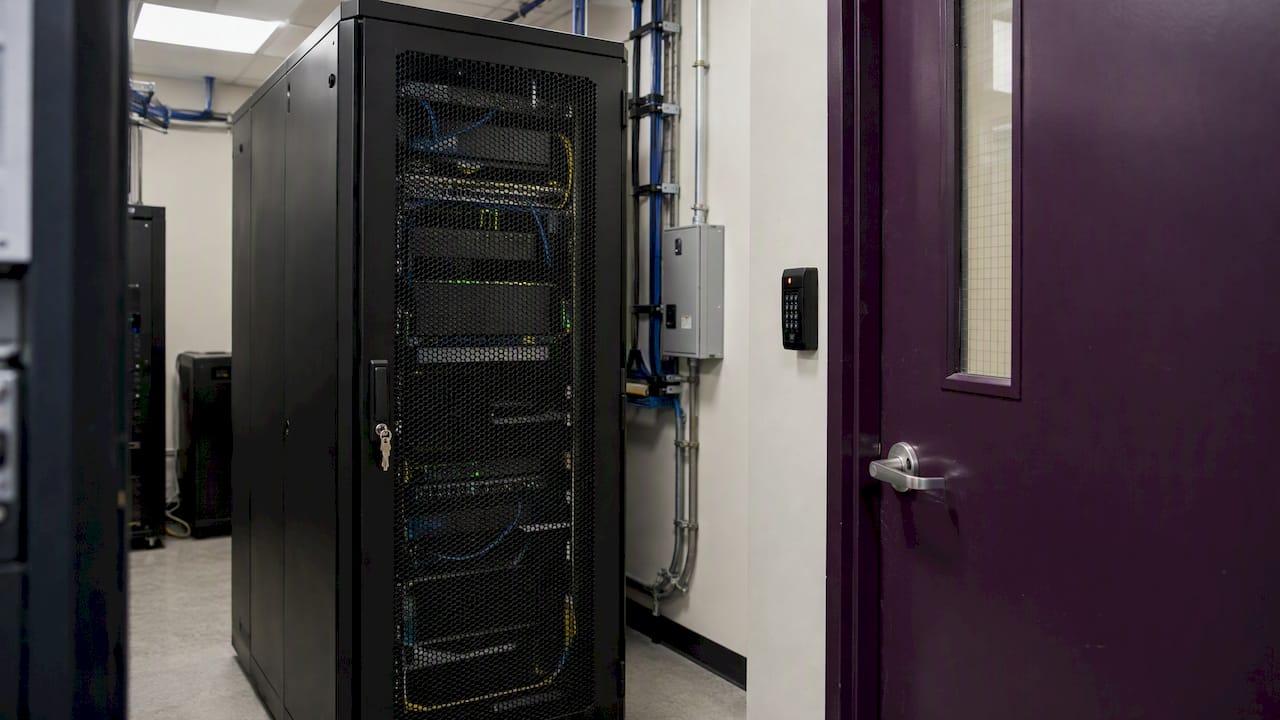
Defense work adds layers. The SBA notes that for DoD, businesses must be able to invoice and receive payments electronically, and each DoD request for proposal lists the CMMC level required to bid. Defense contractors may also face assessment requirements for NIST SP 800-171 under DFARS clause 252.204-7020. If your first target is a defense agency, price security preparation into your plan. If your first target is a civilian agency, the basic safeguarding clause is the usual starting point.
What are the ways into the federal IT market besides open bids?
Open competitive bids are not the only door, and for a first-time contractor they are often the hardest one. GSA lists common entry strategies: subcontracting, Contractor Team Arrangements, joint ventures and the SBA Mentor-Protégé program.
- Subcontracting. You work under a prime contractor and build past performance without carrying the full proposal burden. Margins are thinner, but the reference is real.
- Teaming and joint ventures. You combine capabilities with another firm to bid on work neither could win alone.
- Mentor-Protégé. An SBA program that pairs a smaller firm with an experienced one.
- Contract vehicles. Instead of competing for every one-time award, you get onto a vehicle agencies can order from. The GSA Multiple Award Schedule (MAS) is the largest example, and GSA says it opens the door to federal contracting opportunities exceeding $39 billion annually.
For a deeper look at how the vehicle works, see our explainer on how the GSA Schedule works and our 2026 guide to the Multiple Award Schedule for small businesses.
Does your IT business qualify for a GSA Schedule?
GSA’s published rule: to be eligible, a business must have been in business for two years, have two years of financial statements and have measurable past performance. Those requirements may be waived for eligible businesses through Startup Springboard, which we cover in our Startup Springboard guide.
If your past performance comes from a few commercial projects rather than government work, that can still count. We explain how in winning a Schedule with two or three commercial projects.
One honest point from GSA itself: a Schedule contract does not guarantee agency sales. It gets you onto the shelf. You still market to buyers. That is why we build marketing support around the contract, not just the paperwork.
Should you do it yourself or hire a consultant?
Both work. The difference is time and risk.
| Factor | Doing it alone | With our full-service support |
|---|---|---|
| Typical time to award | Often 2+ years, by our experience | About 6 months for many clients, about 90 days for some |
| Your time | Dozens of hours across forms, pricing and negotiation | About 3 hours |
| Fee structure | Your internal staff time | Payment only after approval (“no award, no fee”) |
| Risk of rejected offers | Depends on your learning curve | We report a 98% first-application approval rate |
Those figures are our own results and claims, not GSA statistics. A consultant earns the fee when your offer is complete, priced correctly and negotiated cleanly the first time, because each resubmission costs weeks.
If you prefer to learn the process yourself, our GSA DIY Quick Start gives you a structured toolkit.
What we have learned from putting small IT firms on a Schedule
Most owners who ask us how to get government IT contracts have already priced the problem wrong. They budget for the proposal and forget the clock. Every month spent learning forms is a month with no federal revenue.
We built our process around that clock. We assess eligibility first, because an honest “not yet” saves a firm months. Then we map your SINs and NAICS codes, prepare the documentation, build the price list and handle the negotiation. You give us about 3 hours. Many clients are awarded in around six months, and some in about 90 days, against two years or more for firms working alone.
Winning the contract is half the job. We keep clients compliant after award with modifications, price list changes and sales tracking, so a Schedule becomes a sales channel and not a certificate on the wall.
Josh
What happens after you win?
GSA’s guidance for managing a contract is to comply with contract requirements, handle modifications including renewals and extensions, monitor past-performance evaluations and keep marketing to pursue more task orders and contracts. The work does not stop at award.
In practice that means three routines: keep your price list and catalog current, submit modifications on time, and track sales so you do not miss reporting duties. Our guide to getting, maintaining and selling on a Schedule covers the cycle. For ongoing support, our maintenance plans start at $99 per month for one modification per year, with $159 per month for two, $219 for three and $279 for four. Custom plans start from $339 per month.
If you want federal marketing after award, our programs run $10,700 per year (Lite), $15,700 per year (Standard) and $27,700 per year (Plus), described on the federal marketing proposal page. Our retainer is $1,500 per year, listed on the pricing page.
Ready to get on a GSA Schedule faster?
If your IT business has two years of operating history and measurable past performance, or may qualify for a waiver, a Schedule can be your most direct route to repeat federal buyers. Our Startups, Specialty and Streamline services cover eligibility assessment, documentation, pricing and negotiation. You pay only after approval. Start with a free eligibility check and we will tell you plainly whether you qualify now, and what to fix if you do not.
FAQ
How long does it take to get a government IT contract?
SAM.gov registration alone can take up to 10 business days to activate. A first competitive award often takes much longer, and the SBA notes it can take up to two years to see a return. With our full-service support, many clients are awarded a Schedule in about six months.
How much does it cost to win a first federal contract?
The SBA reports that some businesses spend between $80,000 and $130,000 to earn their first contract. Your own costs depend on proposal effort, security preparation and whether you hire help. We publish our retainer and maintenance prices, and quote full-service work after a free eligibility check.
Do I need a GSA Schedule to sell IT to the government?
No. You can bid on open solicitations, subcontract or team with other firms. A Schedule gives you a standing vehicle agencies can order from, which many small IT firms find faster than competing for each award separately.
Can a brand-new IT company get on a Schedule?
Possibly. GSA requires two years in business and two years of financial statements, but these may be waived through Startup Springboard for eligible businesses. Our free eligibility check shows where you stand and what the next step is.
Sources
- Finding Opportunities and Providing Services to the Federal Government, U.S. Digital Service
- Get started with contracting, Small Business Administration
- How to win contracts, Small Business Administration
- Register your business, GSA (small business)
- Register your business, GSA (sell to government)
- Respond to a solicitation, GSA
- 1352.215-70 Proposal preparation, Acquisition.gov
- FAR 52.204-21 Basic Safeguarding of Covered Contractor Information Systems
- DFARS 252.204-7020 NIST SP 800-171 DoD Assessment Requirements
- How to access contract opportunities, GSA
- Roadmap to get a MAS contract, GSA
- Helpful resources for MAS sellers, GSA
- Step 3: Manage your contract, GSA
Recommended
- Guide to Becoming a Government Contractor: Your Path To Success
- Applying for Government Contracts: Step-by-Step Guide
- How to Win Government Contracts: A Step-by-Step Plan
- GSA IT Services: Contract Acquisition Steps