

Most GSA Multiple Award Schedule (MAS) offers move from submission to award in about 6 months, though GSA’s own guidance allows up to 12 months for complete review, negotiation, and award. The gap between those numbers comes down to one thing: how clean your offer is on day one, plus whether pricing questions, protests, or FASt Lane status enter the picture.
TL;DR:
- Before opening eOffer, confirm active SAM.gov registration, complete three to four hours of Pathways to Success training, and obtain an authorized employee’s signed readiness assessment.
- Prepare commercial sales practices, discount history, and market comparisons before submission; unsupported pricing can trigger negotiations that add weeks or months.
- FASt Lane is not vendor initiated: an agency contracting officer must document a compelling federal need, and approved vendors must answer clarifications quickly.
- After award, both signatures precede notification; register with the Vendor Support Center for buyer visibility, then start sales reporting and Industrial Funding Fee tracking.
Table of Contents
- What are the phases of the GSA award process?
- What factors make the GSA timeline longer or shorter?
- Can FASt Lane speed up your GSA award?
- What should you complete before submitting your GSA offer?
- What happens after your GSA Schedule is awarded?
- How does professional support change the award timeline?
- What’s the realistic path for most U.S. small businesses?
- Ready to move on your GSA Schedule? Here’s what working with us looks like
- FAQ
- Sources
What are the phases of the GSA award process?
The timeline breaks into four distinct phases, and most delays trace back to skipping steps in the first one.
- Pre-submission readiness. Before you ever open eOffer, you need an active SAM.gov registration, completed Pathways to Success training, and a readiness assessment signed off by an authorized employee of your company, as outlined in GSA’s MAS Roadmap. Training alone runs three to four hours, and skipping any prerequisite blocks submission rather than just slowing review.
- Submission through eOffer. The eOffer system transmits your electronic offer, attachments, and pricing proposal directly to GSA, where it gets assigned to a contracting officer for review.
- Review and negotiation. The contracting officer evaluates your documentation and runs a price fairness analysis. If anything is unclear or the pricing doesn’t hold up, you’ll get clarification requests or move into formal negotiation, which can add weeks or months depending on how quickly you respond.
- Award and notice to proceed. Once review closes, GSA generates a contract package. You sign first, then the contracting officer signs, and only then does the official award date get set and the notification go out.
GSA’s own Vendor Support Center is direct about the ceiling here: complete review, negotiation, and award can take up to 12 months. The same guidance notes that offers with accurate, complete documentation and competitive pricing move faster because there’s less back-and-forth to resolve. Submitting isn’t the same as being awarded. Everything that happens between those two points is where your timeline gets decided.
What factors make the GSA timeline longer or shorter?
A handful of recurring issues account for most of the delays vendors run into, and nearly all of them are preventable.
- Incomplete documentation or missing prerequisites. An expired SAM.gov registration, missing training certificates, or a skipped readiness assessment stalls your offer before a contracting officer ever reviews the substance.
- Pricing that can’t be justified. GSAM Part 538 requires GSA to document that your offered prices are fair and reasonable before award. Weak pricing rationale is one of the most common reasons offers enter extended negotiation.
- Protests, holds, or backlog. Administrative holds, FOIA requests tied to related procurements, or a contracting office working through a heavy caseload can push timelines out regardless of how clean your own paperwork is.
- SIN-specific technical reviews. Certain Special Item Numbers require subject-matter evaluation beyond a standard administrative check, which adds review time.
- FASt Lane eligibility. This can compress the timeline significantly, but it’s narrow and agency-driven rather than something you select on your own application.
Pro Tip: Build your pricing justification (market comparisons, commercial sales practices, discount history) before you submit, not after a contracting officer asks for it.
Can FASt Lane speed up your GSA award?
FASt Lane exists, but it’s not a button you click on your own offer. GSA’s FASt Lane program requires an ordering agency’s contracting officer to submit a written request demonstrating a specific, compelling federal need for your product or service, not a vendor-initiated shortcut. Our guide to GSA FASt Lane walks through what that evidence typically looks like for IT contractors specifically.
If a request qualifies, the expectations are strict on both sides:
- GSA screens every FASt Lane request carefully because expediting one offer can extend processing time for others already in the queue.
- Vendors approved for FASt Lane face very short response SLAs and must be ready to turn around clarifications fast.
- There’s no formal path for a vendor to self-nominate. The request has to originate from the agency with the procurement need.
If you believe your offer qualifies, the practical move is making sure your potential ordering agency knows the option exists and has the documentation ready to request it.
What should you complete before submitting your GSA offer?
The vendors who hit the faster end of the timeline almost always did the same prep work before they touched eOffer.
- Confirm your SAM.gov registration is active and accurate. Outdated NAICS codes or an expired registration will stop your submission cold.
- Complete Pathways to Success training and your readiness assessment. Both are required by an authorized employee before GSA will accept your offer, per the MAS Roadmap.
- Document your pricing logic. Have your commercial sales practices, discount structure, and comparable pricing ready to support a fair and reasonable price determination.
- Map your NAICS codes to the correct SINs and assemble every required attachment before you start the submission, not during it.
- Assign one internal point of contact who can respond to contracting officer clarifications without delay.
Our GSA contract preparation checklist and 7-item readiness checklist both break these steps down in more detail if you want to work through them line by line. Handling this alone, from training through document assembly, typically consumes far more internal staff time than most SMBs budget for, which is a large part of why many choose guided support instead.
Pro Tip: Assign readiness tasks to one owner internally. Split responsibility across departments is the single fastest way to lose weeks to miscommunication.
What happens after your GSA Schedule is awarded?
Award isn’t the finish line. A few operational steps determine when you can actually start taking orders.
- Signature sequence matters. Per eOffer’s documented process, you sign the generated contract package first, then the contracting officer signs. Award notification and your contract documents only become available after both signatures are complete.
- Register in the Vendor Support Center. You need to complete VSC registration before your contract becomes visible to buyers in eBuy and other ordering systems.
- Visibility isn’t instant. GSA’s own guidance notes operational caveats around posting timing, so expect a short lag, often framed as roughly one business day, between registration and full visibility.
- Start compliance and reporting immediately. Sales reporting, Industrial Funding Fee tracking, and first-order readiness all start the moment your contract goes live.
Our walkthrough on what happens after GSA approval covers these post-award mechanics in more depth, including how to prepare your team for the first orders.
How does professional support change the award timeline?
Full-service GSA consulting exists because the timeline is less about paperwork volume and more about getting every piece right on the first pass. Engagements in the market typically cover readiness assessment, full documentation preparation, pricing logic and justification, negotiation support, VSC registration, and ongoing contract maintenance after award.
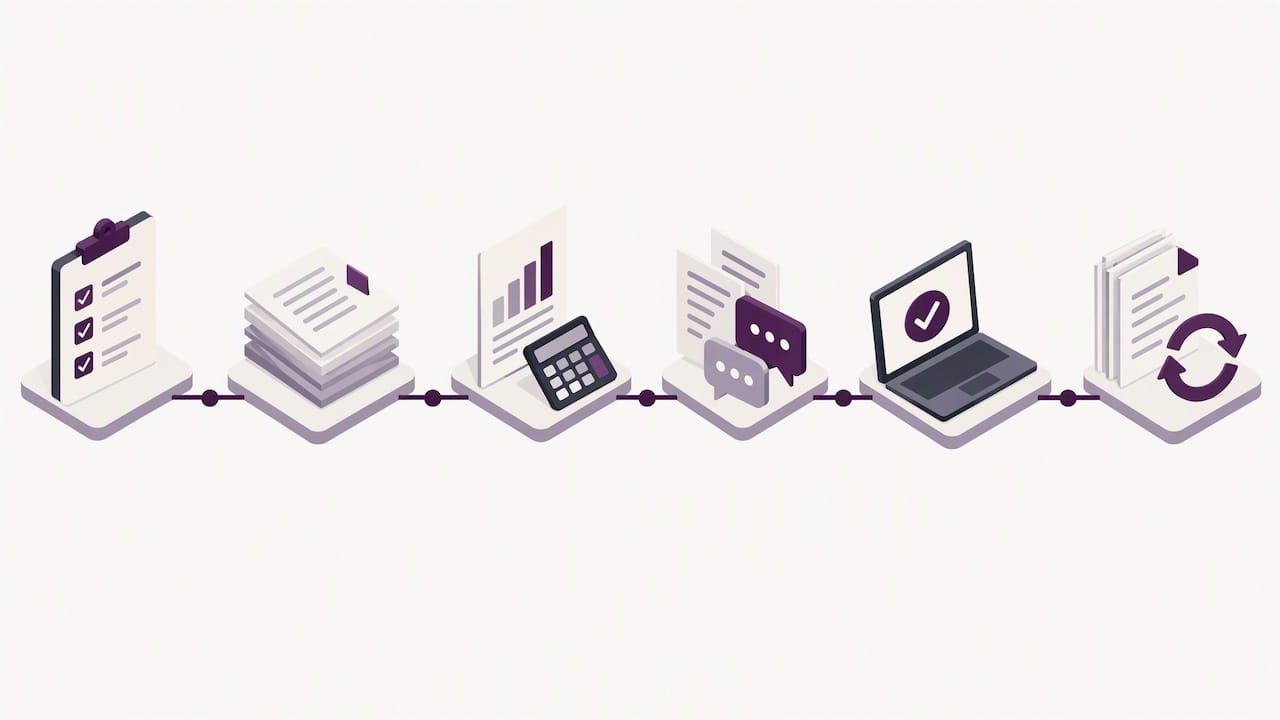
Before hiring anyone for this work, ask about deliverables, response time commitments, how fees are structured, and what guarantee language actually covers. Those four questions separate a consultant who manages your timeline from one who just files paperwork on your behalf.
What’s the realistic path for most U.S. small businesses?
If there’s one lever that controls your GSA timeline, it’s completeness paired with defensible pricing. Protests and backlog are largely out of your hands, but a tight, well-documented offer removes most of the avoidable delay.
Hiring a consultant tends to make sense when you’re short on internal bandwidth, facing a federal sales deadline, or dealing with pricing complexity you haven’t justified before. Whichever path you choose, use a readiness checklist before you submit anything.
— Josh
Ready to move on your GSA Schedule? Here’s what working with us looks like
We built our services around the one variable you can actually control: how complete and well-priced your offer is before it reaches a contracting officer. Our full-service engagements include readiness assessment, documentation preparation, pricing strategy, negotiation support, and post-award maintenance, so the burden of chasing paperwork doesn’t sit on your team.
- Our Startups, Specialty, and Streamline packages cover the full application process from readiness through award.
- Our Lite, Standard, and Plus plans add federal marketing strategy once your Schedule is active.
- Our GSA DIY Quick Start option is available if you’d rather handle submission yourself with structured guidance.
- Our maintenance plans and RETAINER option keep your contract compliant and modification-ready after award.
Clients typically spend around three hours of their own time on the process while we manage the rest. Once you’re awarded, pairing your Schedule with a structured outreach plan, like the steps in this marketing automation checklist, helps put your listing in front of the right buyers faster.
Start with a free eligibility check to see where your timeline stands and what’s needed to move your offer forward.
FAQ
What is the GSA Award Schedule?
The GSA Multiple Award Schedule, often called the GSA Schedule, is a long-term governmentwide contract that lets federal agencies buy products and services from pre-vetted vendors without running a new competition each time. Vendors apply through eOffer and, once awarded, list their offerings for agencies to purchase directly.
How long does it take to get a GSA Schedule?
Many vendors are awarded in around 6 months, while GSA’s Vendor Support Center states that complete review, negotiation, and award can take up to 12 months. Complete documentation and well-justified pricing are the biggest factors in landing toward the faster end of that range.
What’s the GSA Schedule?
It’s a procurement vehicle that pre-qualifies your pricing, terms, and compliance so federal buyers can purchase from you without a separate bid process for each order. Once your contract is awarded and registered in the Vendor Support Center, your offerings become visible to agency buyers through systems like eBuy.
How long does it take to award a government contract through GSA?
The process runs through four stages: pre-submission readiness, eOffer submission, contracting officer review and negotiation, and final signing. Each stage can extend if documentation is incomplete, pricing isn’t justified under GSAM Part 538, or the request requires agency-level FASt Lane sponsorship.
Sources
- You’ve Decided MAS Is a Good Fit: Now What? | Vendor Support Center
- FASt Lane: Making it easier | GSA
- eOffer process
- Part 538 – Federal Supply Schedule Contracting | Acquisition.GOV
Recommended
- GSA Application Timeline Estimator
- GSA Application Timeline Calculator
- GSA Schedule Timeline: Step-by-Step Guide
- GSA Application Timeline Planner