

Category management is the federal government’s way of buying common goods and services as one enterprise instead of through thousands of separate offices. For a small business, it means agencies steer more spending to pre-competed government-wide contracts, so being on the right vehicle, under the right category, decides whether buyers can find and order from you.
TL;DR
- Category management groups federal spending into categories, each run by a category manager and an interagency team, so agencies buy common items smarter and cheaper.
- Agencies are directed to move spending off one-off buys and onto managed and Best-in-Class vehicles, which raises the value of holding a pre-competed contract.
- OMB requires plans to keep meaningful opportunities for small businesses, so small firms still have a path in.
- Buyers are told to check existing government-wide contracts first, and for simple needs they may use GSA Schedules.
- If you qualify, the practical move is to get on a Schedule and map your offer to the right categories. We can run that process with about 3 hours of your time.
Table of Contents
- What is federal category management, and why does the government use it?
- How is federal spending organized into categories, and who runs it?
- What are spend under management and Best-in-Class solutions?
- What role does GSA play in category management?
- How does category management affect small businesses?
- How do agency buyers choose a vehicle?
- What should a business do about it?
- Why do we see category management as a reason to act now?
- How can we help you get on a Schedule?
- How do you choose between doing it yourself and getting help?
- What about companies that already hold a contract?
- Where can you find current category guidance?
- Start with a free eligibility check
- FAQ
- Sources
What is federal category management, and why does the government use it?
Category management is the organized, enterprise-wide purchase of common goods and services. According to GSA’s category management page, the government uses it to improve acquisition efficiency and effectiveness and to get more value and savings. It does this by using data, consolidating and reducing contracts when possible, managing suppliers and demand, and reducing total cost of ownership.
The idea is simple. For decades, thousands of contracting offices bought the same laptops, janitorial services and consulting support on their own terms, at their own prices, with their own supplier relationships. Category management treats each type of spending like a line of business. The OMB and OFPP guidance describes a category manager and an expert support team for each category, rather than leaving purchasing, pricing and supplier relationships spread across separate procurement units.
The policy was reinforced in a March 20, 2019 OMB memorandum. It says category management is meant to eliminate redundancies, increase efficiency and deliver more value and savings. It does so by aligning decentralized spending with government-level strategies and by sharing market intelligence, prices-paid data and practices.
The same guidance names five principles: optimize existing contract vehicles, improve data collection and analysis, leverage commercial intelligence and partner relationships, maximize customer insight to bring more spend under management, and grow and share expertise.
Why this matters to a seller
You do not sell to “the government” in general. You sell to individual agency buyers who are being told, in writing, to look at existing government-wide contracts first. Category management is the reason that advice exists. Understanding it tells you where agency dollars are being pointed.
How is federal spending organized into categories, and who runs it?
The initiative is sponsored by OMB and, according to the Acquisition Gateway overview, operates across 10 common-spend categories. Each has a category manager and an interagency team of experts.
The original structure came from fiscal year 2014 procurement data. Acquisition.gov explains that it split spending into 19 categories: 10 common-spend categories and nine defense-centric categories. The same page says the governing body is the Category Management Leadership Council, chaired by the Administrator for Federal Procurement Policy, with representatives from major agencies, GSA, NASA and SBA.
The taxonomy works by mapping Product Service Codes to categories. The public taxonomy user guide says its rules cover both the 10 common-spend categories and the nine defense-centric ones.
For buyers, GSA’s buying portal presents a simplified list. BUY.GSA.GOV lists nine categories:
| Category | What it typically covers |
|---|---|
| Facilities & Construction | Building services, construction, facility upkeep |
| Human Capital | Training, workforce and personnel support |
| Industrial Products & Services | Tools, equipment, industrial supplies |
| Information Technology | Hardware, software, IT services |
| Office Management | Furniture, supplies, office equipment |
| Professional Services | Consulting, management and business support |
| Security & Protection | Security services and equipment |
| Transportation & Logistics Services | Shipping, freight, logistics |
| Travel | Travel services |
The right column is a plain-language reading of the category names, not an official definition. Which category your offer falls under depends on the codes attached to what you sell.
What are spend under management and Best-in-Class solutions?
These are the two measuring sticks agencies are judged on.
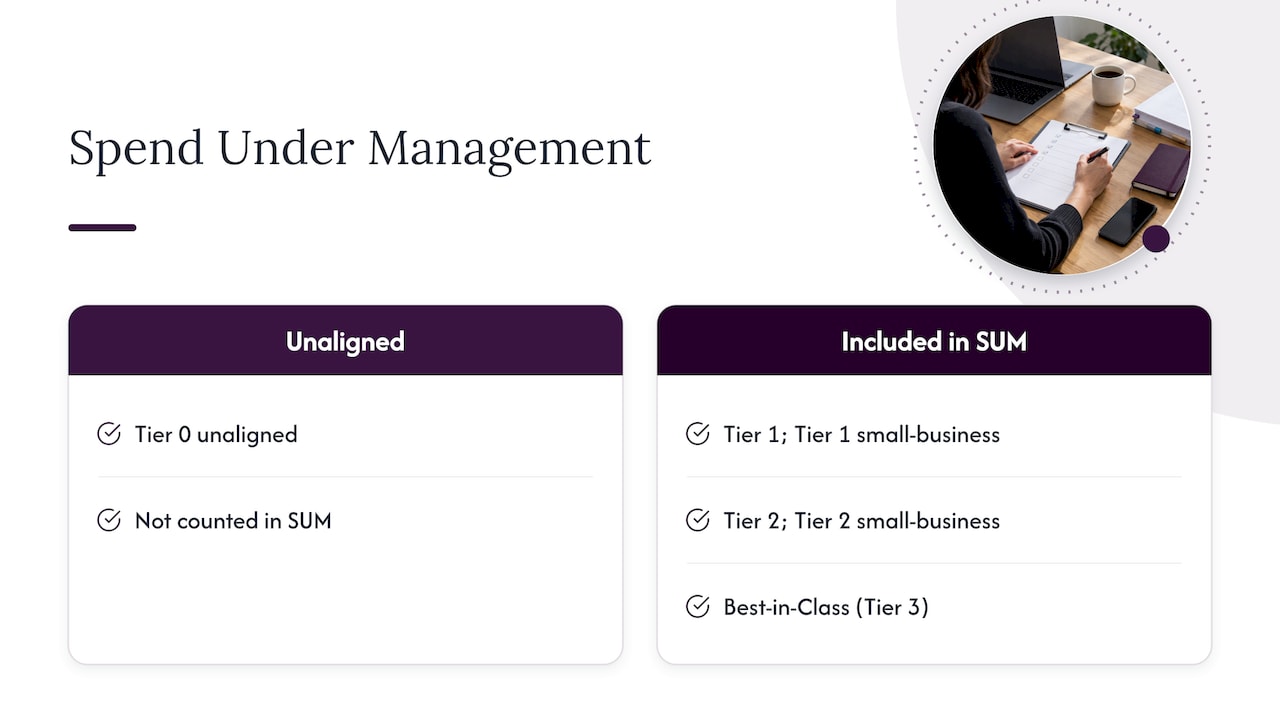
OMB’s memo sorts spending into tiers. Tier 0 is unaligned spending, meaning buys made without a managed approach. Tiers 1, 2 and 3 are managed spending, and Tier 3 is spending through Best-in-Class solutions. Agencies are directed to reduce unaligned spend and increase use of managed and Best-in-Class solutions.
The Acquisition Gateway’s 2024 Acquisition Playbook defines Spend Under Management as Tier 1, Tier 1 small-business, Tier 2, Tier 2 small-business and Best-in-Class spend. Tier 0 is not counted, and agencies are told to look for chances to move it up.
The scale of it
The numbers are large. The GAO’s September 2025 report says federal agencies spent more than $495 billion on common products and services in fiscal year 2024, and that OMB reported more than $111 billion in savings since the initiative began. GAO also reported that the 10 common categories account for more than half of federal contract spending.
When that much money is being steered toward government-wide contracts, a vendor with no vehicle is competing for a shrinking pool of one-off buys.
What role does GSA play in category management?
GSA supports the effort with tools for both buyers and sellers. Its category management page points to the Acquisition Gateway for more category information and to a Solution Finder for searching Best-in-Class solutions.
For a business owner, the takeaway is that the government publishes where its preferred vehicles are. You can read the same category pages your buyers read, and see which of your competitors’ contract types the agencies are being pointed to. If you want a plain explanation of vehicles themselves, our article on GSA contract vehicles walks through them.
How does category management affect small businesses?
It cuts both ways, and OMB addressed that directly. The 2019 memo says category management plans should balance government-wide, agency-wide and local contracts while continuing to meet small-business goals and maintaining meaningful opportunities for small businesses.
It also lets agencies protect small firms. The memo says agencies may favor agency-wide or local contracting over a Best-in-Class or government-wide solution where migration would significantly harm the small-business industrial base, create mission risk through dependence on too few small providers, or conflict with small-business-program requirements.
The Army’s 2024 guide for doing business with its contracting command adds a vendor-side view. It says category management helps optimize performance, minimize price, improve socioeconomic-goal achievement, evaluate life-cycle cost, improve vendor access to opportunities and increase the value of each dollar spent.
What this means in practice
- Pre-competed vehicles get first look. Buyers are encouraged to check them before running a fresh competition.
- Small-business paths remain. The policy language keeps room for small firms, but you still have to be visible to buyers.
- Set-aside structures change. GSA’s January 2025 Refresh 24 materials say GSA planned to transition small business set-aside SINs to non-set-aside equivalents and encourage order-level set-asides, with contractors able to continue under the existing structure during the transition. Small-business status still matters, but it is applied at the order level more than the contract level.
How do agency buyers choose a vehicle?
The Federal Acquisition Regulatory Council’s Category Management Buying Guide, dated October 30, 2025, tells buyers to validate requirements, conduct market research, check required sources and choose a suitable pre-competed vehicle. For simple needs, it says buyers may use GSA Schedules and compare vendors’ offerings and prices.
The guide promotes commercial utilization, prioritization of existing government-wide contracts and BPAs when they meet agency needs, simplicity and efficiency, and adaptability.
Put yourself in the buyer’s seat. A program office needs a service, has a deadline and a limited tolerance for a long competition. The guide steers that person toward vehicles where vendors are already vetted and prices already negotiated. A vendor who is on one gets considered in minutes. A vendor who is not may never come up.
What should a business do about it?
Follow a sequence. Skipping steps is how companies end up with a registration and no revenue.
- Confirm you are ready to sell to the federal market. Register in SAM.gov, the official system for federal awards and opportunities. FedBizOpps is retired, so SAM.gov is where contract opportunities now live.
- Find where your offer sits. Look at the nine buying categories above and decide which one your service or product belongs under. If your work could fit two, note both.
- Study how the category is bought. Read the category page on the Acquisition Gateway and check whether Best-in-Class solutions already exist for it.
- Choose a vehicle. For many small firms selling commercial products and services, a GSA Schedule is the most direct way into the pre-competed pool. Our primer on what the GSA Schedule is covers the basics.
- Prepare your offer. That means eligibility documentation, a price list, past performance and proper code mapping, all of which the vehicle’s reviewers check.
- Market to the buyers. A contract is a license to sell, not a stream of orders. Plan outreach to the agencies that buy in your category.
If you want a sense of the size of the opportunity, our look at the opportunity flowing through GSA contracts and the 2026 Sales Opportunity Estimator can help you frame it for your own market.
Why do we see category management as a reason to act now?
We talk with business owners every week who have read about category management and conclude it is bureaucratic noise. We read it the opposite way. When the government tells its buyers, in writing, to use existing pre-competed contracts first, it is telling you where the orders will go.
The hard part has never been understanding the policy. It is the paperwork. Companies that try the application alone commonly spend two years or more on it, and many stall when they hit price list rules, code mapping or the negotiation. Our approach is designed to remove that load: we handle documentation, compliance guidance and negotiation support, and ask about 3 hours of your time. Many of our clients are awarded in roughly 90 days, and all of our clients are awarded in about six months or less.
We also work on a no award, no fee basis, with payment only after approval. That is how confident we are in the process. If you qualify, the sooner you hold a vehicle, the sooner category managers and buyers can find you.
Josh
How can we help you get on a Schedule?
If your business qualifies, we run the application from eligibility assessment through documentation, price list development, code mapping and negotiation. Our Startups, Specialty and Streamline options are laid out on our application proposal page. If you prefer to do more yourself, the GSA DIY Quick Start gives you a guided toolkit.
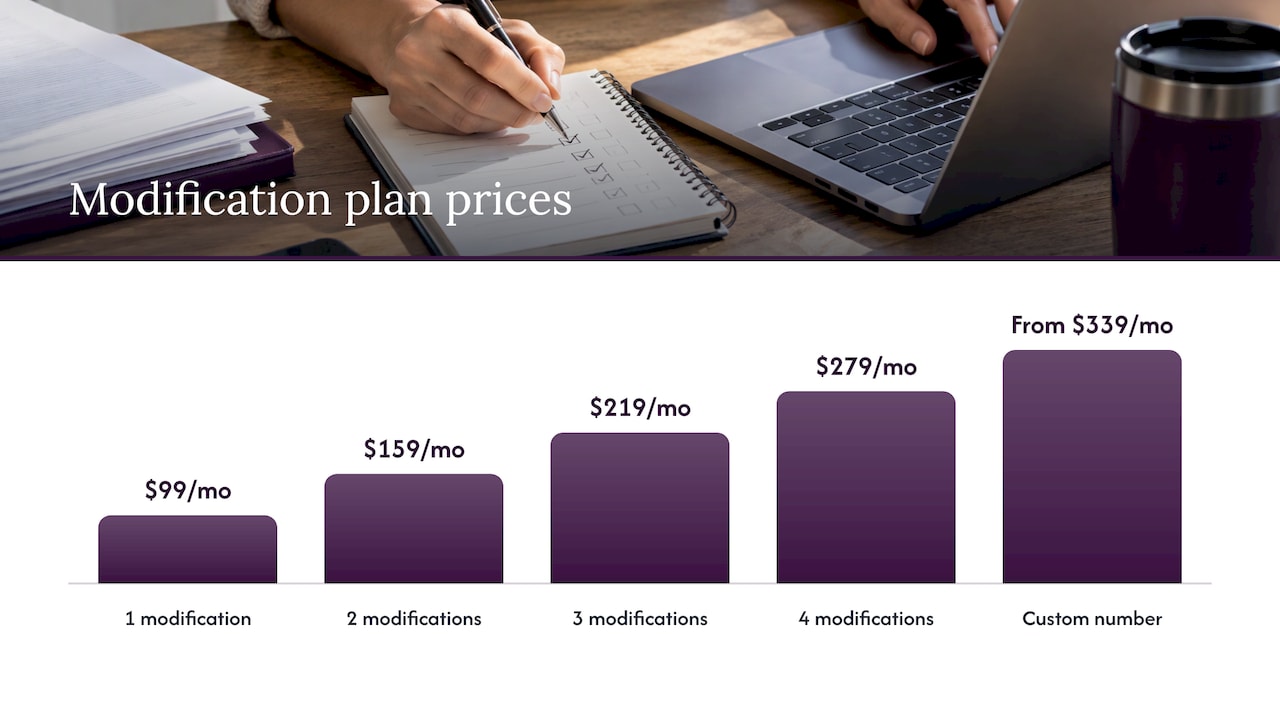
After the award, the work continues. Contract modifications and price list changes are routine, and our maintenance plans cover them at $99 per month for one modification a year, $159 per month for two, $219 per month for three, $279 per month for four, and from $339 per month for a custom number. Our retainer is $1,500 per year. For marketing support aimed at agency buyers, the Lite, Standard and Plus programs are at $10,700, $15,700 and $27,700 per year on our federal marketing page.
We describe our results as our own: a money-back guarantee, a 98% first-application approval rate, and payment only after approval.
How do you choose between doing it yourself and getting help?
Base the decision on time and risk rather than price alone.
| Factor | Doing it yourself | With our support |
|---|---|---|
| Your time | Many hours across months of document gathering and revisions | About 3 hours of your time |
| Typical timeline | Often 2 years or more, based on what we see | Many clients awarded in about 90 days, others within about 6 months |
| Price list and code mapping | You learn the rules while submitting | We prepare and map them for you |
| Negotiation | You respond to reviewer questions yourself | We provide negotiation support |
| Fee timing | You pay with your time upfront | Payment after approval |
If you want to weigh the decision further, see our pros and cons of using a Schedule consultant and our explanation of what a consultant does.
What about companies that already hold a contract?
Category management applies to you too, but briefly: the buyers who find you are the ones searching your category and checking existing vehicles first. Keep your price list current, keep your codes accurate and make modifications on time. Our eMod service and the plans above exist for that. For pricing questions, our guide to how Advantage pricing works is a good start.
Where can you find current category guidance?
Bookmark these, because policy and category pages are updated:
- The GSA category management page for the Acquisition Gateway and Solution Finder.
- The Acquisition.gov category management page for governance and background.
- The GAO’s September 2025 report for results and gaps in implementation.
- SAM.gov for registration and current contract opportunities.
Start with a free eligibility check
Before you spend a single hour on forms, find out whether you qualify. We will review your business, tell you which categories fit your offer and outline what the application would take. Start with our free eligibility check and you will know where you stand.
FAQ
Is category management the same as a GSA Schedule?
No. Category management is the government-wide strategy for buying common goods and services as one enterprise. A Schedule is one type of pre-competed contract vehicle that agencies can use under that strategy. Holding one puts you in a pool buyers are directed to check.
Does category management shut out small businesses?
The policy says it should not. OMB’s memo requires plans to keep meaningful small-business opportunities and lets agencies favor agency-wide or local contracting where migration would significantly harm the small-business industrial base. You still need to be visible and on the right vehicle.
How many categories are there?
The original structure had 19: 10 common-spend and nine defense-centric categories. BUY.GSA.GOV currently lists nine buying categories for purchasers. Which one applies to you depends on the codes attached to your offer.
Where do I find federal contract opportunities now?
Use SAM.gov. FedBizOpps is retired, and SAM.gov is the official source for federal contract opportunities and registration.
How long does it take to get on a Schedule?
It varies. Our experience is that businesses applying alone often take two years or more, while many of our clients are awarded in about 90 days and others within about six months, with roughly 3 hours of their time.
Sources
- Category management | GSA
- OMB Memorandum M-19-13, Category Management
- Government-wide Category Management Guidance Version 1
- Overview | Acquisition Gateway
- Category Information | BUY.GSA.GOV
- Category Management | Acquisition.GOV
- User Guide: Category PSC Taxonomy
- Acquisition Playbook Module 2: Implementing Category Management
- GAO-25-108638, Government Contracting
- Doing Business with the U.S. Army Mission and Installation Contracting Command
- Refresh 24 SF30 Attachment
- Category Management Buying Guide
Recommended
- You want GSA Sales—but do you even qualify?
- 5 Ways GSA Schedules Boost Federal Market Position
- The Recession-Proof Nature of GSA Sales: What You Need to Know
- The GSA Process: Do you really want to do this?