

The UEI is a 12-character ID that identifies your business entity in SAM.gov. The CAGE code is a 5-character ID that identifies your facility at a specific address. You do not apply for them separately: registering in SAM.gov gives you the UEI, and the CAGE code is assigned to U.S. entities once you submit the registration.
TL;DR
- The UEI identifies your entity. The CAGE code identifies a facility at a physical address. One company can hold several CAGE codes but has one UEI.
- You do not need to apply for a CAGE code before SAM.gov. If you do not have one, you select “No” in the registration and one is assigned after you submit.
- DUNS numbers are gone for federal purposes. The UEI replaced them on April 4, 2022.
- Names and addresses must match your IRS records exactly, or validation stalls.
- Both identifiers are only useful while your SAM registration stays active, so plan for annual renewal.
Table of Contents
- What is the difference between a CAGE code and a UEI?
- Do I need a CAGE code for SAM registration?
- How do I get a UEI and a CAGE code, step by step?
- How do I find my company’s CAGE code and UEI?
- Why does a CAGE code attach to an address instead of a company?
- What happened to the DUNS number?
- Who actually checks these numbers, and when?
- Do both identifiers expire?
- When does a CAGE code matter beyond SAM.gov?
- Common mistakes with UEIs and CAGE codes
- What comes after the UEI and CAGE code?
- Our perspective: the identifiers are the easy part
- How we help once your SAM.gov registration is active
- FAQ
- Check whether your business qualifies
- Sources
What is the difference between a CAGE code and a UEI?
Think of the UEI as your company’s federal Social Security number and the CAGE code as a tag on your building.
The UEI is a 12-character alphanumeric identifier assigned by SAM.gov to uniquely identify an entity. The CAGE code is a 5-character identifier that the Department of Defense and other federal agencies use to identify a facility at a specific physical location. The fifth position of a CAGE code is always numeric, and the letters I and O are excluded.
Here is the side-by-side view:
| UEI | CAGE code | |
|---|---|---|
| Length | 12 characters | 5 characters |
| What it identifies | Your legal entity | A facility at a physical address |
| Issued through | SAM.gov | Defense Logistics Agency (DLA), triggered by SAM.gov registration |
| How many per company | One | Can be several, one per location |
| Who looks at it | Every federal agency and contracting officer | Defense buyers, facility clearance programs, DLA systems |
| Replaced | DUNS number | Nothing, it is long-standing |
A practical way to remember it: the UEI answers “who is this company?” and the CAGE code answers “which site are we talking about?”
Do I need a CAGE code for SAM registration?
You do not need to have one before you start. You need to end up with one.
The SAM.gov entity registration checklist says that if you do not have a CAGE code, you select “No” and one will be assigned to your entity after you submit your registration. That applies to U.S. entities. Non-U.S. entities use an NCAGE code instead.
Two mistakes cost people weeks here:
- Requesting a CAGE code from DLA first, then registering in SAM.gov. Running two requests at once can cause delays or rejections. If you are doing a standard registration, let SAM.gov start the CAGE process.
- Answering “Yes” to having a CAGE code when you do not. The answer should reflect reality. If you had one from earlier work, link that one. If you never did, choose “No.”
One more point of confusion: you can request a UEI on its own. SAM.gov lets you request a Unique Entity ID only, without completing a full registration. That is enough for some things, such as certain grant applications. It is not enough to bid on contracts. For contracts you need the full registration, which is what triggers the CAGE code.
How do I get a UEI and a CAGE code, step by step?
The process runs through one door, SAM.gov, and it costs nothing. Here is the order we recommend.
- Gather your legal details. You need your legal business name and physical address exactly as they appear in your IRS records. GSA’s registration guidance is clear that mismatches are a common reason registrations stall.
- Create a SAM.gov login and start the entity registration. Choose the option to register to bid and apply for federal awards if you want contracts. Choose UEI only if that is all you need today.
- Receive your UEI. It is assigned by SAM.gov as part of the process. It does not depend on you buying anything or contacting a third party.
- Answer the CAGE question honestly. If you have no CAGE code, select “No.” If you do have one, enter it so it links to your entity.
- Complete the remaining sections and submit. Expect validation to take time. The research we reviewed puts it at up to 10 business days, so do not leave this to the week before a proposal is due.
- Confirm your CAGE code was assigned. Once the registration is active, your CAGE code shows in your entity record.
If you want a more detailed walk-through of the screens, our guide on how to verify your SAM.gov registration covers what an active registration looks like and what to check before you submit an offer.
How do I find my company’s CAGE code and UEI?
If you already registered, you have both. You just need to look in the right place.
- In SAM.gov. Sign in and open your entity record. Your UEI and CAGE code both appear in the entity details.
- In the DLA’s public search. The CAGE Public Search at cage.dla.mil lets you look up a company by name or code. This is also how you check a teaming partner or subcontractor.
- On old paperwork. Prior proposals, capability statements and contract documents often carry the CAGE code.
When you search, the entity name and address in the result should match what you expect. If they do not, you may be looking at a different location or a stale record, and that is worth fixing before you bid. We built a CAGE code lookup checklist for small businesses for exactly this situation.
Why does a CAGE code attach to an address instead of a company?
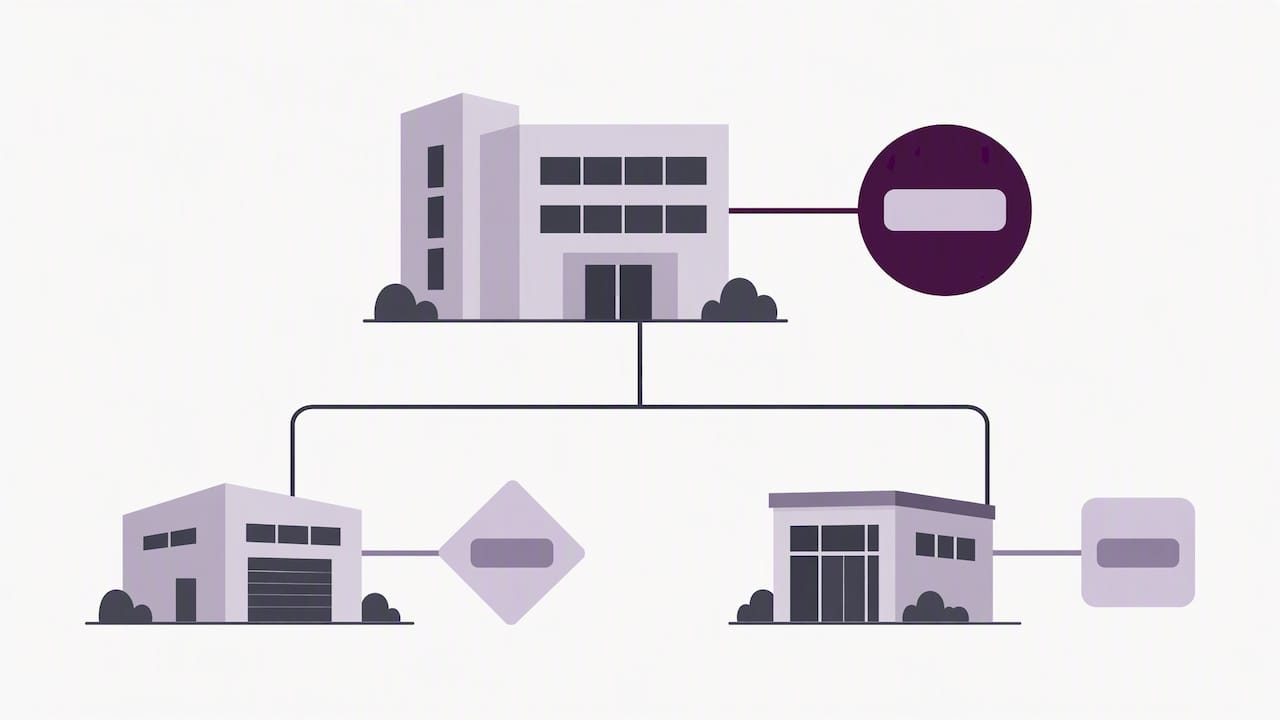
Because it started as a way to track suppliers and facilities for defense buying. Under the Defense Federal Acquisition Regulation Supplement guidance, CAGE codes are assigned per legal entity at individual physical addresses, so the same entity at the same address will not receive two.
The result is a few real-world patterns:
- One location, one code. A consulting firm with one office has one CAGE code.
- Multiple locations, multiple codes. A manufacturer with a plant in Ohio and a warehouse in Texas can hold a code for each.
- Branch offices need care. If you operate a branch, make sure the parent company’s CAGE code is correctly linked during setup. Otherwise you can be blocked from certain security systems.
- Moves matter. Relocating means your address, and therefore your CAGE record, needs updating.
The UEI does not behave this way. It stays with the entity as the entity moves, merges its records or adds offices.
What happened to the DUNS number?
If you are reading older guidance, you will see DUNS numbers everywhere. Ignore that part. The government transitioned away from the DUNS number on April 4, 2022, and the UEI assigned through SAM.gov is now the identifier for doing business with the federal government.
If a website, an email or a “service” asks you to pay for a DUNS number to sell to the government, that information is out of date. Getting a UEI from SAM.gov is free.
Who actually checks these numbers, and when?
Contracting officers do, and they do it early. Under FAR 4.1803, they verify your registration before an award, and your CAGE code and UEI are part of that picture. An expired registration or an unlinked CAGE code can get you thrown out of a competition that you were otherwise qualified to win.
The clause on SAM maintenance, FAR 52.204-13, also puts a duty on you: you must communicate changes to your identifiers to your contracting officer within 30 days. A move, a legal-name change after a merger or a restructure can all trigger this.
If you sell to buyers who have extra verification steps, for example in cybersecurity, the same logic applies, and this overview of what contracting officers verify during federal solicitations and awards is a useful second read on how compliance checks stack up.
Do both identifiers expire?
Not exactly. This is where people get tripped up.
Your UEI is a permanent identifier. What expires is your SAM registration, which has to be renewed every year to stay active. If it lapses, your entity shows as inactive, and an inactive entity cannot receive awards or, in the worst case, can see payments held up on contracts you already have.
The practical routine:
- Put your renewal date on a calendar with a reminder at least 60 days ahead.
- Review your name, address, NAICS codes and points of contact when you renew, not just click through.
- Update SAM.gov first when anything changes, then notify your contracting officer.
We cover this in more depth in our posts on maintaining your SAM registration and best practices for SAM registration maintenance.
When does a CAGE code matter beyond SAM.gov?
For most small businesses selling services or commercial products to civilian agencies, the CAGE code sits quietly in the background. It matters more in these cases:
- Defense work. DLA and military buyers rely on it heavily.
- Facility clearances. The Defense Counterintelligence and Security Agency uses CAGE codes to track basic facility information, and a company without one needs to get one through SAM.gov before moving forward.
- Subcontracting. Prime contractors often ask for both your UEI and your CAGE code on teaming paperwork.
- Multi-site operations. Each site may need its own record.
If none of those describe you, treat the CAGE code as something to get right once and keep accurate.
Common mistakes with UEIs and CAGE codes
These are the problems we see most often when a company comes to us after a stalled attempt:
- Name mismatch. Using a trade name or an abbreviated legal name that does not match IRS records.
- Address mismatch. Listing a mailing address, such as a PO box or a registered-agent address, where the physical address is required.
- Duplicate requests. Asking DLA for a CAGE code while SAM.gov is already processing one.
- Letting the registration lapse. The UEI survives, but you cannot bid.
- Forgetting changes. Moving offices without updating the record.
- Assuming the number is the hard part. The identifiers take days. The harder part is everything that follows.
What comes after the UEI and CAGE code?
Having both gets you into the federal marketplace. It does not get you contracts.
Beginners often assume a registered company will start receiving opportunities. In practice, you still have to find solicitations on SAM.gov (FedBizOpps was retired, and SAM.gov is where opportunities are posted now), write a competitive response and compete against firms that already have relationships. Each bid can take weeks of effort with no guarantee.
Many small businesses find that a pre-approved vehicle shortens that path. A GSA Schedule lets agencies buy from you without running a new open competition for every purchase, and your UEI and CAGE code are prerequisites for it. If you want the overview first, start with our GSA contractor registration guide.
Our perspective: the identifiers are the easy part
We work with small and medium-sized businesses that want federal sales, and the pattern is consistent. Getting a UEI and CAGE code is a one-afternoon task for most owners. What sinks them is what happens next: the paperwork, the price list, the negotiation and the compliance details.
Companies that try the process alone often spend two years or more on it. The companies we support are typically awarded in around six months, and the client’s own time is about three hours. Most of the gap comes from avoidable errors: mismatched records, wrong code mapping, incomplete documentation and slow responses to agency questions.
Our advice, if you are early in the process:
- Register in SAM.gov first, and do it carefully. Do not hurry through name and address.
- Do not pay anyone for a UEI or a CAGE code. Both are free through the government.
- Decide whether a federal contract vehicle fits your business before spending months on one-off bids.
- If you go it alone, set a calendar for renewals from day one.
We also think owners should hear the hard truth: if your business is not ready, it is better to know now. That is why we start with an eligibility check and not a sales pitch.
— Josh
How we help once your SAM.gov registration is active
If your registration is active and you want a federal buying vehicle, we handle the full application: readiness assessment, documentation, price list development, code mapping and negotiation support. Our model is built on a simple promise: no award, no fee, and a money-back guarantee. You can see the application options on our GSA consulting page and the packages on our proposal page.
Prefer to do it yourself? Our DIY Quick Start gives you the structure without the guesswork.
After award, upkeep matters. Our maintenance plans start at 99 USD per month for one modification per year, and a retainer is listed at 1500 USD per year on our pricing page.
FAQ
Are a UEI and a CAGE code the same thing?
No. The UEI is a 12-character ID for your entity, assigned through SAM.gov. The CAGE code is a 5-character ID for a facility at a physical address. You usually need both to be active in federal contracting, and they appear together in your SAM.gov entity record.
Can I get a CAGE code without SAM.gov registration?
In most cases for U.S. businesses, no separate step is needed, because SAM.gov registration starts the assignment. Some facility clearance situations involve DLA directly, but for standard entity registration the SAM.gov route is the one to use. Running both at once can cause delays.
Does my UEI change if I move or rename my business?
Your UEI is tied to the entity. A move changes your address, and that affects your CAGE record, so update SAM.gov first. If you hold a contract, notify your contracting officer within 30 days, as FAR 52.204-13 requires.
Do I need to pay for a UEI or CAGE code?
No. Both are obtained for free through SAM.gov. Be cautious with any provider that charges for the identifiers themselves, since you are paying for something the government gives away.
How long does it take to get both?
Expect validation to take up to about 10 business days, and sometimes longer if your name or address does not match IRS records. Start early, and double-check your legal details before you submit.
Check whether your business qualifies
If you have a UEI and a CAGE code and want to know whether a federal buying vehicle makes sense for you, ask for a free eligibility check. We will tell you plainly where you stand. Start from our home page and tell us about your business.
Sources
- Entity Registration, SAM.gov
- Entity Registration Checklist, SAM.gov
- CAGE Public Search, Defense Logistics Agency
- Register Your Business, GSA
- DUNS transition, Congressional Research Service
- FAR 4.1803, Acquisition.gov
- FAR 52.204-13, Acquisition.gov
- Facility Clearances, DCSA
Recommended
- Understanding What is a Cage Code Number: A Comprehensive Guide
- Step-by-Step Guide on How to Get a CAGE Code Successfully
- Cage Code: A Comprehensive Guide
- Understanding the Cage Code Meaning: A Comprehensive Guide