

SAM reps and certs are the representations and certifications you submit electronically inside your SAM.gov entity registration. You answer questions about your business size, ownership, location, and legal history, then renew them at least once a year. They are part of registration, not a separate certification you buy or apply for.
TL;DR
- Reps and certs are completed inside SAM.gov registration. FAR Subpart 4.12 says they are submitted electronically in SAM.
- Registering and maintaining your SAM registration costs nothing, according to HUD Exchange guidance.
- Review your answers whenever something changes and at least annually. Your registration itself must be renewed every 365 days.
- Inconsistent names, addresses, or ownership data are the most common cause of delays. Match your IRS, SAM.gov, and SBA records first.
- If you want a GSA Schedule, your reps and certs are the foundation of the offer, so errors here follow you into the contract.
Table of Contents
- What are SAM reps and certs, and is it a separate certification?
- What do the questions actually ask?
- How do you complete reps and certs in SAM.gov, step by step?
- Does it cost anything to complete SAM reps and certs?
- How can you check whether a company is registered?
- How often must reps and certs be updated?
- What mistakes cause delays or trouble?
- How do reps and certs connect to winning government contracts?
- Perspective: where reps and certs trip up GSA Schedule offers
- What does it look like to get help with a GSA Schedule?
- Should you do it yourself or hire a consultant?
- FAQ
- Check your eligibility for free
- Sources
What are SAM reps and certs, and is it a separate certification?
It is not a separate certification. Representations and certifications are statements you make to the government about who you are and how you operate. FAR Subpart 4.12 requires entities to submit this information in SAM so the government has one common source of data and contracting offices do not collect the same answers again and again.
That is why “SAM certified” is a loose phrase. What people usually mean is that a company has an active SAM registration with completed reps and certs. Nobody issues a SAM certificate. You get an active registration status, and contracting officers can see it.
A representation is a statement of fact, such as where your facilities are or whether you are a small business under your NAICS code. A certification is a promise, such as a promise that you have not been debarred. Both are made under the False Statements rules that apply to federal dealings, so accuracy matters more than speed.
The three types of reps and certs
As of August 2025, a GSA review of Revolutionary FAR Overhaul impacts on SAM described three kinds in SAM.gov:
| Type | What it covers |
|---|---|
| Entity-level | Answers specific to your company |
| Procurement-specific | Answers tied to a particular procurement |
| By Submission of Offer | Statements that collect no entity information |
The same document says the vision is to keep collecting entity-level representations in SAM.gov and move the other two into solicitations and resulting contracts. It said system changes were not expected before January 2026 at the earliest. Because that is a moving target, check the current SAM.gov registration screens before you rely on any description of the questions, including this one.
What do the questions actually ask?
For an “All Awards” registration, the one you need to bid on contracts, the SAM.gov entity registration checklist says reps and certs run to more than 40 questions across four sections. The topics include:
- Facility locations and environmental guidelines
- Small business status and labor surplus area status
- Tax identification
- Ownership and parent company
- History of debarment, fraud-related convictions, or legal judgments
Each question links to specific FAR or DFARS provisions. SAM.gov lets you select the FAR reference link beside a question to read the full text of the provision behind it, as shown in the SAM.gov entity registration walkthrough. Use those links. A “yes” or “no” on a question about affiliates or subcontracting limits can carry legal meaning you will not guess from the short question text.
Self-certified versus SBA-managed statuses
Some socio-economic categories are self-certified inside SAM. Others are managed by the Small Business Administration and pulled into your record automatically after a registration update, according to the SAM.gov small business training. If a status you expect is missing, the fix is usually on the SBA side, not in your SAM answers.
How do you complete reps and certs in SAM.gov, step by step?
You complete them during registration. GSA’s guide to registering your business describes the flow: create an account, enter identifying information such as your UEI and CAGE code, select NAICS codes, then complete the required representations and certifications. Here is the order that saves rework.
- Download the entity registration checklist first. SAM.gov training recommends reading the questions in advance so you can gather answers before you start.
- Get your Unique Entity ID. Sign in to SAM.gov and choose the option to get a Unique Entity ID. That step asks only for basics like legal business name and physical address. A full registration, which includes the UEI, is required if you plan to bid directly on federal contracts, per the same GSA page.
- Align your records. Make sure your business name, address, and ownership details match across IRS, SAM.gov, and SBA records. Mismatches are what slow validation.
- Choose your NAICS codes. Your size status is judged against the code tied to the work you pursue, so choose them deliberately.
- Answer reps and certs one question at a time. Open the FAR reference when a question is unclear. Have the person who knows your ownership structure and legal history in the room.
- Submit and wait for validation. GSA says registration can take up to several days to complete and validate, so do not leave it for the week a bid is due.
Older vendor records sometimes still refer to a D-U-N-S number. The D-U-N-S number application steps explain how those identifiers are requested, which can help if a partner or lender still asks for one. For SAM.gov itself, your UEI is the identifier you use.
If you want a walkthrough of the broader process, our guide on how to register and search contracts on SAM.gov covers the screens in order.
Does it cost anything to complete SAM reps and certs?
No. HUD Exchange states there is no fee to register or maintain a SAM registration, and that help from the Federal Service Desk is also free. The same page warns that emails from companies offering to register you for a payment are not from the government.
That does not mean outside help is pointless. It means you should know what you are paying for. Paying someone to click through a free form is rarely worth it. Paying someone to build a defensible GSA Schedule offer on top of an accurate registration is a different purchase, and we cover it below.
How can you check whether a company is registered?
Use the Check Entity Status tool on the SAM.gov entity registration page. It shows whether an entity’s registration is active. You can use it on your own company before a bid, and on a teaming partner or subcontractor before you sign anything.
If you want more detail on what to look for and what an inactive status means, see our step-by-step guide to verifying SAM.gov registration.
How often must reps and certs be updated?
At least once a year, and sooner if anything changes. FAR Subpart 4.12 requires you to review and update your representations and certifications as necessary, but at least annually, so they stay current, accurate, and complete. Separately, SAM.gov says entities must renew registration every 365 days to remain active.
In practice, treat these events as triggers to update right away:
- A change in ownership, a merger, or a new parent company
- A move or a new facility
- A change in small business size or socio-economic status
- A new legal judgment or debarment issue
- A change to your legal name or tax information
Let the registration lapse and your status goes inactive. For companies holding or pursuing a GSA Schedule, that is more than an inconvenience. Our article on what happens to GSA Schedule offers when SAM status lapses explains the risk, and our guide to maintaining SAM registration shows how to build a renewal habit.
What mistakes cause delays or trouble?
Most problems come from a handful of habits:
- Guessing at the answer. If a question mentions affiliates, ownership, or a FAR clause you do not recognize, read the provision before answering.
- Mismatched data. A name spelled one way at the IRS and another in SAM.gov stalls validation.
- Wrong NAICS codes. Small business status depends on the code. A code that does not match your real work can make you look ineligible or too large.
- Letting someone else answer for you. A certification is your company’s statement. Whoever helps, your executive signs off on its truth.
- Waiting until the bid deadline. With validation taking several days, a late start can cost you the opportunity.
How do reps and certs connect to winning government contracts?
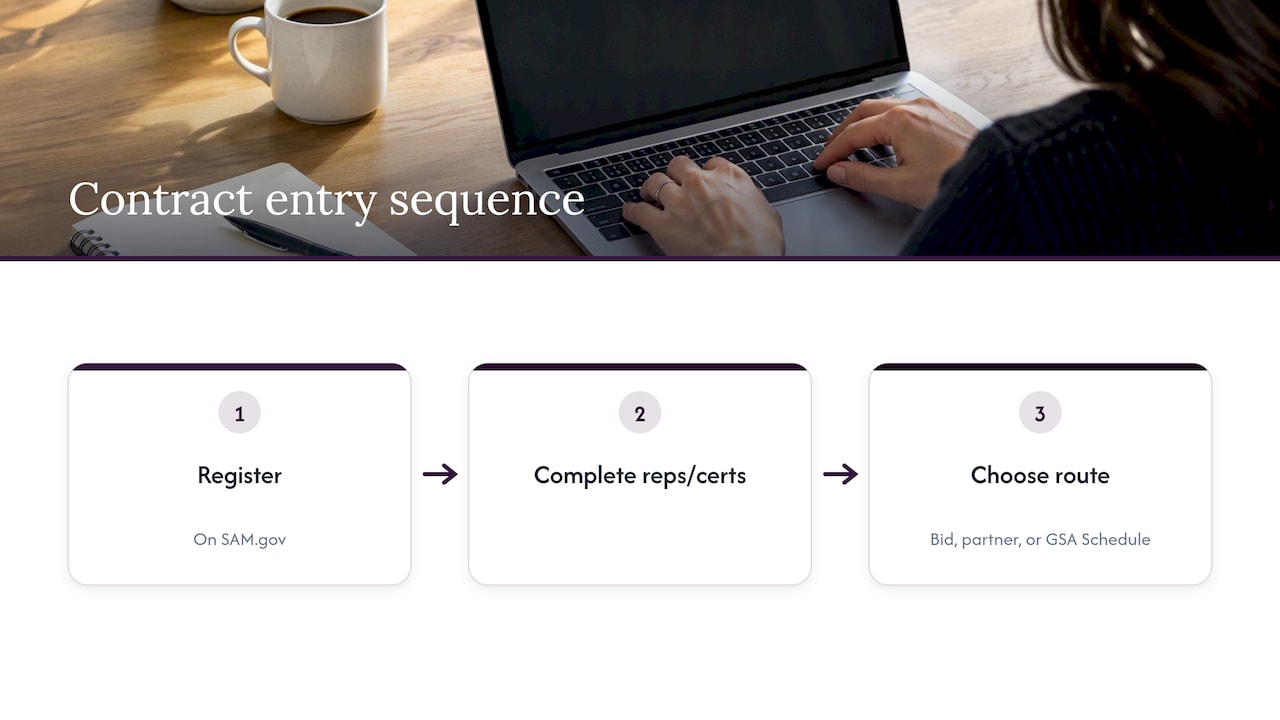
They are the entry ticket. Without an active registration, you cannot be awarded a federal contract, and you will not appear properly to contracting officers searching for vendors. If you are new to selling to the government, the order is: register in SAM.gov, complete your reps and certs, then decide which route to contracts fits your business. You can bid on individual solicitations posted on SAM.gov, partner with a prime contractor, or pursue a contract vehicle such as a GSA Multiple Award Schedule that lets agencies buy from you without a fresh competition each time.
Our overview of the role of SAM registration in federal contracting explains how registration fits into each route. If you are weighing the schedule route, GSA compliance requirements shows what the government expects after you are in.
Perspective: where reps and certs trip up GSA Schedule offers
We work only on GSA Schedule acquisition and maintenance, and we see the same pattern. The SAM registration looks finished, so the owner assumes the hard part is behind them. Then the schedule offer begins, and the company’s size status, ownership description, and NAICS codes have to line up with the corporate experience narrative, the price list, and the SIN mapping. Small inconsistencies that SAM.gov accepted get questioned.
So we tell clients to treat reps and certs as the first page of the offer, not a chore before it. Get them right once, keep a dated record of who answered what and why, and the offer is faster to build. On our side, the work is hands-on: we prepare documentation, map codes, and handle the back and forth. Clients typically spend about 3 hours of their own time, and they are typically awarded in about six months. Companies that go it alone often take two years or longer.
— Josh
What does it look like to get help with a GSA Schedule?
SAM registration is free and you can do it yourself. A GSA Schedule offer is another matter. It involves documentation, pricing, negotiation, and compliance rules that trip up first-time applicants.
We handle eligibility assessment, full documentation preparation, price list development, NAICS and SIN mapping, and negotiation support. Our model is no award, no fee: you pay after approval, and a money-back guarantee backs the work. Our full-service GSA Schedule offering lays out how it works, and the Startups, Specialty, and Streamline options fit different company profiles. Prefer to do it yourself? The GSA DIY Quick Start gives you structure without the full engagement.
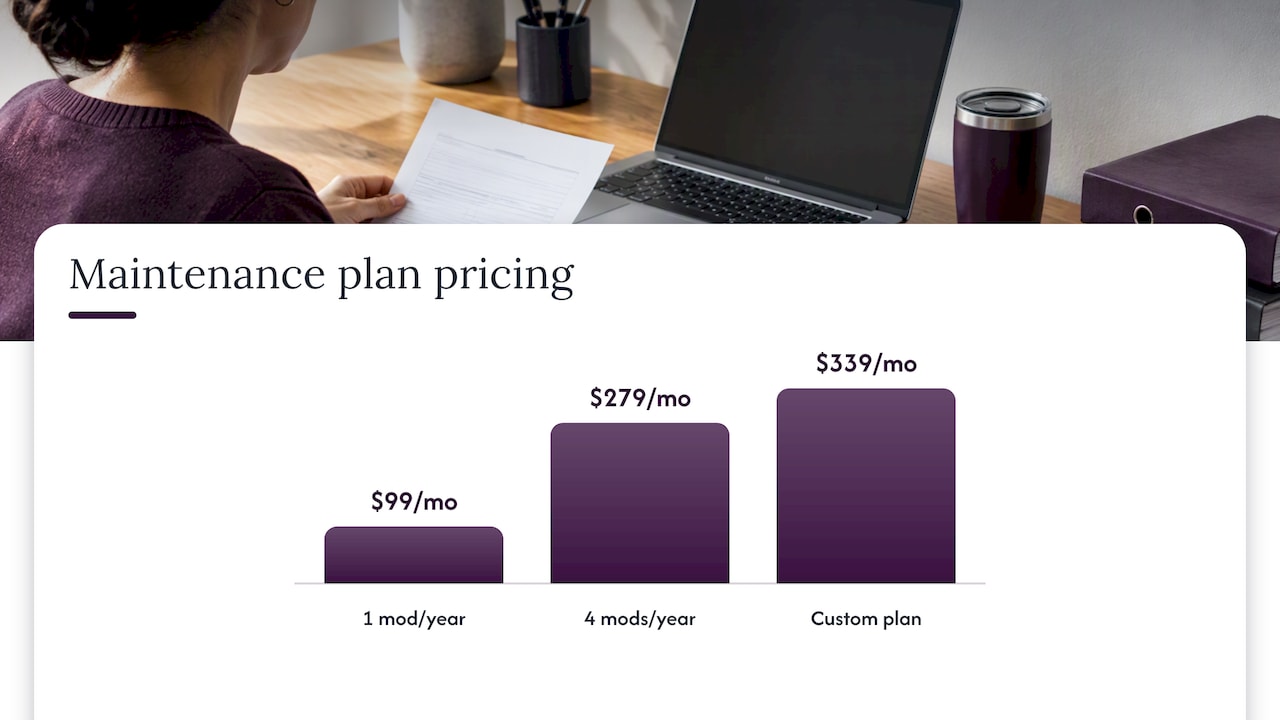
After award, upkeep matters. Our maintenance plans start at $99 per month for one contract modification a year, and run to $279 per month for four. Custom plans start from $339 per month. A retainer is listed at $1,500 per year on our pricing page. Our post-award checklist shows what to do in the first weeks.
Should you do it yourself or hire a consultant?
Do your SAM registration yourself. Weigh a consultant for the schedule offer. The honest split looks like this:
| Task | Do it yourself | Consider expert help |
|---|---|---|
| SAM.gov registration and reps and certs | Yes, free, and the questions are about your own business | If ownership or legal history is complex |
| Choosing NAICS codes | Yes, with care | If you serve several markets |
| Building a GSA Schedule offer | Possible, but slow | When time to first award matters |
| Price list and negotiation | Risky for first-timers | Usually yes |
| Ongoing modifications and compliance | If you have staff time | If you want predictable upkeep |
If you already meet the basics, an eligibility check tells you quickly whether your business is ready, and what, if anything, to fix first.
FAQ
What is a SAM certification?
There is no standalone SAM certification. People use the phrase for an active SAM.gov registration with completed representations and certifications. FAR Subpart 4.12 says these are submitted electronically in SAM. You are “certified” only in the sense that your answers are on record.
How long does it take to get registered in SAM.gov?
GSA says registration can take up to several days to complete and validate. Matching your name, address, and ownership across IRS, SAM.gov, and SBA records helps avoid delays. Start well before any bid deadline.
How do you get a UEI number?
Sign in to SAM.gov and select the option to get a Unique Entity ID. It asks for minimal information, such as legal business name and physical address. If you plan to bid directly on federal contracts, complete a full registration, which includes the UEI.
How do you check if a company is SAM registered?
Use the Check Entity Status tool on the SAM.gov entity registration page. It shows registration status for an entity. Check your own status periodically, since lapsed registrations go inactive.
Check your eligibility for free
If your SAM registration is active and you want to sell to federal agencies through a GSA Schedule, start with a free eligibility check. We will tell you whether your business qualifies, what a realistic timeline looks like, and what it would cost. Request it at gsascheduleservices.com.
Sources
- FAR Subpart 4.12, Representations and Certifications
- GSA review of RFO impacts on SAM
- GSA: Register your business
- SAM.gov entity registration checklist
- SAM.gov entity registration walkthrough
- SAM.gov small business training
- SAM.gov entity registration
- HUD Exchange: SAM.gov registration fees
Recommended
- SAM Registration Renewal: Your Step-by-Step Action Plan
- Maintaining SAM Registration for Federal Contracts
- Verify SAM.gov Registration: Step-by-Step Guide
- Best Practices for SAM Registration Maintenance