

Yes. A company with less than two years in business can submit a Multiple Award Schedule offer through GSA’s Startup Springboard pathway. You must be FASt Lane-qualified, and as of Refresh 33 your offer must also be sponsored by a federal agency. Here is what that means in practice.
TL;DR
- The standard rule is two years in business, two years of financial statements and measurable past performance. Startup Springboard can waive those for eligible new companies.
- Startup Springboard requires FASt Lane qualification and, as of Refresh 33, sponsorship by a federal agency.
- Before you submit, you must finish the Pathways to Success training and a readiness assessment within the past year.
- Award takes weeks to months on GSA’s side. Our clients are typically awarded in about six months with roughly three hours of their own time.
- Winning the schedule does not produce sales by itself. Plan your marketing before you apply.
Table of Contents
- Does a company need two years in business to apply?
- What is Startup Springboard and who qualifies?
- How can a new company prove it can perform?
- What do you need before submitting an offer?
- How long does it take for a new company to get awarded?
- What is a GSA Schedule, and what do you get?
- Should a new company get a schedule first or win other federal work first?
- Should you do it yourself or hire a consultant?
- What would a full-service GSA application cost with us?
- Our perspective: what actually holds new companies back
- How do you find out whether your company is ready?
- What happens after you win?
- FAQ
- Sources
Does a company need two years in business to apply?
The default answer is yes. GSA says that to be eligible for a Schedule contract a company needs two years in business, two years of financial statements and measurable past performance. The same page says these requirements may be waived for eligible businesses through Startup Springboard.
That waiver is the reason the question has a good answer for new companies. Without it, a business formed last year would simply wait. With it, a newer firm can apply if it can show it is capable of performing, even though the company itself has a short history.
The two-year rule exists because a Schedule is a long-term contract. The contracting officer needs confidence that you can deliver, stay solvent and report sales correctly. Startup Springboard does not remove that concern. It lets you answer it with different evidence.
What is Startup Springboard and who qualifies?
Startup Springboard is GSA’s route for companies with less than two years of corporate experience or financial statements. According to GSA’s program page (Refresh 33, October 2026), three conditions apply:
- Your company has less than two years of corporate experience or financial statements.
- You are FASt Lane-qualified.
- Your offer is sponsored by a federal agency. This applies across all Large Categories as of Refresh 33.
The sponsorship requirement is the part that catches new companies off guard. It means a federal customer has to stand behind your offer. If you have no federal relationships yet, that is a real task, and it belongs at the start of your plan, not the end. If you want a longer walk-through of the program, see our guide to navigating Startup Springboard.
What does FASt Lane qualification mean?
FASt Lane is the expedited review track for offers that meet GSA’s readiness criteria. Qualifying matters twice for a new company: it is a hard requirement for Startup Springboard, and it shortens review time. Our overview of GSA FASt Lane explains the track, and our FASt Lane quiz is a quick way to see where you stand.
How can a new company prove it can perform?
When your company has no long financial history, you substitute other evidence. GSA states that offerors can provide alternative financial documentation and information demonstrating their management capability.
The contracting officer decides what financial documentation is required. GSA’s examples include:
- Bank references
- An SBA Certificate of Competency
- Evidence of a line of credit
- Signed venture capital agreements
On the experience side, the program lets a firm lean on the track record of its executives and key personnel rather than only the age of the company. Steven Koprince of Govology made this point in 2022, describing the program as a shift toward more access for newer, highly qualified firms.
In practice, this means your offer should read like a story about people. Who ran similar work before? For which customers? What did they deliver? A founder who spent ten years delivering IT services to a federal agency at a previous employer has something to show, even if the new LLC is eight months old.
What do you need before submitting an offer?
Before you open the offer, GSA’s roadmap to a MAS contract (updated April 2, 2026) asks you to:
- Complete the Pathways to Success training and a readiness assessment within the past year.
- Read the solicitation and the attachments for your category.
- Review the new-offeror checklist.
- Complete the required registrations.
- Gather the information the offer needs.
The training is not optional. You acknowledge it in the eOffer system when you submit, and it must fall within the past year. If your offer sits unfinished for months, the training date can lapse. For a plain-language look at the preparation steps, this overview of preparing to do business with the government is a sensible companion.
Which registrations come first?
Registration in SAM.gov is the foundation, since it is the federal government’s official system for entity registration and contract opportunities. (FedBizOpps was retired and its listings now live on SAM.gov.) Complete it early and keep it active, because other steps depend on it. Registration details change, so follow the checklist in GSA’s roadmap rather than a secondhand summary.
Which documents will you actually assemble?
Expect to pull together company information, evidence of experience and capability, financial documentation, pricing and a price list, and your proposed offering mapped to the right categories. We keep a current checklist of documents for a GSA Schedule offer, and a readiness checklist built around the mistakes that cause eOffer rejections. If you like tools, the application checklist generator builds a list for your situation.
How long does it take for a new company to get awarded?
GSA’s own wording is cautious. It says the MAS award process can take several weeks to months, and it does not promise a fixed date. Much of the variation comes from how complete your first submission is. Each round of clarifications adds time.
From our own work: clients we support are typically awarded in about six months and spend roughly three hours of their own time. Many reach award in around 90 days. Companies that go alone commonly take two years or more, mostly because of rejected submissions, missing documents and offers that restart after a stall. These are our experience figures, not a GSA statistic, and your timeline depends on your category, your readiness and your sponsor.
A rough sequence for a new company looks like this:
| Stage | What happens | Where delays come from |
|---|---|---|
| Readiness | Training, assessment, category choice | Unclear eligibility, wrong category |
| Sponsor and FASt Lane | Federal sponsor identified, qualification confirmed | No federal relationships yet |
| Documentation | Financials or alternatives, past performance, price list | Missing or inconsistent documents |
| Submission and review | eOffer filed, contracting officer reviews | Clarification rounds |
| Negotiation and award | Pricing is negotiated, contract issued | Weak price justification |
Our eOffer step-by-step guide and the eOffer process guide walk through the submission stage in detail.
What is a GSA Schedule, and what do you get?
If you are new to federal work, here is the short version. GSA’s Multiple Award Schedule program lets federal, state, local and tribal governments and other eligible buyers get commercial products, services and solutions, and sellers offer them at pre-negotiated prices. It is a multiple award contract, which means it is awarded to many vendors and task orders are competed among the pool of awardees.
That has two consequences for a new company. First, the award gets you onto the list, not into a contract with a customer. Second, buyers come to the schedule because the vetting is done, so a smaller pool competes for each order. The program is guided by the Federal Acquisition Regulation and the General Services Acquisition Manual, so a good offer follows those rules closely.
GSA also warns that an award does not guarantee future sales, and that companies need the resources to market their products or services. We repeat this to every client. A schedule without a sales plan is a certificate in a drawer.
Should a new company get a schedule first or win other federal work first?
Beginners often ask which comes first. There is no single right order, but a few patterns hold up:
- Startup Springboard needs a federal sponsor. If you already do subcontract or direct work for an agency, that relationship can become your sponsor.
- Subcontracting builds the record. Prime contractors need capable small suppliers, and the work becomes past performance you can cite.
- Opportunities are posted on SAM.gov. Searching it shows which agencies buy what you sell, which also tells you which category to apply under.
- A schedule reduces friction later. Once you hold one, agencies can buy from you without running a full open competition for every purchase.
If you have no federal history at all, spend the first weeks learning who buys your service, then build toward a sponsor. Do not rush an offer you cannot support.
Should you do it yourself or hire a consultant?
You can do this alone. GSA publishes the training, the solicitation and the checklists for free. The trade-off is time and risk, not access.
| Factor | Doing it yourself | Working with a consultant |
|---|---|---|
| Cash cost | Your time, plus any tools | Consulting fee |
| Your time | Many hours across months | About three hours in our process |
| Typical timeline | Two years or more in our experience | About six months for our clients |
| Main risk | Rejected offers, restarts | Choosing the wrong partner |
| Best for | Founders with spare time and a simple offering | Owners who need the schedule producing revenue sooner |
A consultant is most useful for a new company when the offer is non-standard: a thin financial history, a sponsor to arrange, a mix of products and services, or a price list that must hold up in negotiation. If your offering is simple and you have the hours, our DIY Quick Start gives you a structured path without full-service support.
What would a full-service GSA application cost with us?
We publish pricing where it is fixed. Our full-service application options for new and growing companies are the Startups, Specialty and Streamline engagements, which are scoped to your situation. Because each offer differs, those proposals are quoted rather than listed.
Our federal marketing packages, which help you generate sales once the schedule is in hand, are published at $10,700 per year for Lite, $15,700 per year for Standard and $27,700 per year for Plus. You can see what each includes on the marketing proposal page.
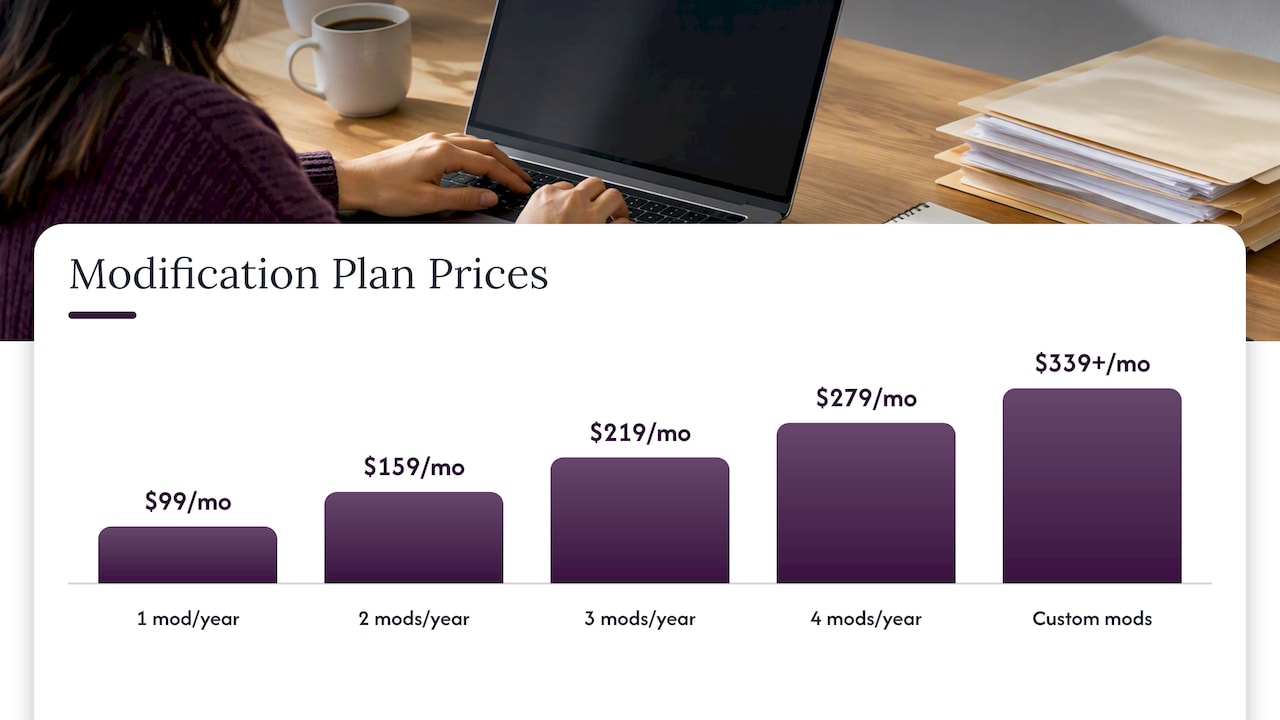
Once awarded, you keep the contract healthy. Our retainer is $1,500 per year, and our modification plans run as follows:
| Plan | Price |
|---|---|
| 1 modification per year | $99 per month |
| 2 modifications per year | $159 per month |
| 3 modifications per year | $219 per month |
| 4 modifications per year | $279 per month |
| Custom number of modifications | From $339 per month |
One-off price list changes, from simple to advanced, are handled through our maintenance proposal page. For ongoing support in general, see our contract management service.
Our terms on the application side: payment comes only after approval, and we offer a money-back guarantee. We report a 98% first-application approval rate, which is our own figure from our client work.
Our perspective: what actually holds new companies back
We have watched many young companies approach the schedule, and the pattern is consistent. The eligibility rules are rarely what stops them. The usual causes are quieter.
The first is treating the offer as paperwork. It is a business case. A contracting officer reads it to decide whether a company with a short history can be trusted with a twenty-year contract vehicle, so every document should support one coherent story about who will do the work and why they can.
The second is a price list built on guesses. Negotiation is where new companies lose months, because they cannot explain why their rates are what they are. Build the logic before you submit.
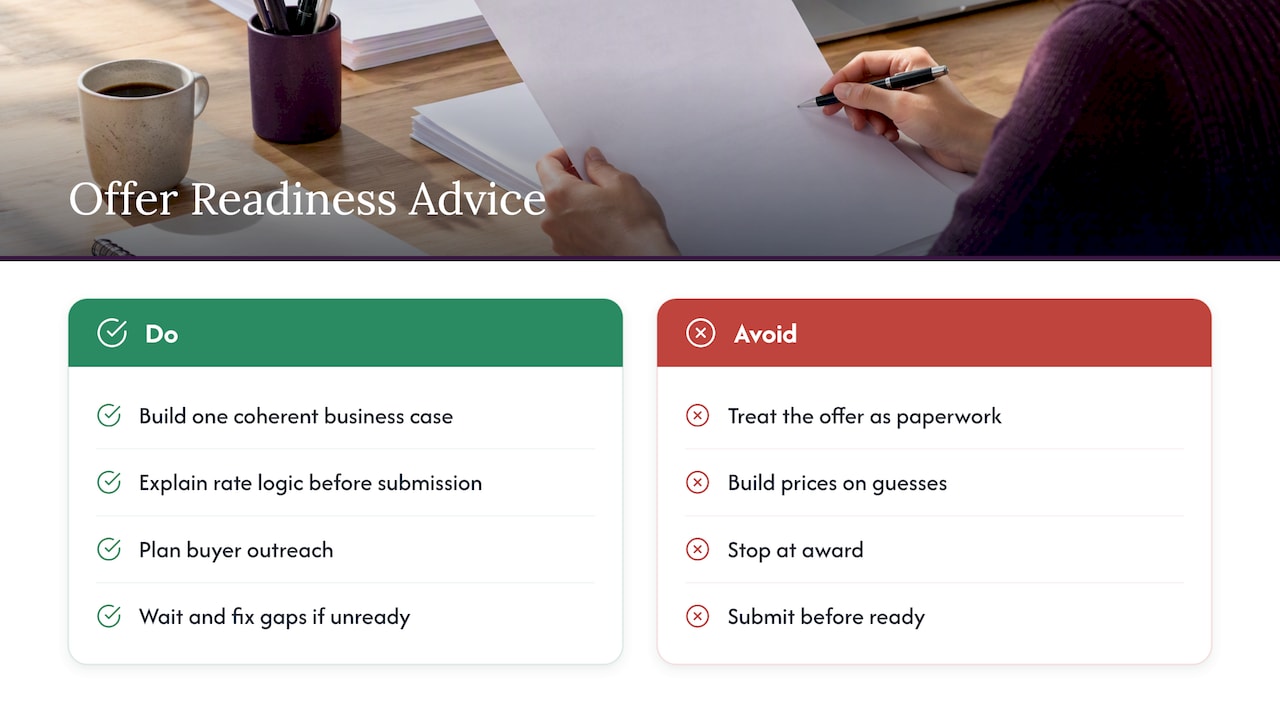
The third is stopping at award. We would rather see a company with a modest schedule and a plan to find buyers than a perfect schedule and no outreach. That is why we pair application support with tracking and marketing, and why we talk about sales on the first call.
Finally, be honest about fit. If you are not close to ready, the right advice is to wait a quarter and fix the gap, not to submit a weak offer that burns your credibility with the reviewer.
— Josh
How do you find out whether your company is ready?
Start with the training and readiness assessment GSA requires anyway, then pressure-test your answers. Our contract readiness assessment guide lists the questions we ask first: what you sell, who has bought it, who can sponsor you, and what financial evidence you can produce.
If you want a second opinion on your eligibility, request a free eligibility check. We will tell you whether you qualify under the standard rule or Startup Springboard, what is missing, and a realistic timeline. If you are not ready, we will say so.
What happens after you win?
Award is the start of the work. After it, you will upload your price list, set up sales reporting and begin marketing. Our post-award checklist covers the first steps in order. Treat the first ninety days as a launch window: tell your sponsor and contacts, post your offering, and track every inquiry.
FAQ
Can a startup with no revenue get a GSA Schedule?
It is possible but harder. Startup Springboard lets companies with less than two years of financial statements apply, and the contracting officer can accept alternative financial documentation such as bank references or a line of credit. You still need FASt Lane qualification and a federal sponsor.
Do I need past performance if my company is new?
The standard rule asks for measurable past performance. Under Startup Springboard, you can lean on the experience of your executives and key personnel rather than only the company’s age. Document the specific projects, customers and results those people delivered.
How long does it take to get on a GSA Schedule?
GSA says the process can take several weeks to months. Our clients are typically awarded in about six months, and many reach award in around 90 days. Companies that apply alone often take two years or more, mostly from rejected or incomplete submissions.
Is a GSA Schedule a guarantee of sales?
No. GSA states that an award does not guarantee future sales, and you need resources to market your offering. Plan outreach, a sponsor relationship and sales tracking from the start.
Sources
- Startup Springboard | GSA
- How to access contract opportunities | GSA
- Roadmap to get a MAS contract | GSA
- Become a Multiple Award Schedule holder | GSA
- Multiple Award Schedule | GSA
- Ways you can sell to government | GSA
- Multiple Award Schedule | Vendor Support Center
- Pathways to Success | GSA
- GSA Expands Schedule Eligibility | Govology
Recommended
- Is a GSA Schedule Right for Your Business?
- How To Qualify for a GSA Schedule
- How to Apply for a GSA Schedule
- GSA Schedule Timeline: Step-by-Step Guide