

Most small business owners assume getting a GSA Schedule contract is basically a long application form. They fill out some paperwork, wait a few weeks, and then start selling to federal agencies. The reality hits hard when they realize the full onboarding process covers mandatory training, SAM.gov registration, a digital certificate, a formal eOffer submission, and a lengthy post-award compliance checklist. Each stage has its own deadlines, documents, and potential rejection points. This guide breaks down every phase so you can enter the process informed, avoid the most costly mistakes, and get operational faster.
Table of Contents
- Understanding GSA Schedule onboarding
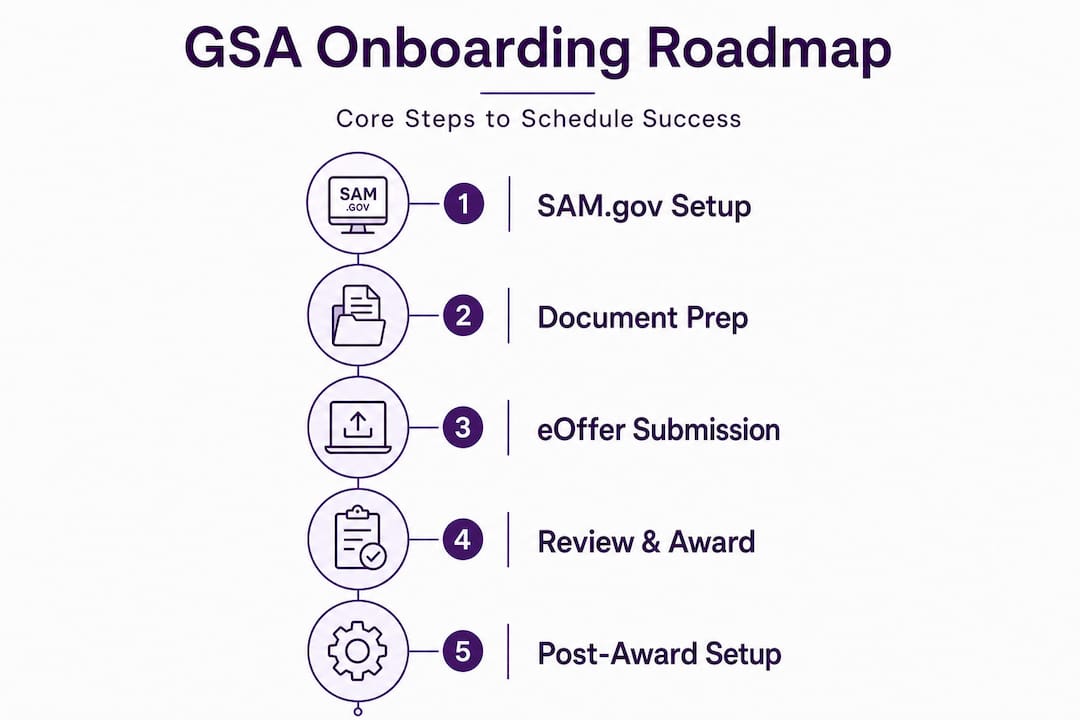
- Step-by-step: The GSA Schedule onboarding roadmap
- Nuances, shortcuts, and common pitfalls
- The critical post-award onboarding actions
- What most guides miss about GSA Schedule onboarding
- How we can help with your GSA Schedule journey
- Frequently asked questions
Key Takeaways
| Point | Details |
|---|---|
| Onboarding is multi-step | GSA Schedule onboarding requires coordinated pre-award, submission, and post-award tasks to sell to the government. |
| Keys to faster approval | Accurate documentation, official GSA checklists, and prompt responses help avoid costly delays in the process. |
| Special paths exist | Programs like Startup Springboard and FASt Lane offer alternatives for certain businesses and faster IT review. |
| Marketing is still essential | Winning a spot on the Schedule does not guarantee sales—active marketing remains crucial for success. |
Understanding GSA Schedule onboarding
GSA Schedule onboarding is the complete journey from deciding to pursue a Multiple Award Schedule (MAS) contract to becoming a fully active, compliant federal vendor. It is not just a single form or portal login. It covers every stage from initial research through post-award activation and ongoing reporting obligations.
The Multiple Award Schedule is the federal government’s primary vehicle for buying commercial products and services. Thousands of agencies use it every year, and the total procurement value runs into hundreds of billions of dollars. If your business wants a reliable piece of that market, getting on the Schedule is the starting point.
Here is what GSA Schedule onboarding actually covers:
- Pre-award preparation: Business eligibility checks, SAM.gov registration, mandatory training, document gathering
- eOffer submission: The formal digital application submitted through GSA’s eOffer portal
- Contracting officer review: Back-and-forth clarification requests, pricing negotiations, compliance checks
- Post-award setup: Vendor Support Center registration, GSA Advantage catalog updates, Sales Reporting Portal enrollment
- Ongoing compliance: Industrial Funding Fee (IFF) reporting, annual reviews, price list maintenance
“GSA Schedule onboarding is not a one-time event. It is a structured sequence of gates, each requiring specific documentation and timely responses. Businesses that treat it as a simple application consistently run into delays and rejections.”
Many companies underestimate the vetting level involved. GSA contracting officers review your pricing methodology, your past performance records, and the specific Special Item Numbers (SINs) you selected. If any piece does not hold up to scrutiny, your application stalls. Understanding that this is an extensive vetting process, not just a form, changes how you prepare and how seriously you take each stage.
Step-by-step: The GSA Schedule onboarding roadmap

Understanding the stages in sequence makes the whole process far less intimidating. Each stage builds on the previous one, and skipping ahead or cutting corners at any point compounds problems downstream.
Here is the complete onboarding sequence:
- Confirm business eligibility: Your business must have been operating for at least two years with proven revenues (with some exceptions, covered below), commercial products or services, and a clean financial record.
- Register in SAM.gov: System for Award Management registration is mandatory for all federal contractors. It must be active and accurate before you submit anything.
- Complete Pathways to Success training: This is a mandatory pre-award requirement that takes roughly 3 to 4 hours. You cannot proceed without the training certificate.
- Obtain a digital certificate: Required for eOffer portal access. Plan ahead because this step alone can take 2 to 3 weeks.
- Select the right SINs: Special Item Numbers define what you can sell under the Schedule. Wrong selections are the single leading cause of rejections.
- Gather all required documents: Pricing templates, past performance narratives, financial statements, corporate experience write-ups, and applicable certifications.
- Build your offer in eOffer: The GSA eOffer process requires careful document uploads with size and format restrictions. Prepare everything offline before you log in.
- Submit and respond to clarifications: After submission, expect multiple rounds of questions from your contracting officer. Response time matters enormously here.
- Negotiate pricing: GSA will review your commercial pricing and may push back. Be prepared to support your rates with documented evidence.
- Award and post-award setup: Once awarded, you have immediate deadlines for VSC registration, catalog uploads, and SRP enrollment.
The table below gives you a realistic sense of timing for each major phase:
| Onboarding phase | Typical duration | Key action required |
|---|---|---|
| SAM.gov registration | 1 to 2 weeks | Submit and verify registration |
| Pathways to Success training | 3 to 4 hours | Complete and save certificate |
| Document preparation | 4 to 8 weeks | Gather pricing, past performance, financials |
| Digital certificate | 2 to 3 weeks | Apply through approved provider |
| eOffer submission and review | 3 to 6 months | Submit offer, respond to clarifications |
| Post-award setup | 15 to 30 days | VSC, SRP, GSA Advantage |
| Total timeline | 6 to 12 months | Active across all phases |
Pro Tip: Never start uploading your eOffer documents without preparing every file offline first. The portal has strict upload limits and no autosave feature. A session timeout mid-upload can force you to restart entirely. Use the step-by-step application guide as your pre-submission checklist. Also review the official GSA pre-award preparation guide before you even begin document gathering.
The Pathways to Success training deserves special attention. Many applicants treat it as a box to check. The smart move is to actually absorb the content. It covers pricing requirements, terms and conditions, and compliance obligations that will directly affect how you build your offer and run your contract. Businesses that skip through it often make avoidable errors in their SIN selection and pricing methodology.
Nuances, shortcuts, and common pitfalls
Following the standard roadmap works for most businesses. But there are specialized pathways and a predictable set of mistakes that you need to know about before you start.
Startup Springboard and FASt Lane
If your business is less than two years old, the standard eligibility rules would normally disqualify you. The Startup Springboard program creates a path for newer companies to pursue MAS contracts by substituting alternative experience evidence for the standard two-year revenue requirement. It requires strong documentation of technical capability and a clear commercial offering.
For IT-focused businesses, the FASt Lane program is a major accelerator. As the program documentation confirms, FASt Lane speeds up the contracting officer review for IT products and services, but it comes with a strict 24-hour response requirement when clarifications are requested. Missing that window removes you from the fast-track queue entirely.
Here is a comparison of your main pathway options:
| Program | Eligibility | Timeline advantage | Key requirement |
|---|---|---|---|
| Standard MAS onboarding | 2+ years in business | None (baseline) | Full document package |
| Startup Springboard | Under 2 years | Enables access, not speed | Alternative experience docs |
| FASt Lane | IT category applicants | Faster review cycle | 24-hour clarification response |
The most common rejection causes
The most frequent GSA onboarding mistakes follow a predictable pattern. Reviewing them now can save you months of delay:
- Wrong SIN selection: Approximately 37% of rejections stem from mismatched SINs. Your selected SINs must precisely match your commercial offerings and capabilities.
- Missing or incomplete documents: A single missing document can halt your entire review. Contracting officers do not chase down information on your behalf.
- Slow clarification responses: When GSA sends a clarification request, every day you take to respond is a day your file sits idle. Some officers will close an offer if responses take too long.
- Pricing inconsistencies: Your proposed prices must be consistent with what you charge your most favored commercial customers. Discrepancies trigger detailed scrutiny and negotiation delays.
- Outdated SAM.gov registration: An expired or inaccurate SAM.gov record stops the process cold. Check it before every major submission.
Also, building and maintaining architectural compliance in your documentation structure matters more than most applicants realize. Federal procurement officers are trained to spot gaps in compliance frameworks, and consistent, well-organized documentation signals professionalism.
Pro Tip: Set a calendar reminder to check SAM.gov renewal 60 days before your registration expires. A lapsed registration during active contract negotiations or post-award reporting can trigger serious compliance issues and even contract termination.
The critical post-award onboarding actions
Getting your MAS contract award is a genuine milestone. But a surprising number of businesses slow down right after the award letter arrives, when they should actually accelerate. The post-award setup phase has hard deadlines, and missing them can delay your ability to sell.
Here is your first 30-day post-award checklist, based on the official post-award requirements:
- Register in the Vendor Support Center (VSC): This is your primary administrative hub for managing contract information. Complete this immediately after award.
- Review the Contractor Start-up Kit: GSA provides an official start-up package covering your specific obligations. Read it in full. It contains compliance requirements you will be held to regardless of whether you read them.
- Submit electronic contract data to GSA Advantage within 30 days: Your product or service catalog must be live on GSA Advantage so agencies can find and buy from you. Missing this deadline delays your ability to generate revenue.
- Register in the Sales Reporting Portal (SRP) within 15 days before your first sales period: The SRP is how you report sales and pay the Industrial Funding Fee. Late registration creates reporting gaps that can jeopardize your contract standing.
- Review your contract terms and conditions: Your specific contract clauses govern pricing modifications, option renewals, and compliance obligations. Know them before your first sale.
The professional services onboarding process has some additional nuances around labor category documentation and pricing that service-based businesses should understand before their first task order.
“Failing to complete post-award setup steps is one of the top reasons new MAS contractors go months without their first federal sale. The contract exists on paper, but the agency cannot find you, buy from you, or pay you correctly until every system is properly configured.”
The IFF reporting obligation catches many new contractors off guard. The Industrial Funding Fee is a small percentage of your sales that you remit to GSA quarterly. It is not optional and not something you can back-fill later. Getting SRP configured correctly from day one protects you from accumulated reporting liabilities.
What most guides miss about GSA Schedule onboarding
Here is the honest truth that most how-to articles gloss over: landing on the GSA Schedule does not guarantee you a single dollar in federal revenue.
We see it consistently. A company invests 9 months and significant resources completing the onboarding process. The award letter arrives. Everyone celebrates. Then six months pass and the contract sits unused because nobody developed a proactive marketing strategy to reach federal buyers.
The Schedule makes you eligible to receive federal purchases through eBuy RFQs, agency direct buys, and task order competitions. It does not make agencies aware of you or inclined to choose you. Federal buyers have hundreds of Schedule vendors to choose from for any given requirement. Your pricing, past performance visibility, and active outreach through eBuy and agency relationship-building determine whether you win work.
Cash flow planning is another area most guides skip entirely. The post-award requirements include ongoing compliance costs: annual modifications, price list maintenance, IFF payments, and system registrations. These obligations continue whether or not you have active sales. Plan your cash reserves accordingly, especially in the first year.
One more thing worth saying directly: the onboarding process is not something to navigate using unofficial guides, outdated forum posts, or generic consulting advice. Always verify requirements against current official GSA sources. Regulations change, forms get updated, and portal requirements shift. Businesses that rely on qualified consultant support alongside official documentation are the ones that avoid compliance surprises later.
The businesses that succeed long-term on the Schedule treat onboarding as the foundation, not the finish line.
How we can help with your GSA Schedule journey
If you want a true competitive advantage throughout your GSA onboarding journey, here is how our expertise can support you.
At GSA Schedule Services, we specialize in guiding small and medium-sized businesses through every stage of the MAS process. From your initial readiness assessment and SIN selection through eOffer preparation, contracting officer negotiations, and post-award catalog setup, our team handles the complexity so you can focus on your business. We have seen every common rejection scenario and know exactly how to position your offer for a clean approval. If you are ready to stop guessing and start moving through the process with confidence, visit our services page to explore how we can accelerate your path to federal revenue.
Frequently asked questions
How long does GSA Schedule onboarding take for most small businesses?
The process typically takes 6 to 12 months from initial preparation through post-award setup, depending on document accuracy and how quickly you respond to contracting officer clarifications.
What is required after receiving a GSA Schedule contract award?
You must register in the Vendor Support Center, complete the Contractor Start-up Kit, upload your catalog to GSA Advantage within 30 days, and enroll in the Sales Reporting Portal within 15 days before your first sales period.
Are there special onboarding pathways for startup companies?
Yes. The Startup Springboard program supports businesses with less than two years of operating history, while FASt Lane accelerates IT category reviews for qualifying technology companies.
What are the most common reasons GSA onboarding applications get rejected?
The leading causes are wrong SIN selection, which accounts for roughly 37% of rejections, along with missing mandatory documents and delayed responses to contracting officer clarification requests.
Recommended
- GSA Schedule Contracts: Your Guide to Success
- Step-by-Step Guide to GSA Schedule Application
- How to Get a GSA Schedule: A Step by Step Guide
- Navigating GSA Contract Vehicles: Your Guide