
Federal procurement is shifting focus toward sustainability, but recent updates in 2025 have adjusted compliance requirements for contractors. Here’s what you need to know:
- GSA Contracts Overview: Simplify federal procurement with pre-approved vendors, but only 4% of small businesses hold these contracts.
- Sustainability Goals: Federal targets include net-zero emissions by 2050 and 100% carbon-free electricity by 2030.
- Policy Changes in 2025:
- Greenhouse gas reporting and EPA product standards like WaterSense and Safer Choice are no longer mandatory.
- Class Deviation CD-2025-05 and GSA Refresh 25 have removed several sustainability requirements.
- What Remains: FAR Part 23 sustainability guidelines still require contractors to prioritize efficient, biobased, and ENERGY STAR products where feasible.
- Resources: Tools like DOE-FEMP and GSA guidance can help contractors align with remaining regulations.
Key Takeaway
Stay updated on evolving requirements to maintain compliance and remain competitive in federal contracting. For small businesses, leveraging services like GSA Focus can simplify this process and ensure adherence to current standards.
Federal Sustainability Requirements for GSA Contractors
Executive Order 14057 and Its Goals
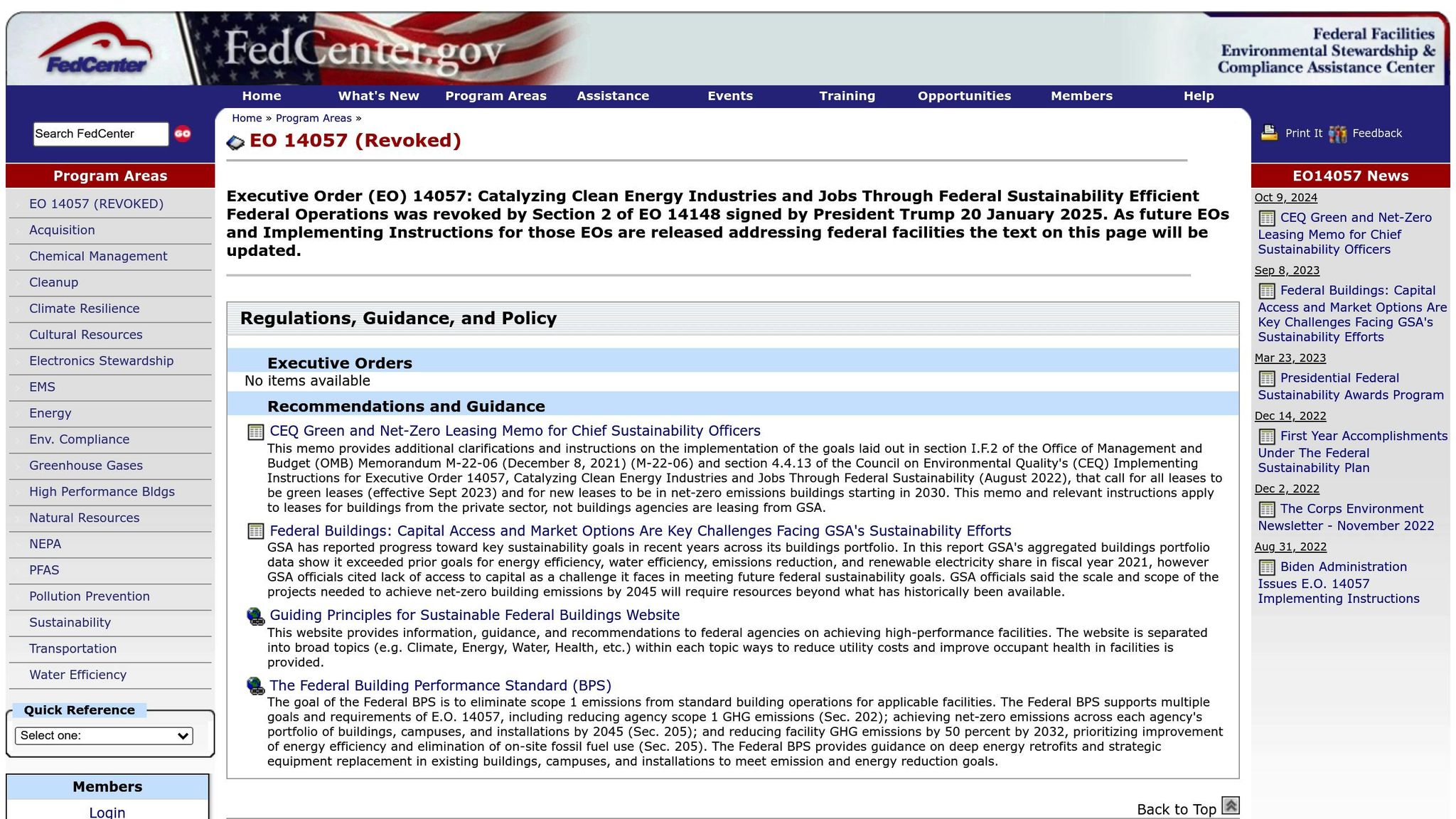
Executive Order 14057 laid out ambitious federal sustainability goals that shaped procurement practices before recent policy changes. It aimed for the federal government to achieve net-zero emissions by 2050 and transition to using 100% carbon pollution-free electricity by 2030, with half of that power available continuously. To align with these goals, the General Services Administration (GSA) updated its P100 Facilities Standards, requiring all new construction over 5,000 gross square feet to be designed for net-zero energy. Additionally, the agency set a target for 40% of building designs to meet this standard by fiscal year 2025.
The GSA also adopted an electrification strategy to reduce on-site fossil fuel consumption by 90% in prospectus projects by FY 2025, aiming for full elimination by FY 2030 if it proves cost-effective over the life cycle. For contractors, these goals translated into stricter renewable electricity requirements. For instance, renewable energy use increased from 50% in FY 2021 to as much as 100% in certain new solicitations by FY 2022. GSA now mandates renewable electricity use and updated building standards in new solicitations, requiring projects to exceed ANSI/ASHRAE/IES Standard 90.1-2019 by 30% and achieve at least LEED Gold certification. These measures are part of a broader effort to achieve steady reductions in energy consumption.
FAR Part 23: Sustainability Guidelines
FAR Part 23 serves as the regulatory foundation for sustainable procurement in federal contracting, including GSA contracts. It requires contracting officers to prioritize sustainable products and services wherever feasible. Key sections – 23.102 (Policy), 23.103 (Procedures), and 23.104 (Priorities) – outline the steps contracting officers must follow to meet these objectives.
For contractors, this means delivering sustainable products and services for government use, incorporating them into construction projects, or acquiring them when they are a direct contract expense. FAR Part 23 enforces requirements for energy efficiency, biobased products, energy savings performance contracts, hazardous material identification, and pollution prevention. Contractors must also comply with standards for biobased products and ENERGY STAR/FEMP-designated products, which remain essential under these regulations. These guidelines provided a framework for the policy updates described below.
Recent Updates to Sustainability Policies
Recent policy changes have adjusted contractor compliance requirements, building upon earlier sustainable procurement guidelines. Notably, Class Deviation CD 2025-05 and GSA Refresh 25 removed some environmental product standards and greenhouse gas tracking requirements. On January 13, 2025, the federal government withdrew a proposed rule that would have required contractors to publicly disclose climate-related information.
As a result, contracting officers can no longer include FAR 52.223-19 (Compliance with Environmental Management Systems) or FAR 52.223-22 (Public Disclosure of Greenhouse Gas Emissions and Reduction Goals Representation) in new solicitations and contracts. Additionally, agencies can no longer require contractors to submit greenhouse gas inventories or emissions reports as a condition of contract awards.
Despite these rollbacks, the GSA’s Federal Acquisition Service continues to refine sustainable procurement practices. Efforts include reducing the greenhouse gas footprint of governmentwide acquisition vehicles, encouraging high-performing contractors to voluntarily disclose emissions and climate risks through the Carbon Disclosure Project (CDP), and issuing national standards for asphalt and low embodied carbon concrete. These adjustments reflect a balance between sustainability goals and evolving federal procurement strategies.
Key Compliance Areas for GSA Contractors
Greenhouse Gas Emissions Reporting
Recent regulatory updates have reshaped how contractors report greenhouse gas emissions. As of February 15, 2025, the introduction of Class Deviation CD-2025-05 and GSA Refresh 25 has removed the previously mandatory requirements for emissions disclosures, setting reduction targets, and tracking progress during contract performance.
While these mandates are no longer enforced, some contractors – particularly those with strong performance and significant sales under Multiple Award Schedules – may still opt to voluntarily disclose emissions and climate-related risks through the Carbon Disclosure Project (CDP). This voluntary reporting can demonstrate a commitment to sustainability, even in the absence of formal requirements.
These changes in emissions reporting tie into broader considerations around sustainable sourcing.
Sustainable Product and Service Sourcing
Federal Acquisition Regulation (FAR) Part 23 continues to emphasize the use of sustainable products and services when specifying government needs, describing requirements, and setting source-selection criteria. Contractors are expected to provide sustainable products when these items are central to the costs of service or construction contracts.
The guiding principle for sustainable procurement is "to the greatest practicable extent." In other words, sustainable alternatives should be pursued unless they cannot be sourced competitively, delivered within a reasonable timeframe, meet performance needs, or are available at a fair price.
Recent updates have also waived certain EPA-certified product standards. While contractors are no longer required to prioritize these specific products, they may still include them if individual contracts specify such preferences. When sustainable procurement isn’t feasible, FAR 23.106 requires contractors to document written justifications. Additionally, contractors are encouraged to focus on multi-attribute sustainable products that meet several environmental criteria whenever possible.
In some cases, agencies may recommend – but not mandate – the procurement of sustainable products and services for defense or recovery efforts against cyber, nuclear, biological, chemical, or radiological threats.
Waste Reduction and Environmental Impact
Waste reduction remains a key focus under federal sustainability strategies, even as some requirements have been streamlined. Contractors are expected to implement measures that minimize waste and support effective environmental management. FAR Part 23 sustainability provisions apply unless specific exemptions are granted or written justifications are provided explaining why sustainable products or services cannot be procured practicably.
For lease acquisitions, Class Deviation CD-2025-06 has removed certain sustainability requirements. However, GSA will continue to meet sustainability obligations outlined in 570.117-2 for lease-related activities. Compliance expectations may vary depending on the type of contract.
Small businesses, in particular, should stay informed about these evolving GSA sustainability policies and class deviations. The regulatory landscape has shifted significantly in 2025, and reviewing Class Deviation CD-2025-05 is essential to understanding which sustainability standards are no longer applicable as of February 15, 2025. Staying proactive in reviewing these changes ensures contractors remain compliant without expending resources on outdated requirements.
Resources and Tools for Meeting Compliance
DOE-FEMP Target-Setting Tools
The Department of Energy’s Federal Energy Management Program (DOE-FEMP) offers practical frameworks to help contractors establish emissions reduction targets and energy performance benchmarks. For example, the General Services Administration’s (GSA) 2022 Sustainability Plan serves as a helpful reference for crafting sustainability strategies.
GSA’s target-setting approach includes performance metrics that contractors can align with their operations. These metrics include a 2.6% annual reduction in energy use per square foot and a requirement for new buildings to perform 30% better than ANSI/ASHRAE/IES Standard 90.1-2019 standards. Additionally, the GSA’s CFE and Renewable Energy Roadmap/Strategic Plan outlines strategies contractors can adopt to tackle emissions reduction efforts effectively. While mandatory greenhouse gas reporting requirements have been removed as of 2025, contractors pursuing voluntary sustainability goals can still take advantage of these established frameworks.
Given the recent policy changes, it’s essential for contractors to confirm the latest DOE-FEMP resources with their contracting officers. Staying updated ensures they’re using the most relevant tools and guidelines. These resources also complement initiatives from the Environmental Protection Agency (EPA) and GSA, which aim to simplify sustainable procurement.
EPA and GSA Resources
The GSA has developed sustainable procurement solutions, including infrastructure for zero-emission vehicle charging. Through its Federal Acquisition Service, the GSA has streamlined sustainable procurement by introducing standardized approaches that make compliance more straightforward.
To further support sustainability, the GSA has expanded its contractor climate risk disclosures through the CDP Supply Chain program. This initiative tracks voluntary submissions and promotes sustainable acquisition practices. Additionally, the GSA has issued national standards for asphalt and low embodied carbon concrete, offering contractors clear guidelines for sourcing materials for federal projects.
However, contractors should be aware of changes coming in February 2025. Certain EPA programs, such as WaterSense, Safer Choice, and the EPA Recommendations of Specifications, Standards, and Ecolabels, will no longer be mandatory under Class Deviation 2025-05. This means contractors must consult with their contracting officers to determine which EPA programs apply to their specific contracts, rather than assuming prior requirements still hold.
To avoid unnecessary compliance efforts, contractors are encouraged to seek clarification during contract negotiations. This proactive approach ensures they focus on the sustainability programs that are still relevant.
Support from GSA Focus
For small businesses, navigating the complexities of sustainability compliance can feel overwhelming – especially with regulations constantly evolving. That’s where GSA Focus comes in. This specialized service helps small businesses manage GSA contract compliance, keeping them informed about regulatory updates that impact sustainability requirements.
GSA Focus takes care of 95% of the paperwork involved in GSA contracts, while also providing advisory support throughout the process. Their expertise ensures small businesses stay compliant by integrating the latest sustainability policy updates into their services. From document preparation to compliance assurance, GSA Focus helps contractors demonstrate their understanding of current regulations and their ability to meet requirements.
The company stays on top of GSA policy updates and Class Deviations, ensuring clients aren’t blindsided by regulatory changes. For small businesses unsure about which sustainability requirements apply to their contracts, GSA Focus offers tailored guidance. Their 98% success rate highlights their ability to navigate even the most complex compliance challenges.
With a refund guarantee and a secure online system for document uploads, GSA Focus simplifies the process and reduces the time investment for small businesses. For those looking to align sustainability compliance with their overall GSA contract strategy, scheduling a consultation with GSA Focus can provide clarity and ensure the right tools and resources are utilized for their specific needs.
Conclusion
Key Takeaways
In 2025, two major policy updates – Class Deviation CD-2025-05 (effective February 15, 2025) and GSA Refresh 25 – brought changes to federal procurement requirements. These updates waived specific regulations related to WaterSense, Safer Choice, EPA specifications, and greenhouse gas emissions reporting.
However, sustainable procurement rules still apply when products are delivered to the government, used for government purposes, incorporated into public buildings, or charged as direct costs to government contracts. For small businesses, this means navigating which requirements remain in place and which have been waived, avoiding unnecessary compliance efforts while staying aligned with federal expectations.
The General Services Administration (GSA) has a strong track record in sustainability – achieving a 51% cut in building-related emissions by FY2021 and targeting 100% carbon pollution-free electricity by 2030. This highlights that sustainability continues to be a driving factor in procurement decisions. Contractors who prioritize sustainability not only ensure compliance but also showcase their operational efficiency and risk management capabilities, traits that resonate with federal agencies. Staying informed and proactive about policy changes can also give businesses a competitive advantage.
To support contractors, various resources are available, such as DOE-FEMP tools, GSA guidance materials, and the Vendor Support Center. But given the fast-changing regulatory environment, businesses must verify current requirements rather than relying on outdated standards.
Next Steps for Small Businesses
For small businesses, now is the time to take clear and decisive action. Start by thoroughly reviewing GSA Refresh 25 and Class Deviation CD-2025-05 to pinpoint which requirements have been waived and which remain in effect. Update your contract language to reflect these changes and remove any outdated compliance obligations.
Ensure that your products and services meet essential federal criteria, including reasonable performance standards, competitive pricing, and feasible delivery schedules. Take the time to document your sustainability efforts and implement systems to monitor compliance, especially for products provided to the government or used in construction projects.
Stay connected with GSA updates by subscribing to their communication channels and regularly checking buy.gsa.gov for the latest information. Consider setting up a quarterly review process to adjust your compliance strategies as regulations evolve.
Balancing regulatory compliance with daily operations can be overwhelming. Services like GSA Focus can simplify GSA Schedule Contract management, offering full-service support and a proven 98% success rate to help businesses prepare for future policy changes.
The federal contracting environment will keep shifting. By staying informed, adapting quickly, and seeking expert advice when necessary, your business can thrive in this evolving landscape. Take this opportunity to assess your compliance status, update your processes, and build a framework that allows your operations to respond effectively to future regulatory developments.
Sustainable Procurement A Closer Look at the New Federal Acquisition Regulation FAR
FAQs
What are the upcoming sustainability requirements for GSA contractors in 2025, and how will they affect compliance?
The General Services Administration (GSA) has revealed new sustainability requirements for contractors, set to take effect in 2025. These updates reflect the federal government’s ongoing push to minimize environmental impact and encourage sustainable practices in its contracts.
Under these updated guidelines, contractors will need to take actionable steps, including reducing greenhouse gas emissions, adopting energy-efficient methods, and adhering to updated recycling and waste management policies. Meeting these standards will likely require businesses to evaluate their current operations and integrate practices that align with these stricter rules.
For small businesses, adjusting to these changes might feel daunting. However, specialized support services, such as those provided by GSA Focus, can help simplify the compliance process and prepare businesses for a smooth transition.
What steps can small businesses take to comply with updated sustainability regulations in GSA contracts and stay competitive?
To align with the updated sustainability regulations in GSA contracts, small businesses should make a conscious effort to incorporate eco-friendly practices into their daily operations. This might involve using energy-efficient technologies, cutting down on waste, and opting for materials that have a lower environmental impact whenever feasible. Staying up-to-date with the latest federal sustainability initiatives and changes to GSA policies is equally important to ensure compliance.
Navigating these requirements can be challenging, but seeking professional guidance can make the process smoother. Meeting these standards doesn’t just ensure compliance – it can also position small businesses as strong contenders in the expanding market for environmentally responsible products and services.
What tools and resources are available to help contractors comply with sustainability requirements in federal procurement?
Contractors have access to several tools and resources to align with federal sustainability standards. The General Services Administration (GSA) offers valuable support through its Sustainable Facilities Tool and other online platforms. These resources are designed to help contractors grasp and apply eco-friendly practices in their operations effectively.
On top of that, the Federal Acquisition Regulation (FAR) outlines specific sustainability requirements, such as using energy-efficient products and adopting waste reduction strategies. It’s essential for contractors to review these regulations thoroughly to ensure compliance.
For small businesses that might need extra guidance, services like GSA Focus can be a game-changer. They provide comprehensive support, helping businesses manage documentation, understand regulations, and meet federal sustainability standards with ease.
Related Blog Posts
- Regulatory Requirements for Federal Contracts
- Energy Efficiency Standards in GSA Contracts
- Performance Metrics for Sustainable GSA Contracts
- FAR Sustainability Rules: 2025 Amendments Explained