
The federal government spends billions annually on IT services, with GSA Schedule Contracts serving as a key entry point for businesses. In 2023, $45 billion in transactions flowed through this program, yet only 4% of small businesses hold these contracts. For IT providers, this means untapped opportunities to secure steady, government-backed revenue with less competition.
Here’s a quick breakdown of the process:
- What is a GSA Schedule Contract?
It’s a pre-negotiated agreement that simplifies federal IT procurement, covering areas like cloud computing, cybersecurity, and software development. - Why It Matters for Small Businesses:
Contracts provide predictable income, reduced competition (44% of awards receive just one bid), and long-term stability. - Steps to Apply:
- Register on SAM.gov to get a Unique Entity ID.
- Meet eligibility requirements (financial stability, compliance, etc.).
- Submit a proposal with administrative, technical, and pricing documents.
- Go through compliance checks, negotiations, and approval.
- Post-Award Management:
Promote your services to federal agencies, maintain compliance, and manage quarterly reporting.
While the process can take 3–12 months, the rewards – consistent revenue and access to a $45 billion market – make it worthwhile. For small businesses, expert guidance can simplify the journey and maximize success.
GSA Contracts Step by Step in 2025
Preparing for the GSA IT Services Contract Application
Getting a GSA Schedule Contract starts with solid preparation. This means ensuring your business meets eligibility requirements, gathering the necessary documents, and staying informed about procurement updates. By laying this groundwork, the application process becomes much smoother.
Eligibility Requirements for GSA Schedule Contracts
Before diving into the application process, your business needs to meet specific criteria set by the GSA. Here’s what you’ll need:
- Financial Stability: Submit audited financial statements to show your company is on solid financial ground.
- Operational History: Your business must have at least two years of operational experience to demonstrate stability and expertise.
- Proven Performance: Provide evidence of past IT service projects that highlight your capabilities.
- Compliance Standards: Ensure your business adheres to federal procurement regulations, including FAR (Federal Acquisition Regulation) and TAA (Trade Agreements Act).
- Mandatory Training: Complete the Pathways to Success Training and Readiness Assessment.
- SAM Registration: Maintain an active registration in the System for Award Management (SAM), with a valid Unique Entity ID and the correct NAICS codes for your services.
These requirements set the foundation for a successful application.
Required Documents for Application
The GSA Schedule application is divided into three main sections: Administrative, Technical, and Pricing. Each requires specific documents to complete.
- Administrative Documents:
- A cover letter introducing your business and highlighting your IT capabilities.
- An agent authorization letter if you’re working with a consultant.
- Financial statements to demonstrate your company’s stability.
- Your SAM registration certificate, and if applicable, a small business subcontracting plan.
- Technical Documents:
- A corporate experience narrative detailing your company’s history, key personnel, and expertise.
- A quality control narrative explaining how you ensure successful project outcomes.
- Past performance documentation, including summaries of completed projects from the last two years (or at least one year for ongoing projects).
- Pricing Documents:
- A commercial pricelist showing the rates you charge private-sector clients for similar IT services.
- Pricing support documentation to justify your proposed GSA rates.
- A Commercial Sales Practices Form, if required.
Having all these documents in order ensures your application is complete and ready for submission.
How to Review GSA Schedule Solicitation and Updates
Once your documents are ready, it’s crucial to stay on top of solicitation requirements, which can change over time. The GSA eLibrary is your go-to resource for the latest solicitation documents, including details on Special Item Numbers (SINs), pricing structures, and technical specifications for IT services.
Additionally, the GSA solicitation portal provides application guidance, sample documents, FAQs, and updates through Mass Modifications. These broad updates can impact contract terms, compliance standards, or pricing structures, so reviewing them regularly is essential.
Keep in mind that updates to the FAR may introduce new compliance requirements, particularly in areas like cybersecurity, data protection, and cloud computing. To stay ahead, consider subscribing to GSA update notifications to receive alerts about any significant changes that could affect your application.
Step-by-Step GSA IT Services Contract Application Process
Registering in SAM.gov and Getting a Unique Entity ID
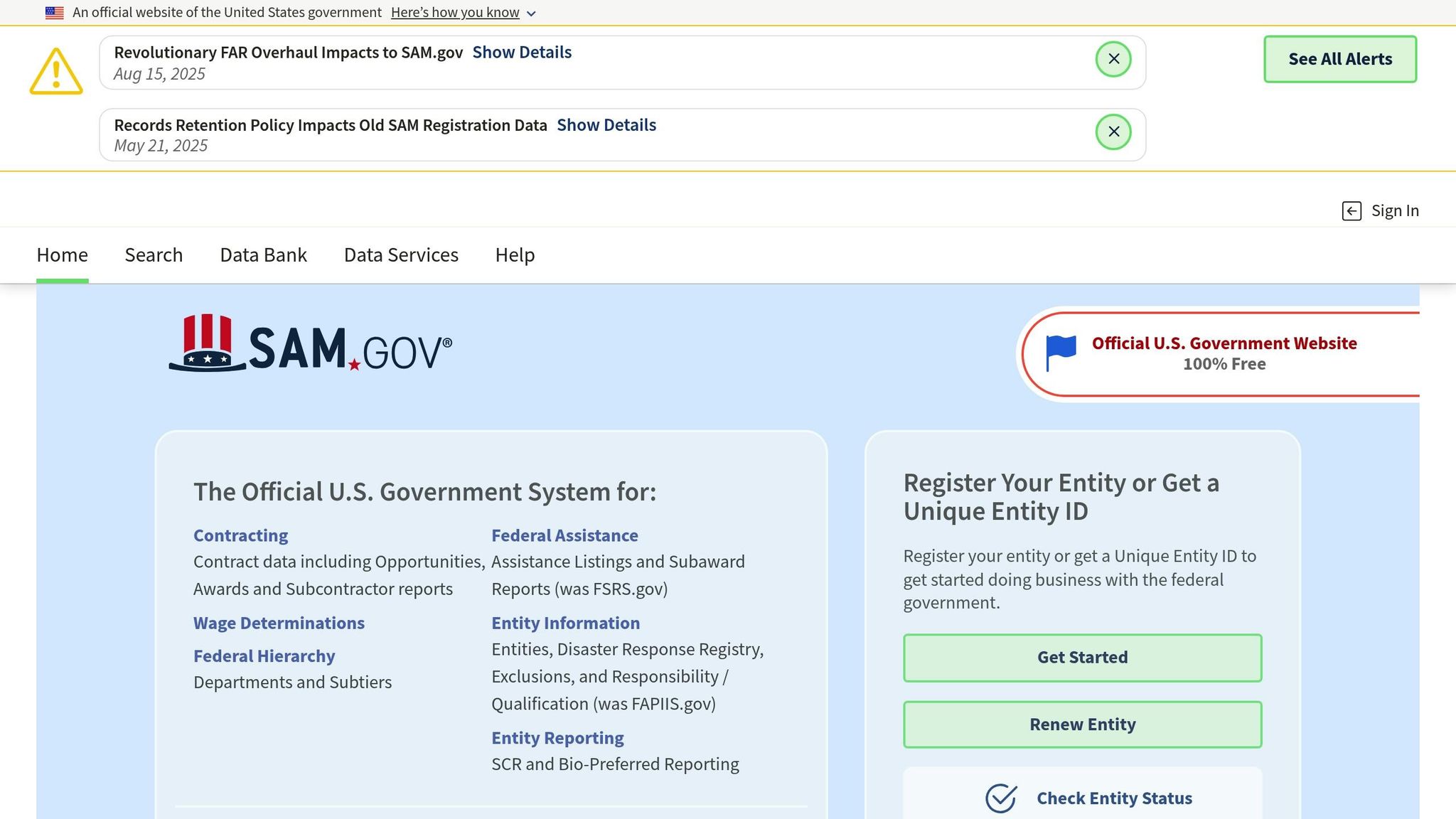
If you’re planning to apply for a federal contract, including a GSA Schedule contract, your first step is to register your business on SAM.gov. This is the official platform where businesses can register with the U.S. Government and obtain a Unique Entity ID (UEI), which is essential for the process.
To get started, head to SAM.gov and click on the "Get Started" button prominently displayed on the homepage. The site provides several helpful tools, including a video tutorial titled "How to get a Unique Entity ID in SAM.gov" and a detailed FAQ section designed to simplify the registration process.
Compliance, Negotiation, and Approval Process
Once your proposal is submitted, the next steps revolve around compliance checks, negotiations, and securing final approval. At this stage, a GSA Contract Specialist (CS) or Contracting Officer (CO) will take the lead, meticulously reviewing your submission for accuracy, completeness, and alignment with GSA and Federal Acquisition Regulation (FAR) guidelines.
Meeting GSA and FAR Standards
The CS or CO will examine your proposal’s administrative, technical, and pricing sections, while specialized GSA teams review financial statements and subcontracting plans. A key requirement is publishing an Authorized Federal Supply Schedule Pricelist, among other regulatory obligations.
Delays often stem from common pitfalls like incomplete or inconsistent documentation, discrepancies between your SAM registration and proposal, or insufficient technical narratives. First-time applicants are particularly vulnerable to these issues, which can result in extended review times – or worse, outright rejection. This highlights why submitting a thorough and accurate proposal from the start is essential.
Navigating Pricing and Terms Negotiations
Negotiations are a routine part of the GSA process, with the primary goal of ensuring your pricing is fair and reasonable. Contracting Officers rely on market research and comparisons with similar contracts to benchmark your rates against industry standards.
To prepare, begin market research early and compile detailed documentation to support your pricing. This includes escalation rates, labor categories, and service descriptions. Transparency about your commercial rates is vital, but so is flexibility – be ready to adjust terms to align with GSA standards while safeguarding your business interests.
Discussions may cover GSA rates, escalation clauses, labor standards, and service descriptions. Depending on the CO’s preference, these negotiations might take place over email or virtual meetings. Having well-organized pricing documentation at hand can make this process smoother and help justify your rates effectively.
Final Approval and Contract Completion
The approval timeline can vary widely, typically ranging from 3 to 12 months, depending on the complexity of your proposal and the speed of responses. IT-related offers may progress more quickly, but delays are common if documentation is incomplete or multiple rounds of clarifications are needed.
After negotiations conclude and compliance is verified, you’ll submit a Final Proposal Revision (FPR) reflecting all agreed-upon changes. The CO will review this final version before issuing the contract award. Once approved, you’ll receive an electronic notification and must review and sign the contract through the eOffer portal.
Before signing, carefully review all contract terms, including pricing, escalation clauses, and compliance requirements. Address any concerns with the CO promptly, as making changes becomes far more challenging after the contract is finalized. The process concludes with the issuance of a Standard Form (SF) 30, which includes your new contract number. Be sure to retain your Final Proposal Revision for future reference.
The growing complexity of federal contracting, influenced by updated FAR guidance and recent executive orders, has added layers to the GSA MAS offer process, often extending review times. For small businesses, navigating this landscape can be particularly daunting, making professional guidance invaluable. Once your contract is awarded, the focus shifts to effective post-award management.
Post-Award Management and Working with GSA Focus
Once your GSA IT Services contract is awarded, the real work begins: managing your contract effectively to turn federal opportunities into steady revenue. Securing the contract is just the starting line. To thrive in the federal marketplace, you need a solid post-award strategy that combines disciplined management with targeted marketing.
Marketing Your IT Services to Federal Agencies
A GSA Schedule contract doesn’t automatically translate to sales. You have to actively promote your services to federal agencies. Think of your GSA Advantage listing as your storefront – it’s where agencies search for IT solutions. To stand out, your service descriptions need to be detailed and your pricing competitive. These elements help boost your visibility and attract government buyers.
Another key platform is GSA eBuy, which allows you to respond to Requests for Quotations (RFQs) from agencies looking for specific IT services. Pairing your GSA Advantage presence with outreach at GSA-sponsored events can help you build relationships that lead to repeat business.
For contractors already holding GSA contracts, specialized marketing support can make a big difference. Professional GSA marketing services help you navigate the unique challenges of marketing to federal agencies, ensuring your efforts are focused and effective.
Staying Compliant with GSA Contract Requirements
Post-award compliance is a critical part of managing your GSA contract. It requires consistent attention to several responsibilities. For example, you’ll need to report your sales quarterly through GSA’s portal and pay the Industrial Funding Fee (IFF) of 0.75% on those sales. Missing these deadlines can result in penalties, including contract suspension or termination.
Keeping your pricing and service information up to date is another ongoing task. Any changes – whether to your business structure, pricing, or service offerings – must go through the GSA eMod system for approval by your Contracting Officer. Without this approval, changes can’t be implemented.
Additionally, you’re required to maintain sales, pricing, and correspondence records for at least three years to comply with audit requirements. Regular internal reviews can help you catch and address potential compliance issues before they become problems.
"Dealing with compliance… Hiring lawyers, googling 1,000 things a day, etc." – GSA Focus
Staying on top of compliance can feel overwhelming, especially for small businesses that may not have dedicated resources for regulatory updates. That’s where expert support becomes invaluable.
How GSA Focus Can Simplify Contract Management
Balancing GSA contract management with running your business can be a major drain on time and resources. This is where GSA Focus steps in, offering comprehensive post-award support so you can concentrate on delivering your services.
Their services include everything from preparing and submitting contract modifications to monitoring compliance deadlines and handling quarterly reporting. By taking these tasks off your plate, GSA Focus frees up hours each week, allowing you to focus on what you do best.
When agencies request pricing adjustments or contract changes, GSA Focus provides experienced negotiators to ensure your rates remain fair while meeting government standards.
"We’ll be there with you, on-call, as your authorized negotiator, to make sure you get the prices your Small Business deserves." – GSA Focus
Consider the story of a small IT services firm that partnered with GSA Focus. By outsourcing their sales reporting, contract modifications, and GSA Advantage listings, the firm saw a 30% increase in federal sales within a year. They also passed a GSA audit with no findings, proving the value of expert guidance.
GSA Focus boasts an impressive 98% success rate, thanks to their systematic approach. Their secure online platform simplifies document uploads and tracking, while their advisory services help you navigate regulatory changes without disrupting operations.
"Enjoying advisory support and training at all stages of the process…eliminating all risk." – GSA Focus
Conclusion: Opening Federal Opportunities with GSA IT Services Contracts
Securing a GSA Schedule Contract for IT services unlocks access to a $45 billion federal IT services market. The process, while detailed, is structured around key steps: registering on SAM.gov, compiling thorough documentation, submitting a proposal, meeting compliance requirements, and managing post-award obligations.
Although the timeline for obtaining a contract can span from 3 to 12 months, the rewards are undeniable. GSA contracts provide entry into a market with lower competition – around 44% of government awards receive only one bid – offering IT service providers a chance to secure steady revenue streams.
That said, the journey is not without its challenges. The paperwork alone can exceed 100 pages, and keeping up with evolving compliance standards can be daunting. Small businesses often face hurdles in understanding eligibility, preparing accurate documentation, and navigating negotiations effectively.
This is where expert guidance becomes a game-changer. GSA Focus, for instance, boasts a 98% success rate, helping clients complete the process 4–6 times faster. On average, their clients see $927,000 in additional revenue and an 87× return on investment, with 57% of those clients being new to government contracting.
The federal IT services market offers immense potential. With only 4% of small businesses currently on GSA Schedules, the door is wide open for IT providers to tap into stable, long-term revenue opportunities. For those looking to expand beyond commercial markets, a GSA Schedule Contract is not just an option – it’s a strategic move.
The first step is often the hardest, but it’s also the most important. Don’t let the complexity of the process hold you back from this significant growth opportunity.
FAQs
What advantages can small businesses gain from securing a GSA Schedule Contract for IT services?
Securing a GSA Schedule Contract for IT services can be a game-changer for small businesses. Here’s why:
- Less competition: GSA contracts create a more focused marketplace, reducing the number of competitors compared to traditional procurement routes. This gives your business a better chance to stand out.
- Quicker sales process: Federal agencies often choose GSA contracts because they simplify purchasing. This means transactions can move faster, saving time for both parties.
- Steady revenue streams: With pre-negotiated pricing and long-term agreements, businesses can count on consistent sales, making financial planning much more predictable.
For small businesses aiming to grow in the IT services sector, this contract can unlock federal opportunities and provide a solid foundation for success.
What steps should small businesses take to meet the eligibility requirements for a GSA Schedule Contract?
To qualify for a GSA Schedule Contract, small businesses need to focus on preparation and meeting compliance standards. First, ensure your business has been operating for at least two years and has solid financial health. It’s also crucial to showcase your track record by providing references or documentation of successfully completed projects.
Next, gather all required paperwork, such as financial statements, pricing details, and certifications like your SAM (System for Award Management) registration. Pay close attention to the solicitation requirements for your specific IT services category, making sure your offerings match the government’s needs. Following these steps can simplify the process and boost your chances of getting approved.
How can I effectively market my IT services to federal agencies after obtaining a GSA Schedule Contract?
After landing a GSA Schedule Contract, the next step is effectively marketing your IT services to federal agencies. The GSA offers powerful tools to help you connect with potential buyers and showcase your offerings.
Start by tapping into platforms like GSA eBuy, where you can respond to government RFQs (requests for quotes), and GSA Advantage!, which acts as a storefront for your services. These platforms make it easier for federal buyers to find and evaluate what you bring to the table.
Networking is another key strategy. Build connections with agency procurement officers by attending government contracting events and industry meetups. Make sure your marketing materials and proposals prominently feature your GSA Schedule status – it’s a mark of compliance and reliability that federal buyers value.
Finally, stand out by clearly communicating your pricing, capabilities, and track record. In a competitive marketplace, transparency and a strong presentation of your past performance can make all the difference.
Related Blog Posts
- How to Access GSA Small Business Support Programs
- 5 Steps to Meet GSA Prequalification Standards
- Ultimate Guide To GSA Contracting Results
- Selling Services via GSA Schedule: A Complete Walkthrough