

Building a GSA vendor brand is essential for businesses aiming to succeed in federal contracting. With the GSA Schedule program facilitating $45 billion in transactions annually and only 4% of small businesses holding GSA Schedules, the competition for federal contracts is fierce. A strong GSA brand not only increases visibility but also establishes trust and positions you as a reliable partner for government buyers. Here’s a quick guide:
- Federal Brand Foundation: Craft a mission statement aligned with government priorities, tailor messaging to your GSA classifications, and gather key credentials like certifications, past performance, and compliance records.
- Clear Messaging: Focus on measurable results and compliance, avoiding vague claims. Ensure your marketing aligns with GSA advertising rules.
- Optimize GSA Platforms: Maintain accurate profiles on SAM.gov, GSA eLibrary, and GSA Advantage! to showcase your offerings effectively.
- Integrate with Marketing: Highlight your GSA status on your website, social media, and marketing materials while adhering to federal regulations.
- Regular Updates: Keep profiles current, track performance data, and stay informed about changing GSA rules to maintain credibility.
GSA Contracts Step by Step in 2025
Step 1: Build Your Federal Brand Foundation
To establish yourself as a credible partner for federal buyers, you need a solid federal brand foundation. This foundation relies on three main components: a mission statement tailored to government priorities, messaging that aligns with your GSA Schedule classifications, and credentials that validate your capabilities. These elements lay the groundwork for the targeted messaging and platform strategies discussed in later steps.
Craft a Mission Statement That Speaks to Federal Buyers
A generic statement like "We revolutionize industry solutions" won’t resonate in the federal market. Instead, consider something more relevant, such as:
"We deliver reliable, compliant solutions that help federal agencies achieve their missions on schedule and within budget."
Your mission statement should reflect federal priorities like consistent performance, risk reduction, and cost efficiency. Federal buyers are laser-focused on meeting agency goals within strict timelines and budgets. To connect with them, your message must directly address these concerns.
When developing your value proposition, emphasize measurable results such as improved efficiency, reduced risks, or controlled costs. Avoid vague claims or superlatives – federal buyers value concrete, actionable benefits that align with their agency’s objectives.
Align Your Brand Messaging with Your GSA Schedule

Your GSA Schedule classifications, organized by Special Item Numbers (SINs) and NAICS codes, determine how federal buyers find your products or services on platforms like GSA Advantage! and the GSA eLibrary. These classifications are crucial for visibility.
Start by researching SINs and NAICS codes that accurately represent your offerings. Use the GSA eLibrary to analyze existing competitors in your category and identify gaps. This research helps you tailor your messaging to highlight your strengths. The GSA Multiple Award Schedule program includes hundreds of SINs across various industries, so you can precisely match your offerings to federal needs.
Ensure your messaging aligns with the capabilities tied to your classifications. For instance, if your services fall under a cybersecurity SIN, focus on security certifications, compliance expertise, and threat mitigation rather than general IT solutions. Consistency across platforms is critical – your branding should seamlessly connect your SAM.gov profile (with compliance and registration details), GSA eLibrary listings (highlighting your capabilities), and GSA Advantage! product descriptions.
Compile Your Federal Credentials
Federal buyers depend on verifiable credentials to gauge a vendor’s reliability. Here’s what you’ll need:
- Registration and Identification: Register on SAM.gov and secure a Unique Entity Identifier (UEI) to be eligible for federal contracts, including a GSA Schedule.
- Small Business Certifications: Certifications like 8(a), Woman-Owned Small Business (WOSB), Service-Disabled Veteran-Owned Small Business (SDVOSB), and HUBZone can significantly enhance your credibility. For context, as of 2021, the federal government allocated over $600 billion annually to contracts, with a goal of awarding at least 23% of prime contract dollars to small businesses.
- Past Performance References: Provide documentation of past projects, such as CPARS ratings or commercial references, to demonstrate your ability to deliver on time and within budget.
- Financial Documentation: Prepare financial statements, customer lists, and invoices to showcase your capacity for handling long-term federal contracts.
- Industry Certifications and Compliance Records: Depending on your field, this could include ISO certifications, security clearances, or quality management documentation. These credentials demonstrate that you meet federal standards and can effectively manage government requirements.
Organize all these credentials in a centralized system to streamline updates to your profiles, proposal submissions, and compliance audits. A well-documented foundation not only enhances your credibility but also ensures you can back up every claim you make.
Step 2: Create Clear and Compliant Messaging
Federal buyers demand proof – proof of timely delivery, budget adherence, and measurable results. To meet these expectations, your messaging must move away from the typical commercial marketing language and focus on compliance, reliability, and outcomes that are easy to verify.
It’s also essential to align your messaging with GSA advertising rules. While you can’t claim government endorsement or preference, you can still craft language that sets you apart in a competitive marketplace. Here’s how to speak directly to federal audiences while staying within the boundaries of GSA regulations.
Write Messaging That Speaks to Federal Priorities
Federal positioning statements should be concise, specific, and results-oriented. Skip vague phrases like "industry-leading solutions" and focus on measurable points that procurement officers can evaluate. Highlight concrete differentiators such as delivery timelines, cost savings, certifications, or documented past performance.
For instance, instead of saying, "We offer innovative solutions", craft a statement like:
"Delivers 30% cost savings compared to commercial pricing with 99.9% uptime compliance with federal standards."
This example is backed by measurable claims that address federal priorities: cost efficiency and reliability. Commercial buzzwords don’t resonate with government buyers – they’re looking for hard facts and verifiable benefits.
Tailoring your messaging to specific federal stakeholders is also critical:
- Procurement officers care most about compliance, competitive pricing, and vendor reliability.
- Program managers evaluate technical capabilities and your past performance on similar projects.
- End-users prioritize usability, training support, and consistent reliability in day-to-day operations.
By addressing these distinct concerns with concrete, verifiable claims, you’ll create messaging that resonates with each group.
To refine your positioning, research your GSA Schedule category through resources like the GSA eLibrary. Analyze competitor offerings to identify gaps or advantages that matter to federal buyers. Your differentiators could include faster delivery times, documented cost savings, unique certifications, or specialized expertise in solving government-specific challenges.
Don’t forget to embed compliance details into your messaging to show you’re ready to meet federal requirements. For example, if your industry demands compliance with standards like FISMA for IT services or HIPAA for healthcare, make sure to include these credentials. Always back your claims with documentation – GSA may request customer lists, invoices, or pricing details during negotiations.
Once your federal-focused messaging is clear, the next step is ensuring it adheres to GSA’s strict advertising rules.
Stay Within GSA Advertising Guidelines
After crafting your messaging, it’s critical to ensure it complies with GSA advertising standards. The GSA Schedule Acquisition Regulation (GSAR) 552.203-71 imposes strict limits on how you can promote your GSA contract status. For example, you cannot imply government endorsement or preference in any of your marketing materials.
Avoid phrases like "government-approved", "preferred by federal agencies", or "trusted by the government." These restrictions apply across all platforms – your website, social media, email campaigns, and printed materials. Violations can lead to serious consequences, including contract termination or removal from GSA platforms.
Instead, stick to acceptable language such as:
- "GSA Schedule holder"
- "Available through GSA Advantage!"
- "Listed on GSA eLibrary"
If you’re a current Multiple Award Schedule (MAS) contract holder, you may use certain GSA logos in your marketing materials, but only within strict guidelines. For example, you can display the logo on your website to indicate your GSA Schedule status or include it in proposals to federal agencies. However, the logo must never suggest government endorsement of your products or services. Confirm the latest logo usage policies with the GSA, as they’re updated periodically.
Focus your messaging on what you can substantiate: GSA Schedule availability, specific capabilities, cost savings, delivery timelines, compliance with federal standards, and past performance metrics. Instead of implying endorsement, highlight your strengths with concrete proof. For example:
"Serves 15 federal agencies with a 98% customer satisfaction rating and full compliance with federal security standards."
This approach builds trust without stepping outside GSA’s advertising regulations. Remember, while the GSA provides the platform, it’s up to you to market your Multiple Award Schedule contract effectively. Be transparent about pricing, demonstrate your ability to scale for government demand, and emphasize the measurable results you’ve achieved in previous engagements.
Step 3: Set Up Your Brand on GSA Platforms
Now that you’ve nailed down your messaging and credentials, it’s time to establish your presence on key federal platforms like SAM.gov, GSA eLibrary, and GSA Advantage!. These platforms are essential tools for federal buyers to verify vendor credentials and assess capabilities. By creating accurate and up-to-date profiles, you not only boost your credibility but also make it easier for agencies to consider your business for contracts. Think of this step as aligning your federal identity with buyer expectations, paving the way for smoother contracting opportunities.
Consistency is key. Keeping your profiles updated across all GSA platforms strengthens your brand identity and builds trust with government buyers. Since buyers often cross-check vendor information, a cohesive presence can make all the difference.
Complete Your SAM.gov and GSA eLibrary Profiles
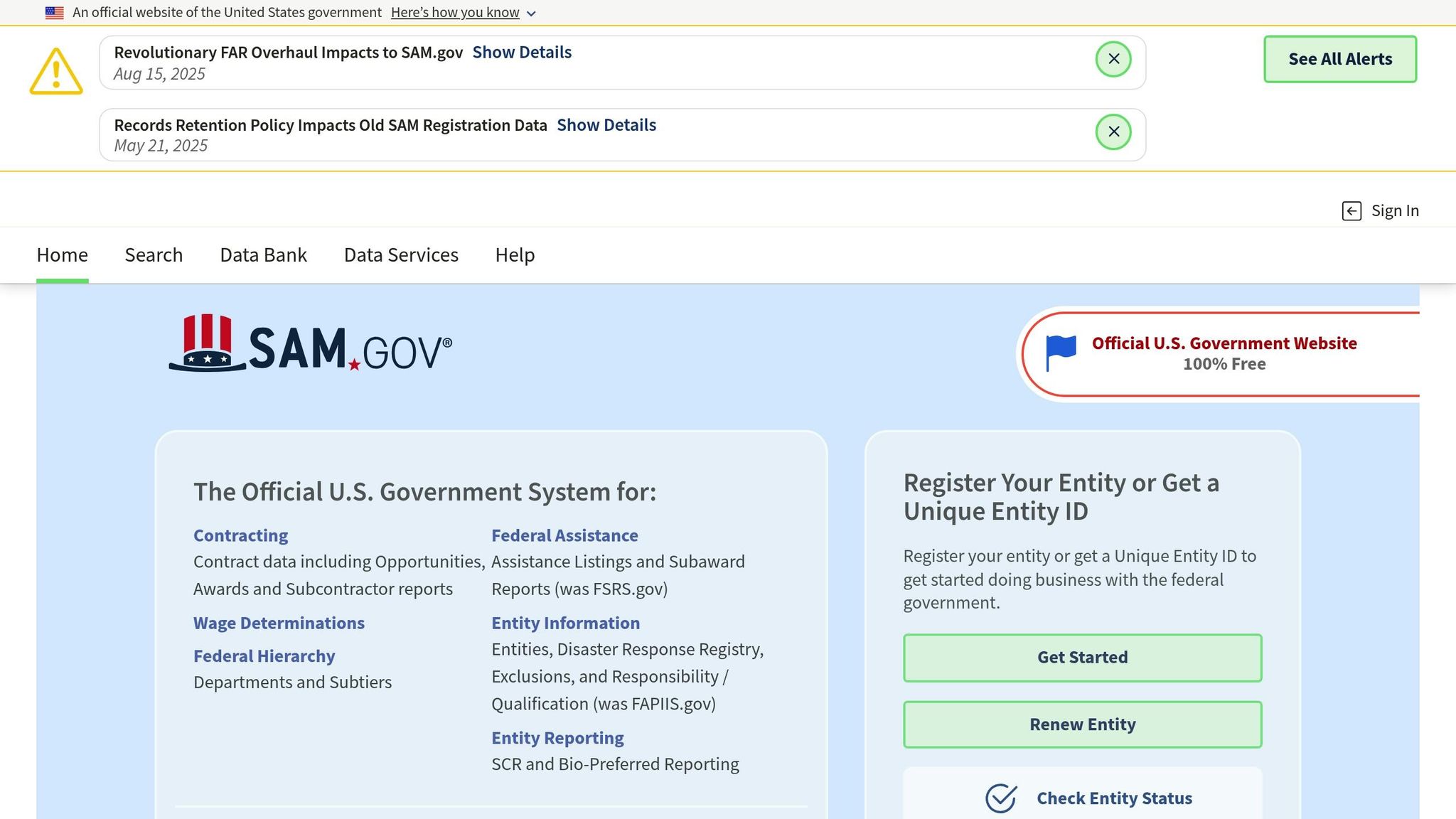
SAM.gov is the cornerstone of your federal identity. This profile includes critical details like your legal business name, Unique Entity Identifier (UEI, which replaced the DUNS number), NAICS codes, and contract status. Federal buyers rely on this information to verify your credentials, so even small discrepancies – like a mismatch in your business name – can cause unnecessary delays.
To avoid issues, keep your contact information current and set an annual reminder to renew your SAM.gov registration.
Your GSA eLibrary profile, which pulls its foundational data from SAM.gov, requires additional details tailored to your GSA Schedule contract. Federal buyers frequently search the eLibrary by contract number, product category, or relevant keywords. Use this space to provide a clear, concise description of your business’s capabilities. For example:
Provides cloud-based project management software with FedRAMP authorization, serving 20+ federal agencies with 24/7 technical support and government-specific training programs.
If your business holds any socioeconomic certifications – such as small business, woman-owned, service-disabled veteran-owned, or HUBZone – be sure to include those as well. These certifications can give your profile an edge.
Improve Your GSA Advantage! Listings
Once your SAM.gov and GSA eLibrary profiles are complete, shift your focus to polishing your GSA Advantage! listings.
GSA Advantage! acts as a digital marketplace where federal buyers browse, compare, and purchase products and services. To stand out, ensure your listings are detailed, accurate, and up-to-date. This includes providing clear descriptions, current pricing, and accurate product availability. Regularly reviewing and updating your listings is essential to maintaining a professional image and staying competitive.
Together, these platforms form a comprehensive representation of your business for federal buyers. Your SAM.gov profile establishes your legitimacy, your GSA eLibrary profile highlights your contract capabilities, and your GSA Advantage! listings showcase your specific offerings. Whenever your business information changes, update your profiles promptly to avoid compliance issues or delays.
Step 4: Connect Your GSA Brand with Commercial Marketing
Your GSA status not only enhances your federal credibility but also bolsters your commercial reputation by showcasing your stability and reliability. Federal contracts serve as a testament to your operational excellence. However, when incorporating your GSA credentials into commercial marketing, it’s crucial to comply with federal regulations.
Keep your GSA offerings distinct from your commercial services to avoid compliance pitfalls. Ensure that all claims about federal capabilities are accurate and verifiable. Pricing in commercial materials must align with the MFC (Most Favored Customer) clause, meaning it cannot exceed your GSA prices. When executed properly, this integration creates a unified brand image that appeals to both federal and commercial audiences. Your GSA status can become a powerful differentiator, highlighting your commitment to compliance and operational quality in a competitive marketplace.
Add GSA Information to Your Website and Materials
A dedicated GSA page on your website – labeled something like "Sell to Government" or "GSA Contracts" – is essential. This clear separation helps federal buyers easily locate relevant information while keeping your business compliant.
Your GSA page should include:
- GSA Schedule contract number(s) and Special Item Numbers (SINs)
- Descriptions of products or services covered by your GSA contract, consistent with official documentation
- Link to your GSA Advantage! listing, allowing federal buyers to access your catalog and pricing
- Relevant certifications, such as small business, woman-owned, veteran-owned, or disadvantaged business designations
- Past performance highlights, including compliance records, case studies, or success stories
- Calls-to-action directing federal buyers to your GSA Advantage! profile or federal sales contact information
On your homepage or main service pages, mention your GSA status with a statement like, "Proud GSA Schedule holder – learn more about our federal contracting capabilities," and link it to your GSA page.
Update your capability statements to reflect your GSA credentials. Start with a company overview, followed by your GSA contract number, effective dates, and specific schedules or SINs. Include technical capabilities, qualifications, and your Unique Entity Identifier (UEI) for verification. When revising brochures, proposals, or presentations, clearly separate your GSA contract scope from your broader commercial offerings.
If you use the GSA logo, follow the official guidelines to signify your status without implying government endorsement.
For help navigating federal marketing compliance, consider working with experts like GSA Focus. They specialize in assisting small businesses with acquiring and managing GSA Schedule Contracts, offering services like document preparation, compliance guidance, and ongoing marketing support.
Use Social Media to Promote Your GSA Status
Social media platforms, especially LinkedIn, are invaluable for showcasing your GSA credentials. Federal buyers and program managers often use LinkedIn to research potential contractors. Update your profile to prominently display your GSA status and certifications, and include links to your GSA Advantage! profile and dedicated GSA webpage.
When posting, focus on educational content rather than overt sales pitches. Share insights into the federal procurement process, industry trends, or case studies of successful government projects. This approach positions your business as a knowledgeable and trustworthy partner in federal contracting.
You can also engage with platforms like GSA Interact to connect with government officials and other contractors. Use professional, consistent language across all platforms while tailoring your messaging to your audience. Federal buyers prioritize compliance, reliability, and past performance, while commercial customers often focus on innovation and cost-efficiency.
To reinforce your GSA status, include it in your email signature, LinkedIn profile, and other professional materials. A simple line like "GSA Schedule Contract #GS-XXX-XXXXX" serves as a subtle yet effective reminder of your federal contracting credentials.
Maintain a cohesive visual identity – logos, colors, and fonts – across all marketing channels while keeping messaging distinct for federal and commercial audiences. By integrating your GSA brand into your marketing efforts, you strengthen your reputation and credibility across both markets.
Step 5: Keep Your GSA Brand Current
Your GSA brand, much like a well-tended garden, needs regular care to thrive. As regulations shift, platforms evolve, and buyer expectations grow, keeping your brand up-to-date is essential.
Think of it this way: an outdated profile could confuse federal buyers, cost you valuable opportunities, or even lead to compliance headaches. The federal marketplace rewards businesses that showcase attention to detail and operational precision. Maintaining accurate and current information is a direct reflection of these qualities.
The federal contracting world is constantly changing, and these shifts can significantly impact how your business is presented. Platforms like SAM.gov are becoming more modern and user-friendly. Meanwhile, initiatives like the Revolutionary FAR Overhaul (RFO) are introducing new consolidated platforms with updated provisions and clauses, reshaping registration and reporting requirements. What worked smoothly six months ago may no longer meet today’s standards.
But staying current isn’t just about ticking compliance boxes. It’s about preserving the trust and credibility you’ve worked so hard to earn. Federal buyers depend on accurate, up-to-date information when making decisions. By keeping your profiles current, you signal professionalism and reliability – qualities that resonate deeply in this space.
Update Your GSA Profiles Regularly
Your profiles on SAM.gov, GSA eLibrary, and GSA Advantage! are essentially your federal business cards. To stay competitive, these need regular updates to reflect your latest business status and capabilities.
While SAM.gov requires an annual renewal, don’t wait for the deadline if there are major changes in your business. Whether it’s a shift in ownership, new certifications, updated banking details, or changes to your points of contact, updating your profile promptly ensures federal buyers see the most accurate snapshot of your business. Similarly, adding new Special Item Numbers (SINs) or making contract modifications should trigger immediate updates.
The platform itself is also evolving. SAM.gov is undergoing gradual improvements to streamline the registration process. Staying informed about these updates can save you from unnecessary frustration. To stay ahead, consider setting quarterly reminders to review and refresh your profiles as needed.
Keep a record of every update you make. Not only does this create an audit trail for compliance purposes, but it also helps you track how your offerings and capabilities have grown over time. Plus, documenting performance metrics can validate your services and guide future updates.
Track Performance Data
Performance data is your proof of excellence in the federal marketplace. It not only strengthens your reputation but also helps identify areas for improvement.
One key tool here is CPARS (Contractor Performance Assessment Reporting System), which evaluates contractors on factors like quality, adherence to schedules, cost control, and customer satisfaction. These ratings are a permanent part of your record and can significantly influence future contract awards.
Pay close attention to your CPARS ratings. If you’ve earned “Exceptional” or “Very Good” ratings, showcase these achievements on your GSA webpage and in your capability statements. On the flip side, if your ratings fall short, use the feedback to refine your processes and demonstrate your commitment to improvement – something federal buyers value highly.
Beyond CPARS, dive into customer testimonials and sales data from your GSA contract. Reports from GSA Advantage! can reveal your top-performing products or services. Metrics like average order value, repeat customer rates, and delivery times provide insights into your operational efficiency. Using this data to back up your claims builds credibility and trust with potential buyers.
Stay Current with GSA Rules
The rules governing GSA branding aren’t set in stone – they’re constantly evolving. Regularly reviewing your materials ensures they comply with current regulations and helps you avoid costly missteps.
Take note of recent regulatory changes, such as those introduced by the Revolutionary FAR Overhaul. These updates impact everything from how you describe your capabilities to the claims you can make in marketing materials. Staying informed about these shifts helps you adapt your branding to meet new standards.
Schedule quarterly reviews of all your GSA-related marketing materials, including your website’s GSA page, capability statements, brochures, email templates, and social media profiles. Make sure contract numbers, SINs, and certifications are accurate and up-to-date. Pricing must align with your GSA contract terms and comply with applicable clauses.
Be especially cautious with how you use the GSA logo or reference government relationships. Missteps here, even unintentional ones, can lead to trouble. When in doubt, consult official GSA guidelines or seek expert advice.
Stay ahead by subscribing to GSA updates through official channels. The General Services Administration regularly shares policy changes, platform updates, and new requirements via email and website announcements. For example, the reporting functionalities from eSRS.gov have now moved to SAM.gov. Being aware of these transitions allows you to prepare and adjust your processes well in advance.
As one industry expert put it:
“Reading through (literally) 100+ page forms… And when you finish, a new version is released”.
If this feels overwhelming, consider working with specialists like GSA Focus, who can help you navigate these complexities.
Document each compliance review with a checklist and update your records after every cycle. This not only keeps you organized but also demonstrates to federal buyers that you’re serious about compliance and professionalism.
Conclusion
Building a strong GSA vendor brand is your gateway to long-term success in a federal market that sees over $850 million in opportunities every single day. To thrive in this space, start by crafting a mission statement that resonates with government buyers, aligning your products or services with your GSA Schedule. Showcase your expertise with solid credentials, develop messaging that complies with GSA advertising rules, and optimize your presence on platforms like SAM.gov, GSA eLibrary, and GSA Advantage! – where thousands of federal buyers actively search for vendors. This strategic alignment connects your federal efforts with broader commercial recognition.
Take it a step further by integrating your GSA status into your marketing strategy. Highlight your GSA-approved credentials on your website and social media to signal both government and commercial audiences that your business has passed rigorous federal scrutiny. Regularly update your profiles, monitor performance, and conduct compliance reviews to stay competitive and relevant.
The benefits are undeniable. GSA contracts can last up to 20 years, and with nearly 44% of government awards receiving only one bid, establishing a well-positioned GSA brand gives you a clear edge in securing contracts. Federal buyers are drawn to vendors with strong reputations and well-defined positioning.
Of course, navigating the complexities of GSA regulations can be daunting. That’s where GSA Focus steps in. With over 18 years of expertise and a 98% success rate, they simplify the process, handling everything from contract acquisition – which takes just about 3 hours of your time instead of the typical 100+ hours – to ongoing compliance and marketing support. Their clients, on average, add $927,000 in steady revenue to their bottom line, representing an impressive 87x return on investment.
Whether you’re new to the GSA world or looking to enhance an existing contract, your brand is your most valuable tool in the federal marketplace. Invest in building it thoughtfully, maintain it with care, and watch it unlock opportunities that might otherwise remain out of reach. As GSA Focus aptly states:
Nothing is more expensive than not having a GSA contract.
Your federal brand isn’t just about visibility – it’s the driving force behind sustainable growth and success in the competitive world of government contracting.
FAQs
How can small businesses use their GSA Schedule to stand out in federal contracting?
Small businesses can leverage their GSA Schedule to stand out in the government marketplace. This program connects them with a dependable network of federal buyers who often favor vendors already vetted and approved. With fewer competitors in this space and simplified purchasing procedures, businesses can shorten their sales cycles and secure deals more efficiently.
To maximize this opportunity, businesses should focus on staying compliant, delivering clear and compelling messaging, and implementing smart marketing strategies. These efforts help build trust and credibility with federal agencies. A well-managed GSA Schedule can pave the way for securing long-term contracts and creating steady revenue streams.
What should a mission statement include to appeal to federal buyers?
An impactful mission statement tailored for federal buyers should clearly articulate your company’s purpose, values, and dedication to addressing government needs. Emphasize reliability, compliance, and quality – key priorities for federal agencies. Showcase how your offerings align with their objectives and reflect a deep understanding of their specific requirements.
Aim for a concise and professional tone that highlights your expertise and commitment to supporting federal initiatives. A thoughtfully crafted mission statement can build trust and position your business as a reliable and distinguished GSA vendor.
How can small businesses create GSA marketing materials that comply with federal regulations while staying effective?
To keep your GSA marketing materials both compliant with federal regulations and effective, focus on being clear, accurate, and professional. Stick to consistent messaging that matches your approved GSA Schedule terms – this includes pricing, product details, and service offerings. Avoid making exaggerated or unverified claims that could raise red flags.
It’s also important to ensure your materials meet compliance requirements by reviewing the GSA Advertising and Marketing guidelines. This involves using the GSA logo correctly and making sure all promotional content accurately represents your business’s registered capabilities. If you’re unsure about any aspect, reaching out to a GSA expert can provide valuable guidance to help you stay compliant while creating marketing that resonates with federal buyers.
Related Blog Posts
- 5 Tips for GSA Advantage Sales Success
- 5 GSA Marketing Mistakes to Avoid
- GSA Schedule: What Happens After Approval
- Selling Services via GSA Schedule: A Complete Walkthrough