
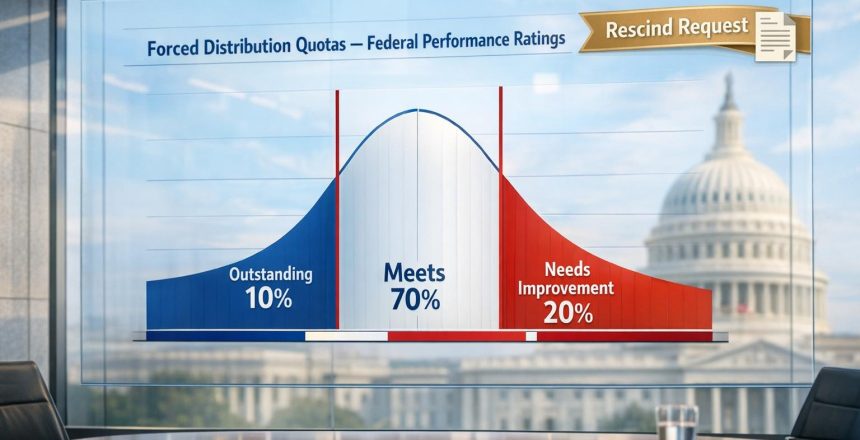
Rep. Robert Garcia, D-Calif., the top Democrat on the House Oversight and Reform Committee, has called for the Office of Personnel Management (OPM) to abandon its controversial proposal to implement forced distribution performance appraisals for federal workers. In a strongly worded letter, Garcia expressed concerns that the policy would undermine collaboration, reduce morale, and harm the federal workforce’s ability to deliver on agency missions.
OPM’s Controversial Proposal
The OPM recently proposed lifting the prohibition on forced distribution performance ratings, allowing federal agencies to set quotas for how many employees can receive top performance evaluations. While the prohibition remains in effect, many federal workers reported experiencing forced distribution practices during their annual reviews last fall. This proposal follows a similar policy change enacted under the Trump administration for the Senior Executive Service.
Garcia, however, argued that such policies could have damaging effects. "The latest research indicates that forced distribution systems are likely to degrade, rather than enhance, organizational performance by effectively pitting employees against one another in open competition, reducing incentives for collaboration and knowledge-sharing", Garcia wrote in his letter to OPM Director Scott Kupor.
Employee and Expert Pushback
The proposal has faced significant criticism, both internally and externally. Employees tasked with reviewing the plan before its publication nearly unanimously opposed it, according to reports. Critics argue that quotas for performance ratings violate merit system principles and foster workplace conflict rather than productivity. Garcia emphasized this concern, noting the lack of justification from OPM for reversing its previous stance against forced distribution.
"By design, forced ranking systems overlook objective evaluation of job performance in favor of relative (and potentially subjective) worker rankings, and as such, it remains unclear how this approach could consistently produce ratings that reflect actual job performance rather than artificially imposed quota-based targets", Garcia wrote.
Additionally, he pointed out that OPM failed to explain why its prior assertions – that forced distribution is "incompatible with effective performance management" – no longer apply. "The current proposal does not substantively engage with that prior determination nor explain why the underlying concerns no longer apply. As such, the proposed rule lacks basic justification", he added.
Broader Industry Trends
Garcia’s letter also cited trends in the private sector, where major companies like Microsoft and General Electric have abandoned forced ranking systems after determining that such practices harm morale and overall performance. These findings align with research suggesting that forced distribution models may be counterproductive to fostering a healthy organizational culture.
Next Steps
The public comment period for OPM’s proposal recently closed, leaving the agency to evaluate feedback and decide on how to proceed. For now, Garcia and other critics remain steadfast in their opposition, advocating for performance management systems that prioritize collaboration, transparency, and objective evaluation over restrictive quotas.
Ultimately, as Garcia warned, implementing the forced distribution model could have far-reaching consequences for federal employees and the critical missions they carry out. Whether OPM takes this feedback into account remains to be seen.