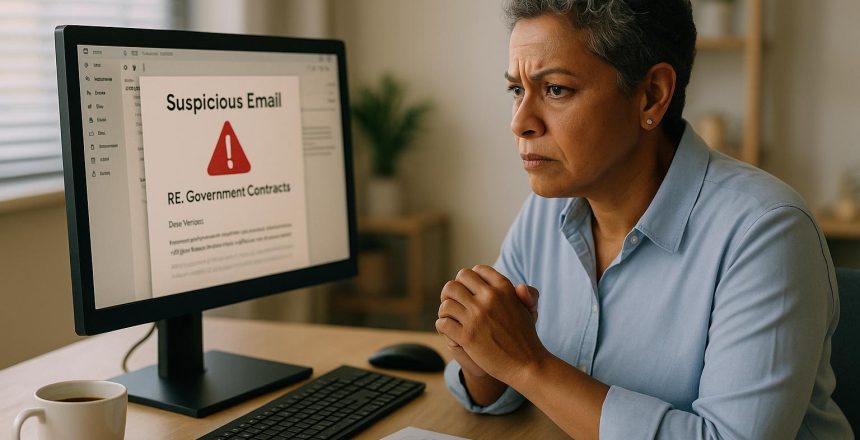
Scammers are targeting small businesses using fake SAM.gov communications to steal sensitive information and money. Here’s what you need to know:
- SAM.gov registration and renewal are free – any payment requests are scams.
- Fraudsters use phishing emails, fake websites, and high-pressure tactics to trick businesses.
- Scammers exploit public SAM.gov data (like UEI and CAGE codes) to make their messages appear legitimate.
- Fake websites often mimic SAM.gov but lack the official
.govdomain or security features like a padlock icon.
Protect yourself: Always verify communications directly on SAM.gov, avoid clicking suspicious links, and report scams to the Federal Service Desk. If managing these risks feels overwhelming, consider professional help to navigate federal contracting safely.
Question of the Week | SAM.gov Renewal Scam? What You Need to Know
Types of SAM.gov Scams
Scammers have found ways to exploit the SAM.gov registration and renewal process, often by imitating official communications. These schemes can easily mislead busy business owners who may not have the time to carefully examine every message they receive.
Fake Emails and Renewal Notices
One of the most common scams involves fake emails crafted to look like official messages from SAM.gov or the GSA Federal Service Desk. Scammers use publicly available information from your SAM.gov registration – like your Unique Entity Identifier (UEI), CAGE Code, registration expiration dates, and points of contact – to make these emails appear authentic. These fraudulent messages often demand payment for services that are actually free, claiming to expedite your registration for a fee. To create urgency, they use alarming subject lines such as "URGENT! SAM REGISTRATION EXPIRING IMMINENTLY! ACT NOW!" and include links to websites that do not end in ".gov." These fake sites are designed to steal your credentials or payments.
Falling for these scams can have serious consequences, including financial losses, data breaches, compromised account details, altered banking information, or even the complete removal of your company’s SAM registration. Scammers don’t stop at emails; they also use deceptive web designs to trick users.
Fake Websites That Look Like SAM.gov
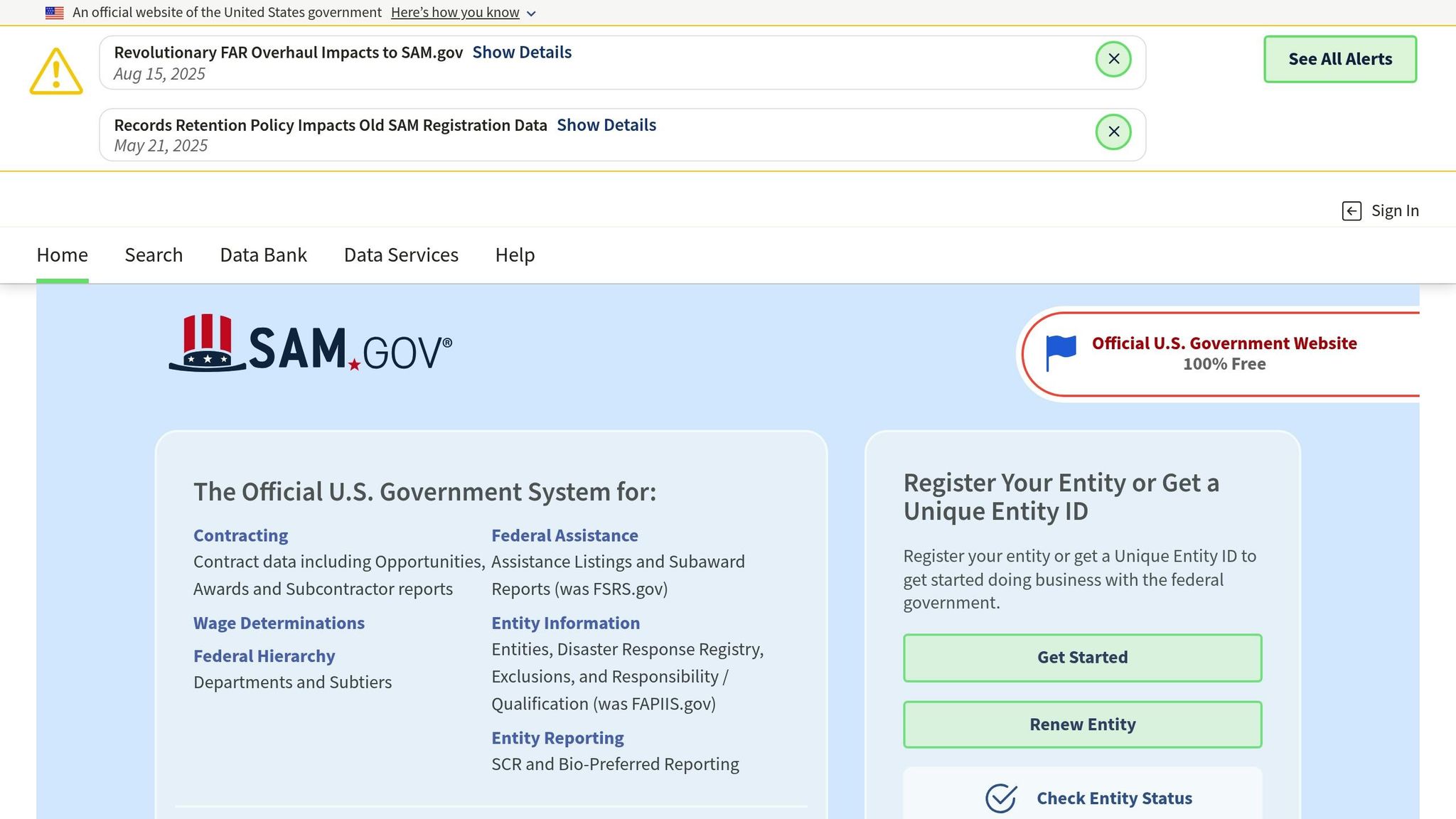
Scammers also set up counterfeit websites designed to mimic the official SAM.gov site. These fake sites often use domain names with slight variations that don’t end in ".gov", making it easy for users to miss the difference. These fraudulent websites are used to steal login credentials or gather sensitive business information during fake registration processes.
To protect yourself, always double-check that the URL ends with ".gov" and look for a padlock icon in the browser’s address bar. When uncertain, it’s safer to type the official SAM.gov URL directly into your browser instead of clicking on links in emails.
How to Spot SAM.gov Scams
Protecting your business from SAM.gov scams is crucial to avoid financial losses and maintain your federal contracting opportunities. Scammers have become more refined in their tactics, but they still rely on predictable methods that, once recognized, can help you stay one step ahead.
Payment Requests and Pressure Tactics
First and foremost, SAM.gov registration and renewal are completely free. If you receive any communication asking for payment to register or renew your account, it’s a scam – plain and simple. This includes offers for things like "expedited processing", "premium support", or guides claiming to simplify the registration process.
Scammers often use urgency and fear to push victims into making hasty payments. For instance, they might use phrases such as "FINAL NOTICE" or "IMMEDIATE ACTION REQUIRED" to create a false sense of emergency. These tactics are designed to pressure you into acting quickly without verifying the authenticity of the request.
Examples of such scams include emails from fake "Federal Service Desk" addresses promoting paid guides via external websites. The GSA Office of Inspector General has even uncovered cases where fraudsters sent fake Requests for Quotations (RFQs) for electronic equipment using spoofed email addresses like [email protected] and [email protected]. While these addresses may look official, they often use non-government domains.
Key warning signs of payment-related scams include:
- Requests for money to register or renew your SAM.gov account
- Offers for paid guides or so-called "insider secrets" about federal contracting
- Claims that payment is required to maintain your registration status
- Promises of faster processing in exchange for a fee
If you encounter any of these red flags, take a closer look at the sender’s domain and investigate further.
Wrong Domains and Security Problems
Another common scam indicator is the use of incorrect email domains. Legitimate government emails will always come from a .gov or .mil domain. If you receive an email claiming to be from SAM.gov or another government agency but the domain ends in .com, .net, .org, or anything other than .gov or .mil, it’s fraudulent.
When visiting websites, ensure the URL ends in ".gov" and check for a padlock icon, which signals a secure HTTPS connection. Avoid entering any information on sites that lack these security features. Scammers often create fake websites with URLs that look similar to official ones but use different extensions. They may also include inconsistent branding, incorrect logos, or contact details that don’t align with official government standards. Some even embed real SAM.gov links to make their sites appear legitimate.
How to verify security:
- The email domain should end in .gov or .mil – never .com, .net, or .org
- The website URL must end with .gov
- Look for a secure HTTPS connection with a visible padlock icon
- Ensure consistent government branding and accurate contact information
- Watch for spelling mistakes or unprofessional formatting
Scammers have become increasingly adept, sometimes using real agency names and nearly identical RFQ formats to trick businesses. However, by staying vigilant and checking these basic security cues, you can safeguard your business and avoid falling victim to even the most convincing scams.
sbb-itb-8737801
How to Protect Your Business
When it comes to safeguarding your business, relying on multiple layers of security is key. By combining scam detection techniques with proactive measures, you can better protect your operations.
Check All Communications and Use Official Sites
Before entering sensitive information online, always double-check that the website URL ends with .gov or .mil and uses a secure connection starting with https://. For example, registering on SAM.gov is completely free. If a site requests payment for SAM.gov services, it’s likely a scam.
For technical support, stick to the official Federal Service Desk (FSD.gov). To stay informed, follow updates directly from SAM.gov announcements, release notes, blogs, or GSA’s verified Twitter and LinkedIn accounts.
Train Your Team and Track Your Registration
Your employees are your first defense against scams targeting SAM.gov users. This is especially true for SAM Administrators, who manage sensitive data like banking and tax details. They should be trained to spot phishing emails, fake links, and other red flags.
Encourage your team to avoid clicking on links in questionable emails. Instead, they should log in directly to their official SAM.gov accounts to verify updates. Additionally, ensure that SAM Administrators follow strict security practices, such as:
- Never sharing passwords or one-time tokens.
- Confirming an individual’s identity and need before granting access.
- Regularly reviewing and updating user permissions, including immediately removing access for former employees or those with changing roles.
Your IT department also plays a crucial role. They should enforce tight controls when managing access to email accounts, phone numbers, or other sensitive details tied to SAM Administrators. If you notice any unusual activity despite these precautions, report it immediately.
Report Scams to Government Agencies
If you come across suspicious communications related to SAM.gov, take action right away. Report these incidents to the Federal Service Desk (FSD). You can also reach out to your local Procurement Technical Assistance Center for additional guidance.
Getting Professional Help Through GSA Focus
Federal contracting can feel like navigating a maze – complicated, time-consuming, and unfortunately, full of potential scams. This is where expert help, like the services offered by GSA Focus, can make all the difference. They help small businesses not only protect themselves but also simplify the entire contracting process.
All-In-One Contracting Assistance
GSA Focus offers small businesses a streamlined way to secure and manage GSA Schedule Contracts. Their services cover every step of the process, including document preparation, compliance checks, and negotiation. By taking on the heavy lifting, they save businesses the headache of dealing with complex regulations and piles of paperwork.
Their team also provides expert advisory support and uses a secure online platform for uploading documents. This ensures that sensitive business information remains safe during the application process. With a 98% success rate and a refund policy, they back their services with confidence, helping businesses successfully navigate the federal marketplace.
But their support doesn’t stop there. GSA Focus also offers ongoing contract management and marketing services, helping businesses make the most of their GSA contracts once they’re in the system. This means they’re not just setting you up – they’re helping you thrive.
Cutting Down on Mistakes and Avoiding Scams
One of the biggest advantages of working with GSA Focus? They help protect your business from scams. As mentioned earlier, distinguishing real government communications from fake ones is critical. The team at GSA Focus knows exactly what legitimate correspondence looks like, which agencies should be contacting you, and how to spot fraudulent payment requests.
Their secure processes also reduce the risk of exposing sensitive data. By handling your information safely, they help prevent common pitfalls like registering on fake websites, sharing login credentials with the wrong parties, or responding to fraudulent banking requests. For small business owners juggling countless responsibilities, this kind of professional oversight can be a lifesaver.
With GSA Focus, you’re not just getting help with federal contracting – you’re gaining peace of mind, knowing you have experts in your corner to guide you through the process and keep your business safe.
Conclusion
Scams targeting SAM.gov users pose a serious threat to small businesses, exploiting fake renewal notices and phishing sites to steal sensitive information and credentials.
To safeguard your business, remember: SAM.gov registration is completely free, official communications will never demand immediate payment through wire transfers or gift cards, and legitimate messages always come from verified .gov domains. If you’re unsure about the legitimacy of a message, verify it directly on the official SAM.gov website.
Educate your team to recognize fraudulent emails, fake websites, and high-pressure tactics. Make it a habit to report any suspicious activity to the appropriate government agencies to help combat these scams.
If managing these risks feels overwhelming, professional assistance can be a game-changer. Federal contracting is complex, and scams add another layer of difficulty. Partnering with experts like GSA Focus can simplify the process, ensuring your documents are handled securely and helping you identify legitimate communications.
With the right precautions and support, federal contracting can open new opportunities for your business. Stay alert, stay informed, and don’t hesitate to seek help when needed.
FAQs
How can I tell if an email or website claiming to be from SAM.gov is real?
To determine if an email or website claiming to be from SAM.gov is genuine, start by examining the email address. It should always end with .gov, as this is the official domain used for U.S. government communications. For websites, double-check that the URL is exactly SAM.gov – watch out for minor misspellings or added words that could indicate a fraudulent site.
Avoid clicking on links in unsolicited emails or messages. Instead, navigate directly to the official SAM.gov website to verify any information. If you’re uncertain about the legitimacy of a communication, rely on official government channels for confirmation. A little caution can go a long way in protecting your business from scams.
What should I do if I think my small business has been targeted by a SAM.gov scam?
If you suspect your business has fallen victim to a SAM.gov scam, it’s important to act fast to limit any potential harm. Begin by reaching out to the SAM.gov help desk to report the issue and confirm your account details. Carefully review your SAM registration for any unauthorized changes – pay close attention to banking or payment details – and refrain from sharing sensitive information with unverified contacts.
Additionally, report the incident to federal authorities such as the Federal Trade Commission (FTC) or the Office of Inspector General (OIG). These agencies can investigate the matter and work to prevent further fraudulent activity. Acting swiftly can safeguard your business and support efforts to address the scam effectively.
What tools or services can help me securely manage my SAM.gov registration and avoid scams?
To keep your SAM.gov registration secure and steer clear of scams, always stick to the official SAM.gov website for any registrations or updates. Protect your login details carefully, and be wary of emails or links claiming to be from SAM.gov – scammers often use these tricks to access sensitive information.
If you run into any problems or need help, the Federal Service Desk (FSD) offers free, trustworthy support for SAM.gov users. It’s also a smart move to familiarize yourself with common fraud tactics and learn to spot warning signs. By staying vigilant and informed, you can keep your SAM.gov account safe and free from scams.
Related posts
- Guide to GSA Fraud Prevention Strategies
- GSA Contracting vs. Federal Bidding: Mistakes to Avoid
- Federal Contract Award Lifecycle Explained
- Maintaining SAM Registration for Federal Contracts