

Keeping your GSA product catalog updated is essential to maintaining visibility and sales in the federal marketplace. Federal buyers rely on accurate, compliant listings to make purchasing decisions. Starting July 28, 2025, GSA’s FAS Catalog Platform (FCP) enforces strict rules for product names and descriptions, rejecting non-compliant submissions.
Here’s what you need to know:
- Catalog updates are required every two years to avoid removal from GSA Advantage! and eLibrary.
- Product names must include at least three words (e.g., Brand + Model + Product Type) and cannot exceed 40 characters.
- Descriptions must be 10–1,000 words long, avoiding promotional language like "Best Deal" or "Free Shipping."
- Use high-quality product photos (JPG/GIF, max 1MB) and ensure filenames meet GSA standards.
With the transition to FCP, updating your catalog has become faster and more efficient, but compliance is non-negotiable. Regular reviews, error corrections, and adherence to new guidelines ensure your catalog remains active and competitive. Missing updates risks losing visibility to over 1 million weekly federal buyers.
Maintaining an accurate catalog isn’t just about compliance – it’s about building trust and securing repeat business.
Introduction to the FAS Catalog Platform (FCP) – MAS Vendor Training
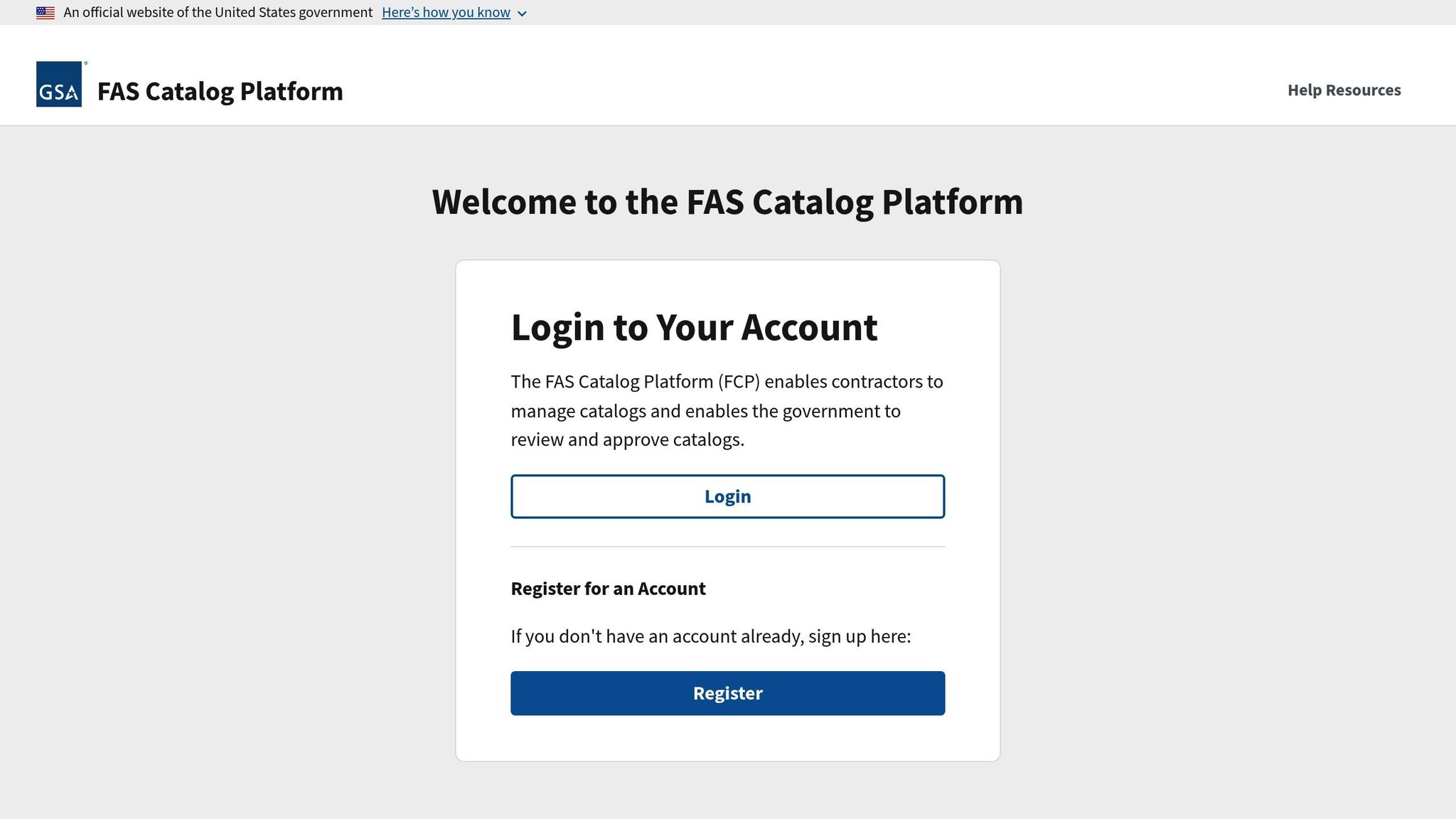
GSA Product Catalog Update Requirements
The General Services Administration (GSA) has laid out clear rules for naming and describing products in your catalog. These rules are strictly enforced – starting July 28, 2025, the FAS Catalog Platform (FCP) will automatically reject any submission that doesn’t comply with these guidelines. This update stems from feedback from federal buyers who struggled to locate items due to unclear or overly generic product listings. Below, we break down the key rules for naming and describing products to help you meet these federal standards.
Product Naming Rules
When naming your products, you must use at least three words, and the name cannot exceed 40 characters. This balance ensures that product names are clear and concise. The suggested format is: Brand + Model + Product Type + Key Features. For example, "Dell 27 Inch 4K UHD Computer Monitor" fits the standard perfectly, while a vague name like "Monitor" or one that includes a part number would not pass.
It’s important to avoid including part numbers in the product name; there’s a separate field for that information. Federal buyers typically search using keywords like "laptop" or "desk", so the product type should be evident within the first three words. If it isn’t, your listing may be harder to find. Once the product name is finalized, the next step is crafting a compliant product description.
Product Description Standards
Descriptions must be at least 10 words long but no more than 1,000 characters. This space should be used to highlight the product’s features, specifications, and practical uses. Include details like material, color, size, and technical specifications to give buyers a complete understanding of the item.
Avoid using promotional phrases such as "Best Deal", "Limited Time Offer", "Free Shipping", or "Save Now", as these do not provide meaningful information about the product and will result in rejection. Additionally, spell out any uncommon acronyms or abbreviations to ensure clarity for federal buyers.
| Requirement | Product Name | Description |
|---|---|---|
| Minimum Length | 3 words | 10 words |
| Maximum Length | 40 characters | 1,000 characters |
| Prohibited Content | Part numbers, vague terms | Promotional language, contractual terms |
| Primary Focus | Brand, model, type, key attribute | Features, specifications, functions |
How to Update Your GSA Product Catalog
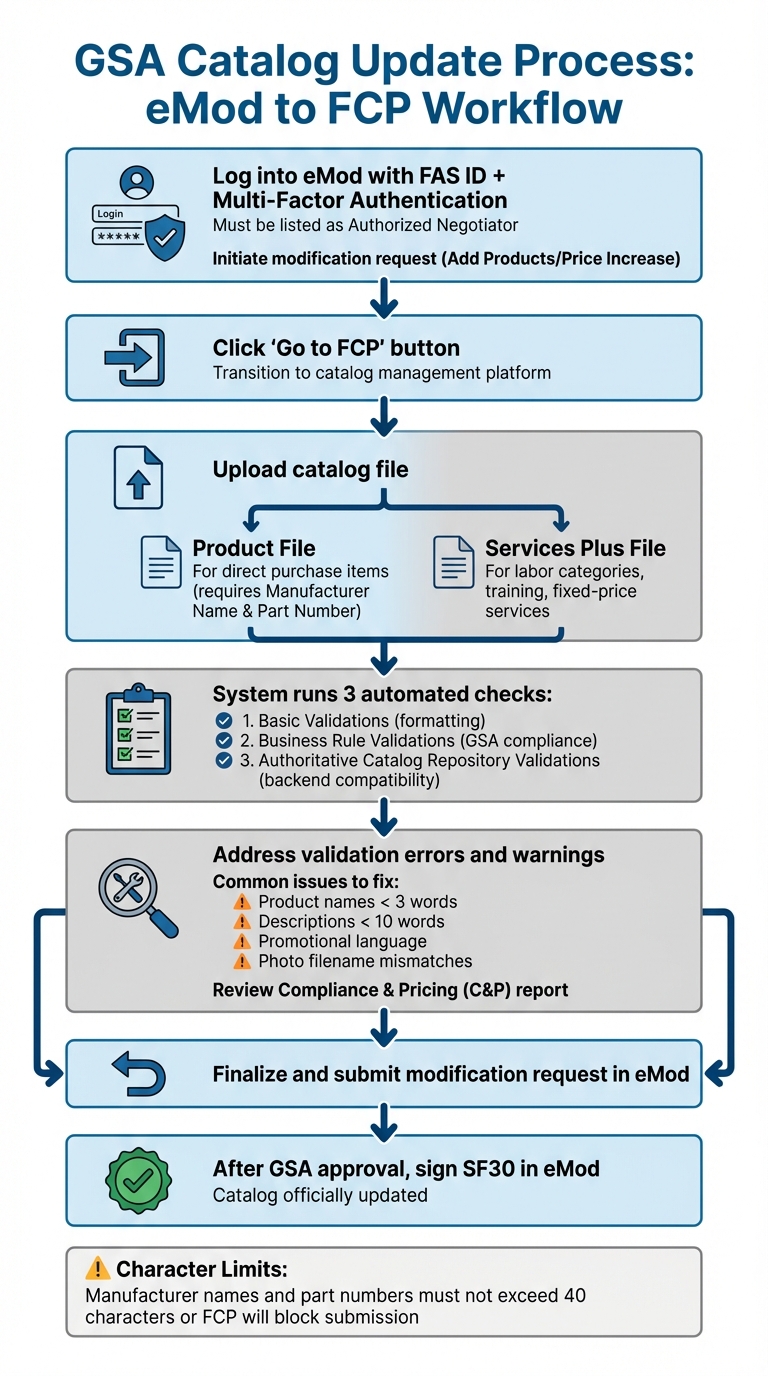
GSA Catalog Update Process: eMod to FCP Workflow
Updating your GSA product catalog involves navigating two key platforms: eMod and FCP. The process begins in eMod, where you initiate the update, continues in FCP for catalog management, and concludes back in eMod with the final submission. To access these platforms, you must be listed as an Authorized Negotiator in eMod and log in using a FAS ID with multi-factor authentication.
Navigating eMod and FCP for Updates
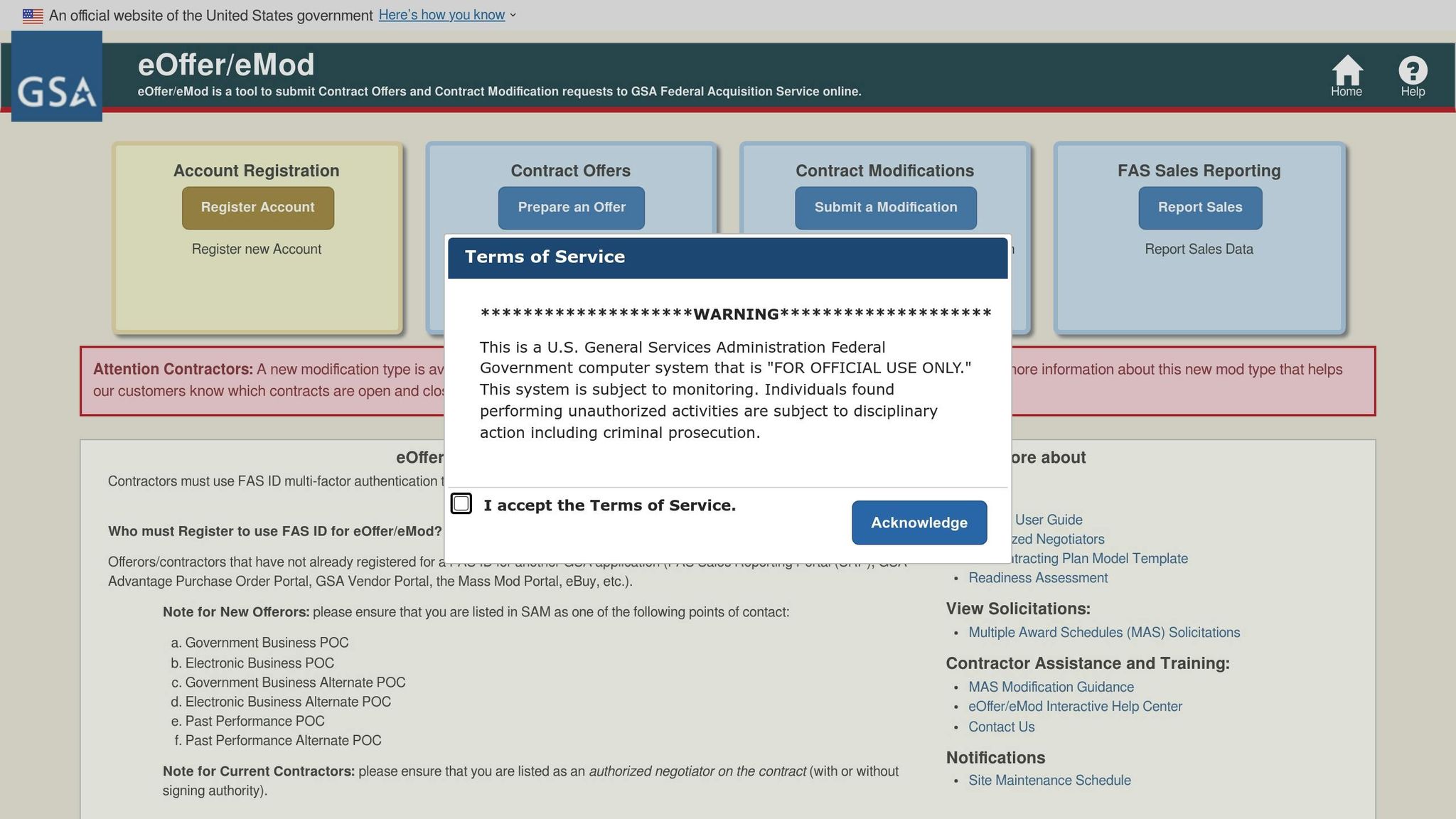
Start by logging into eMod and initiating a modification request, such as "Add Products" or "Price Increase." Once the request is initiated, click the "Go to FCP" button to proceed to the catalog management platform. In FCP, you’ll need to upload either a Product File or a Services Plus File, depending on the type of update you’re making.
The system will then run three automated checks:
- Basic Validations: Ensures proper formatting.
- Business Rule Validations: Confirms compliance with GSA guidelines.
- Authoritative Catalog Repository Validations: Verifies backend compatibility.
Address any errors and review warnings flagged during these checks. Before wrapping up in FCP, carefully review the Compliance & Pricing (C&P) report, which provides insights into market research and highlights any pricing issues that need attention before submission to GSA. This back-and-forth between platforms ensures efficient catalog updates.
Choosing the Right File Type
Selecting the correct file type is crucial. Use the Product File for items that can be purchased directly on GSA Advantage. These require details like the Manufacturer Name and Part Number. For updates involving labor categories, training, fixed-price services, or products that demand vendor engagement before purchase, use the Services Plus File. These files have replaced the older SIP/EDI-832 systems.
A critical point to remember: Manufacturer names and part numbers must not exceed 40 characters. Submissions violating this rule will be blocked by FCP. As Julio Cardenas, Senior Consultant at Coley GCS, LLC, explains:
"FCP catches this [40-character limit] initially and prohibits the modification from being submitted to the Contracting Officer".
Resolving Errors Before Submission
Pay close attention to validation messages in FCP to address common issues, such as:
- Product names with fewer than three words.
- Descriptions under 10 words.
- Use of promotional language like "Best Deal" or "Free Shipping."
- Mismatched product photo filenames.
Once all errors are corrected in FCP, return to eMod to finalize and submit your modification request. After GSA approves the modification, complete the process by signing the awarded modification (SF30) in eMod. This step ensures your catalog is officially updated and ready for use.
Maintaining Catalog Accuracy and Compliance
Once your catalog is updated, sticking to best practices ensures it remains accurate and complies with GSA requirements.
Following GSA Standards
Product descriptions need to be at least 10 words long and must avoid promotional phrases like "Best Deal", "Free Shipping", or "Next Day Delivery". These rules, enforced through the FAS Catalog Platform (FCP) since July 28, 2025, apply even to vendors using older SIP/EDI systems.
Sara Baig from GSA’s Catalog Management team highlights why quality data matters:
"Federal buyers consistently identify low-quality product names and descriptions as significant pain points. Vendors that provide higher quality data typically experience increased sales".
To further meet compliance, include UPCs when available and MPNs for awarded items. Use tools like the Schedules SIN-MOL-Photo-UPC lookup tool on the Vendor Support Center to streamline this process. These ongoing efforts are just as critical as the initial catalog update in maintaining buyer confidence.
Adding Product Photos and Details
Clear, high-quality product photos can make your listings stand out on GSA Advantage and minimize buyer confusion. Photos must meet these specifications: JPG or GIF format, a maximum size of 1MB, and filenames with up to 80 characters (letters, numbers, and underscores only). Each product can feature up to four photos.
Avoid using company logos instead of actual product images. Contracting Officers are increasingly requiring unique photos for every item. When listing accessories or related products, remember that these items are now searchable and purchasable as individual listings. GSA search results prioritize listings based on part number, product name, company name, and product description, in that order.
Conducting Regular Catalog Reviews
Keeping your catalog in top shape requires more than just updating content – it also involves regular system checks. Contractors must re-upload their catalog every two years to avoid it being marked "inactive", which could result in removal from GSA Advantage or eLibrary.
Use the Compliance & Pricing (C&P) report regularly to spot pricing issues and compliance flags before submitting modifications. Additionally, check the Verified Products Portal (VPP) periodically to confirm your manufacturer authorization status. If a manufacturer lists you as unauthorized, you must remove those products immediately. The VPP currently holds data for over 300,000 products from more than 1,400 manufacturers.
After making any catalog updates, visit GSA Advantage to ensure your product pages, photos, and descriptions display correctly. This final review helps catch any rendering problems before buyers see them.
Recent Changes to GSA Catalog Policies
In July 2025, the General Services Administration (GSA) introduced updates to its catalog requirements, changing how vendors format and submit product listings. Starting July 28, 2025, the FAS Catalog Platform (FCP) began automatically rejecting catalog submissions that don’t meet the new compliance rules. This shift moves away from advisory guidelines to strict validation protocols, ensuring non-compliant files are blocked before they even reach a Contracting Officer. These changes build on earlier guidelines and aim to simplify catalog management.
Key Product Listing Rules
- Product Names: Must include at least 3 words but cannot exceed 40 characters. Including manufacturer or vendor part numbers in the name field is no longer allowed.
- Product Descriptions: Must contain at least 10 words and remain under 1,000 characters. Additionally, promotional language is strictly prohibited.
These rules align with previously established compliance standards and are designed to maintain uniformity across vendor submissions.
Updates to the Verified Products Portal (VPP)
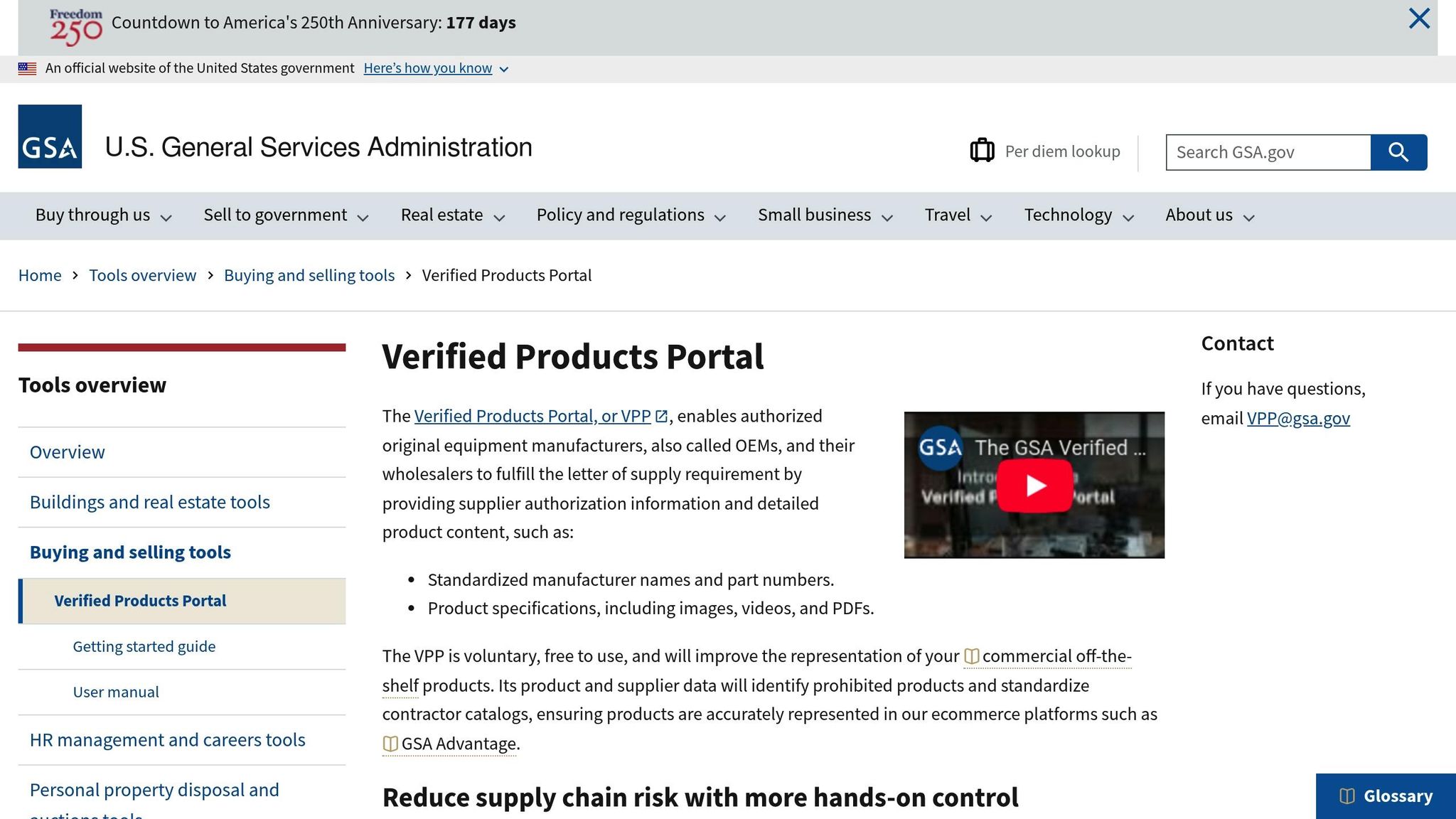
Changes to the Verified Products Portal (VPP) now limit the use of Letters of Supply to specific categories. As of MAS Refresh 27 in June 2025, Letters of Supply are required only for vendors in the Information Technology Large Category (Category F) and the Printing and Photographic Equipment Subcategory (A10) if the manufacturer isn’t listed in the VPP.
Transition to the FAS Catalog Platform
GSA is phasing out the older Schedule Input Program (SIP) and EDI-832 systems. All new MAS contractors awarded after September 2025 will automatically onboard to the web-based FCP. Existing contractors are being transitioned at a rate of approximately 700 contracts per month, with over 7,000 contracts already migrated to the platform by late 2025. This transition builds on earlier catalog update efforts.
Federal Acquisition Service Commissioner Sonny Hashmi emphasized the benefits of the FCP:
"The FCP will help contractors keep their catalogs current, compliant, and competitive. This new application promotes a strong federal marketplace for our customers and is a huge improvement for our industry partners".
What Contractors Need to Know About FCP
Contractors moving to the FCP must complete the "First Steps" baseline process within 60 days of gaining access. Here’s what this process involves:
- The platform will pre-populate a Product File using your current GSA Advantage data.
- You’ll need to download this file, fill in any missing required fields, and resubmit it to create an authoritative electronic record.
- The FCP provides automated Compliance & Pricing (C&P) reports, allowing you to address pricing issues or compliance flags early in the modification process.
As the GSA continues to refine its standards, staying proactive and aligning your catalog processes with these updates will ensure a smoother transition and ongoing compliance.
Conclusion
Keeping your catalog current is essential for staying compliant and competitive in a marketplace that attracts over 1,000,000 visitors each week and processes more than 30,000 orders. Regular updates ensure your products remain accessible to federal buyers while meeting the latest GSA standards.
The FCP transition brings real advantages for contractors by simplifying the process of updating product catalogs. It reduces the time spent on submissions and streamlines workflows, making it easier for vendors to maintain accurate and compliant catalogs that meet GSA’s formatting and validation requirements.
Beyond compliance, maintaining a detailed and accurate catalog builds trust with buyers. When your catalog reflects your approved price list and follows GSA’s strict guidelines, it creates a professional shopping experience that appeals to federal customers.
Catalog management, especially during the FCP transition, can be challenging. That’s where GSA Focus comes in. They specialize in helping small businesses handle catalog updates, meet compliance requirements, and navigate the FCP onboarding process. Their services include everything from document preparation to ongoing support, allowing you to focus on fulfilling orders while they manage the technical details.
Whether you choose to handle catalog updates in-house or seek professional assistance, staying on top of these updates ensures your contract remains active, visible, and competitive in the federal marketplace.
FAQs
What are the consequences of submitting a non-compliant GSA product catalog?
Submitting a product catalog to the GSA that doesn’t meet compliance standards can have serious repercussions. You risk having your contract terminated, facing financial penalties, or even legal action under the False Claims Act. On top of that, any flagged non-compliant products must be removed from your Contract Price List within 30 days – or they’ll be automatically deleted from GSA Advantage. These missteps can also damage your standing with federal agencies and put future contracting opportunities in jeopardy.
Staying on the right side of GSA requirements means keeping your catalog accurate, current, and compliant. That’s where GSA Focus comes in. They specialize in ensuring your catalog meets all regulations by managing the necessary documentation, keeping up with updates, and resolving potential issues quickly. Their expertise helps safeguard your contract and keeps you in the game for federal contracting opportunities.
How often should I update my GSA product catalog to stay compliant and visible?
To keep your presence active and compliant on GSA Advantage and eLibrary, it’s important to update or confirm your GSA product catalog at least every two years. Doing this regularly ensures your pricing, product details, and terms remain accurate and competitive, which helps maintain your visibility and minimizes the risk of compliance issues.
What are the updated rules for naming and describing products in the GSA catalog?
The updated GSA catalog guidelines emphasize that product names should consist of at least three words and must not include any part numbers. Additionally, product descriptions should be clear and detailed, steering clear of repeating part numbers or mentioning any contractual terms.
Adhering to these guidelines helps keep your catalog compliant while offering precise and useful information to prospective buyers.
Related Blog Posts
- 5 Tips for GSA Advantage Sales Success
- How to Optimize GSA Advantage Listings
- How to Get Found on the GSA Advantage Website
- GSA Advantage Website 101: A Small Business Guide