

GSA Past Performance Evaluation is a critical part of securing a GSA Schedule contract. It assesses your business’s ability to deliver on federal contracts based on past work. This evaluation helps the government minimize risks and ensure reliability. Here’s what you need to know:
- Purpose: Evaluates your track record in areas like quality, timeliness, cost control, and management.
- Methods: Use CPARS reports (for federal contractors), Past Performance Questionnaires (PPQs) for smaller businesses, or Legacy Open Ratings Reports (for older data).
- Requirements: Submit at least three references or reports from the last three years, aligned with your proposed work.
- Key Focus Areas: Quality, timeliness, cost control, management, and subcontracting compliance.
Understanding and preparing for this evaluation can significantly improve your chances of winning government contracts.
“Past Performance” of Government Contractors: Obtaining It, Using It, and Defending It
How GSA Past Performance Evaluation Has Changed Over Time

Past performance has long been a cornerstone of credibility for contractors seeking GSA Schedule contracts. But the way this performance is evaluated has evolved considerably. For years, applicants were required to purchase Dun & Bradstreet (D&B) Open Ratings Past Performance Evaluation (PPE) Reports. These reports used surveys from an applicant’s previous customers to create a performance summary, complete with graphics. While this system provided insight, it came at a cost and relied heavily on references supplied by the contractors themselves.
In December 2019, Dun & Bradstreet announced the discontinuation of this service, ceasing new orders for Open Ratings PPE Reports. During the transition, GSA continued to accept existing Open Ratings reports, but only if they were dated within 12 months of the proposal submission. By January 15, 2020, GSA officially moved away from Open Ratings as a requirement for new offerors. This marked a turning point in how past performance would be assessed moving forward.
The Shift from Open Ratings to CPARS
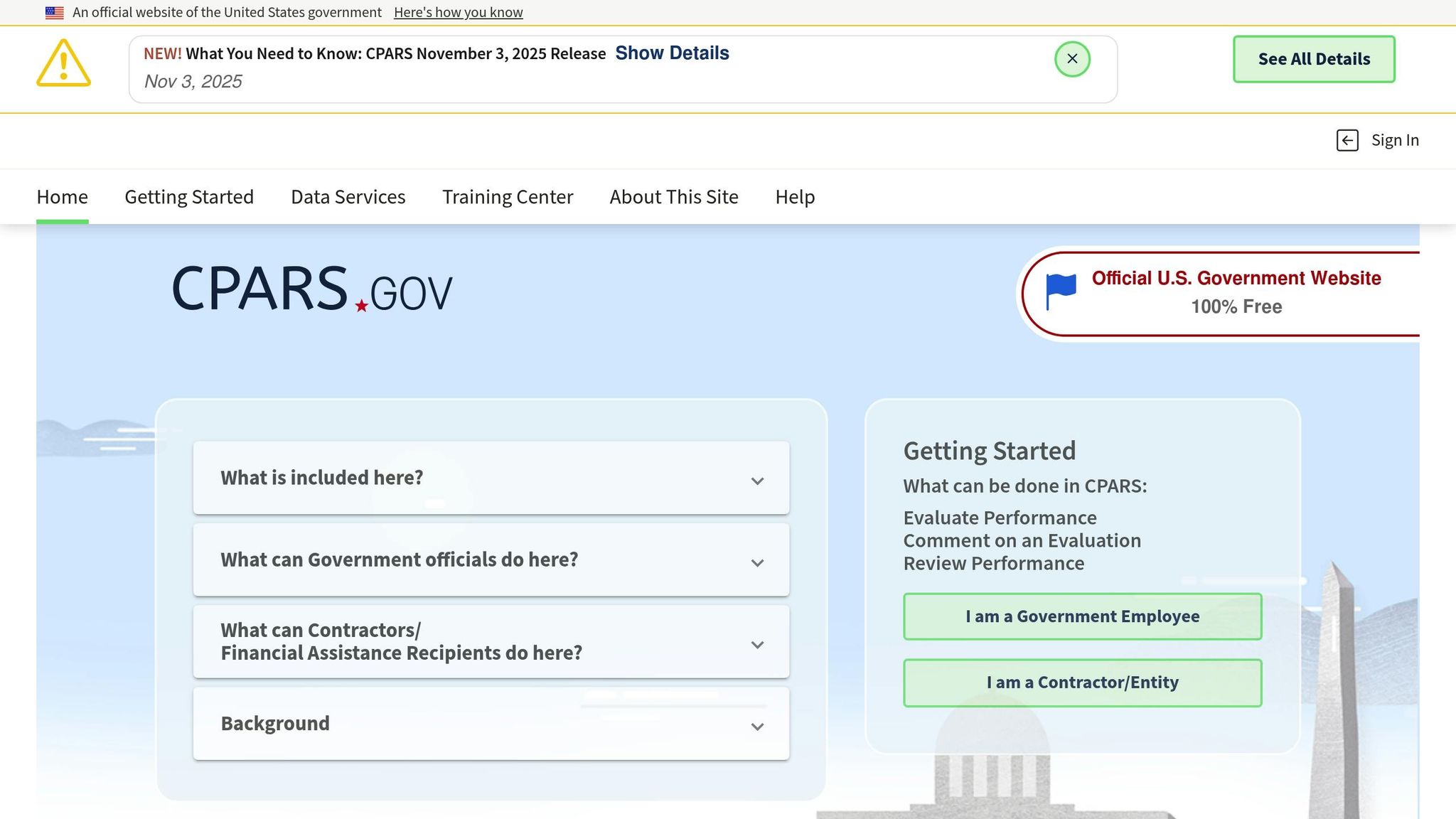
The end of Open Ratings led GSA to adopt the Contractor Performance Assessment Reporting System (CPARS) as the primary tool for evaluating past performance. Unlike Open Ratings, CPARS is a government-operated system that is free for contractors and functions as the federal "report card" for prime contractors, mainly covering contracts valued at over $250,000.
"CPARS now serves as the federal report card system for prime contractors providing services and products to the U.S. federal government." – TargetGov
This change was more than just a platform swap. CPARS consolidated systems like PPIRS, ACASS, and CCASS into one unified application, ensuring consistent evaluation criteria and rating scales across federal agencies. By early 2014, over 340,000 contractor performance evaluations had already been completed within CPARS. Government officials reported a 92% effectiveness rating, while 98% of contractors found the system effective. Unlike the previous method, which relied on contractor-provided references, CPARS evaluations are conducted by government contracting officers using objective metrics tied to specific contracts. This shift has introduced a more standardized and impartial approach to assessing contractor performance.
3 Methods for Demonstrating Past Performance
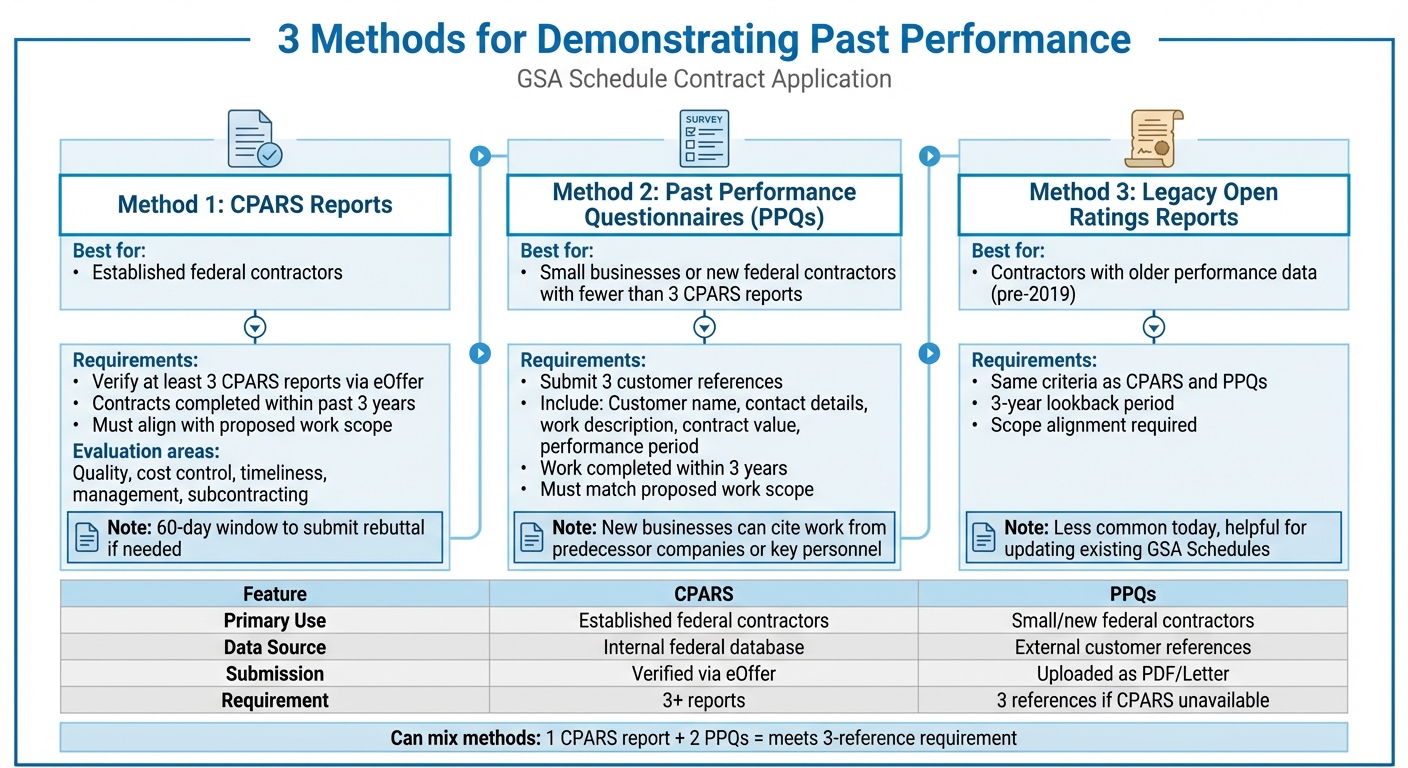
3 Methods to Demonstrate Past Performance for GSA Schedule Contracts
When applying for a GSA Schedule, proving your track record is crucial. GSA offers three ways to demonstrate past performance, and the best method for you will depend on your federal contracting history and available documentation. Let’s break down each option to help you prepare the right materials for your proposal.
CPARS Reports
For contractors with federal experience, CPARS reports are the go-to method. Through the eOffer system, you’ll need to verify at least three CPARS reports, each tied to different contracts or orders completed within the past three years. These contracts must align with the scope of work in your proposal.
"CPARS is the Contractor Performance Assessment Reporting System that reports and rates contractor performance… to support best value source selection decisions." – GSA Vendor Support Center
The CPARS system evaluates performance in areas like quality of work, cost control, timeliness, management capabilities, and small business subcontracting when applicable. If your CPARS reports include negative feedback that hasn’t been addressed or resolved, you must acknowledge and explain it in your offer. Contractors also have a 60-day window to submit a rebuttal if they believe a rating is unjustified.
If you lack sufficient CPARS reports, consider the Past Performance Narratives method below.
Past Performance Narratives
For contractors with fewer than three CPARS reports – or none at all – Past Performance Questionnaires (PPQs) are required. This method involves submitting three customer references, each accompanied by a PPQ. References must include:
- Customer name and contact details (phone and email)
- A brief description of the work performed
- Dollar value of the contract
- Period of performance
The work should have been completed within three years of your offer submission and must match the scope of your proposed work. While GSA provides a PPQ template, references can use their own format as long as it addresses all the evaluation criteria outlined in the GSA questionnaire. If a reference insists on sending the PPQ directly to a GSA Contracting Officer, you’ll need to upload a letter in eOffer confirming this request.
New businesses without three relevant customer references can cite work done by predecessor companies or key personnel as a substitute.
If your performance data predates 2019, the Legacy Open Ratings Reports method may be an option.
Legacy Open Ratings Reports
Although less common today, Legacy Open Ratings Reports are still accepted for contractors with older performance data. These reports must meet the same criteria as CPARS and PPQs, including the three-year lookback period and scope alignment. This method is particularly helpful for contractors updating existing GSA Schedules.
Comparing CPARS and PPQs
Here’s a quick comparison of the CPARS and PPQ methods to help you decide:
| Feature | CPARS Reports | Past Performance Questionnaires (PPQ) |
|---|---|---|
| Primary Use | Established federal contractors | Small businesses or new federal contractors |
| Source of Data | Internal federal database (CPARS/PPIRS) | External customer references (Commercial or Govt) |
| Submission Process | Verified via eOffer system | Uploaded as PDF/Letter in eOffer |
| Requirement | 3+ reports for "Streamlined" offers | 3 references if CPARS is unavailable |
If you only have one CPARS report, you’ll need to submit two additional PPQs to meet the three-reference requirement. This flexibility ensures all contractors, regardless of their federal contracting history, can demonstrate a solid track record.
Evaluation Criteria and Submission Requirements
3-Year Lookback Period
When submitting an offer, the GSA evaluates work completed within the past three years – or six years for construction and architect-engineer contracts. This review period ensures they assess your most recent and relevant performance history.
This timeframe applies to both CPARS reports and Past Performance Questionnaires (PPQs). Any projects older than three years are typically excluded, unless they are ongoing and include at least one year of completed work.
Before using eOffer, make sure you have at least three CPARS reports. If you don’t, you can supplement with PPQs. Once your timeframe and documentation are in order, you’re ready to back up your performance claims with the required materials.
Required Documentation and Validation
CPARS reports must be verified within the eOffer system, as the GSA cross-references them with its official database. For PPQs, you’ll need to provide detailed customer references, including:
- Customer name
- Contact details (phone and email)
- A brief description of the work and your role
- Contract value
- Performance period
It’s important to note that the GSA may directly contact your references to confirm the information you’ve provided. If a customer chooses to send their completed questionnaire directly to the GSA Contracting Officer instead of giving it to you, upload a letter in eOffer explaining this arrangement.
Performance evaluations focus on five key areas:
- Technical: Quality of the product or service
- Cost Control: For non-fixed-price contracts
- Schedule/Timeliness
- Management or Business Relations
- Small Business Subcontracting (if applicable)
Each area is rated on a five-point scale: Exceptional, Very Good, Satisfactory, Marginal, or Unsatisfactory. If your CPARS reports include unresolved negative feedback, you must address these issues directly in your proposal.
"Past performance information is one indicator of an offeror’s ability to perform the contract successfully." – GSA Solicitation
Performance evaluations are mandatory for federal contracts exceeding $150,000. Contractors are given 14 calendar days to respond to a new CPARS evaluation and have up to 60 days to submit a detailed rebuttal if they believe a rating is unfair. Providing accurate and thorough documentation not only verifies your performance but also strengthens the credibility of your proposal.
How Past Performance Affects Your Proposal Success
Your past performance plays a critical role in determining your success with GSA contracts. Since GSA Multiple Award Schedule contracts can extend up to 20 years and involve multiple federal buyers, contracting officers lean heavily on your track record to evaluate your ability to deliver consistently over the long term. This history not only influences your current proposal but also sets the stage for future opportunities.
"Past performance is an indicator of future performance; it’s their primary way to guarantee that a contractor will be able to perform the contract successfully." – Winvale
In most GSA solicitations, past performance is highlighted as Factor Two in the evaluation criteria. To strengthen your proposal, it’s essential to back up your claims with documented evaluations. Tools like CPARS reports, PPQs, or Legacy Open Ratings provide tangible evidence of your reliability. Strong ratings in these evaluations demonstrate your ability to handle work of similar scope and complexity. This, in turn, lowers the perceived risk for the government and increases your chances of securing the contract.
However, negative ratings can have the opposite effect, putting future opportunities at risk. If your CPARS reports include unfavorable feedback, address these issues head-on. Explain the corrective actions you’ve taken and the improvements you’ve implemented. Contracting officers are required to review CPARS data during the source selection process, so demonstrating how you’ve resolved past challenges can help rebuild trust. A solid history of delivering quality work on time, keeping costs under control, and maintaining strong customer relationships sets you apart from competitors and proves your readiness for the long-term commitments GSA contracts demand.
Conclusion and Next Steps
Grasping GSA past performance requirements is a must if you’re aiming to win government contracts. Your performance history serves as a key measure of your reliability, and without the right documentation, even the best pricing might not be enough to secure a win. Given the strict timelines for submitting documentation, it’s crucial to start gathering your past performance evidence well in advance.
If you already have three or more relevant CPARS reports from the past three years, confirm they align with the SINs scope. If they don’t, or if you’re missing CPARS reports, work on obtaining at least three customer PPQs before your deadline. Make sure these PPQs are fully completed – any missing details could put your proposal at risk.
Regularly review and update your CPARS data to address any negative feedback. Open communication with evaluators before assessments are finalized can help you avoid potential issues. If you do receive negative feedback, include a clear, concise explanation of the corrective actions you’ve taken in your proposal. This can help rebuild trust with contracting officers and show your commitment to improvement. These steps are critical to ensuring your performance evaluation supports your proposal.
Once your documentation is in order, tackling the challenges of the eOffer system and meeting GSA’s compliance standards may still feel overwhelming. This is where expert guidance can make a difference. GSA Focus provides tailored support for small businesses, offering services like document preparation, compliance checks, and negotiation assistance. Their expertise ensures that your past performance evidence meets GSA’s criteria and strengthens your overall proposal.
Take action now: check your CPARS status, secure customer PPQs, and organize your documentation to demonstrate your capabilities. The effort you put in today will directly shape your success in future federal contracting opportunities.
FAQs
What if I don’t have three CPARS reports yet?
If your company doesn’t have three CPARS reports, there’s an alternative: Open Ratings Past Performance Evaluation (PPE) Reports. This option is available for businesses that can’t meet the CPARS requirement but have ordered a PPE report instead.
How can I fix a negative CPARS rating before I apply?
When dealing with a negative CPARS rating, the first step is to carefully review the evaluation to pinpoint the exact issues raised. Once you’ve identified the concerns, reach out to the evaluator in a professional manner. Use this opportunity to clarify any misunderstandings, dispute inaccuracies, or discuss how deficiencies can be resolved. It’s also essential to document all corrective actions you’ve taken to address the issues.
If you believe the rating is unfair or missing context, consider submitting a formal rebuttal during the designated comment period. This allows you to provide additional details that could help reduce the impact of the negative review. A well-prepared response shows your commitment to improvement and professionalism.
Do my past projects have to match my proposed SINs exactly?
When showcasing your past projects, they don’t have to align perfectly with your proposed SINs. Instead, focus on presenting work that is relevant, recent, and highlights strong performance in areas connected to those SINs. This approach not only supports your proposal but also makes a stronger case for approval.
Related Blog Posts
- How to Use Past Performance in GSA Proposals
- Ultimate Guide to Marketing with Past Performance
- What Is CPARS in Federal Contracts?
- Ultimate Guide to GSA Past Performance Requirements