

Securing a GSA Schedule contract can open doors to billions in federal spending, but even small mistakes in your proposal can lead to rejection. From outdated templates to pricing errors, these common pitfalls waste time, resources, and opportunities. Here’s what you need to know:
- Outdated Templates: Submissions using old forms are automatically rejected. Always verify you’re using the latest versions from GSA’s official pages.
- Ignoring the MAS Modification Guide: This guide outlines required forms and processes. Skipping it can result in incomplete or incorrect submissions.
- Wrong SIN Selection: Choosing an incorrect Special Item Number misaligns your offerings with GSA requirements, leading to rejection.
- Incomplete Documents: Missing signatures, outdated financials, or inconsistent contact details can derail your proposal during pre-screening.
- Pricing Errors: Discrepancies between invoices, pricing templates, and Commercial Sales Practices (CSP) documentation raise red flags.
- Weak Past Performance: Submitting irrelevant or outdated project examples can hurt your credibility.
Key takeaway: Attention to detail is critical. Use current templates, double-check documentation, and ensure your proposal aligns with GSA’s evolving standards. Mistakes can cost months of effort, but careful preparation can help you secure valuable federal contracts.
FedBiz’5 Podcast | Episode 46: The Keys to Winning Proposal Writing
Mistake 1: Using Outdated or Wrong Templates
Using an outdated template can derail your entire proposal. GSA has strict guidelines, and if your template doesn’t align with current requirements, your submission will be rejected during the pre-screening phase.
GSA templates, like the Price Proposal Template (PPT), are frequently updated – especially after Solicitation Refreshes and mass modifications. Many contractors mistakenly rely on old templates from previous proposals, assuming they’re still valid. However, GSA’s rules are always evolving. If the version date on your template doesn’t match the latest guidelines, your proposal won’t even make it to the next step.
The result? Weeks of hard work wasted because of an easily avoidable mistake.
How to Verify Template Versions
To avoid this pitfall, always check the official GSA webpages for the most current templates. Start with the Modifications and Mass Modification Guidance page and the MAS Scope and Templates page – these are your go-to resources for accurate and up-to-date information.
When downloading a template, confirm the version date stamped on it. Don’t assume that just because you downloaded it recently, it’s still valid. GSA updates templates frequently, sometimes with no grace period for older versions. Before starting any proposal or modification, review the latest MAS Modification Guide and use the checklist that corresponds to your specific modification type. Also, cross-check the template version against the solicitation you’re responding to, as requirements can vary by solicitation.
To stay ahead of changes, assign someone on your team to regularly monitor GSA’s webpages and immediately verify templates whenever a Solicitation Refresh is announced.
These simple verification steps can save you from the costly consequences of using the wrong template.
What Happens When You Use the Wrong Templates
Submitting a proposal with an outdated or incorrect template leads to immediate rejection during the pre-screening phase. Your submission won’t even reach a Contracting Officer. Instead, you’ll receive a rejection notice, forcing you to start the process all over again.
Even if your proposal isn’t outright rejected, using the wrong template can result in resubmission requests, delaying your contract award by weeks or even months. This wastes time, resources, and internal efforts. Worse, it can harm your credibility with GSA, signaling that your organization isn’t keeping up with federal contracting standards – an impression that could impact future submissions.
Template requirements also vary depending on whether you’re submitting for services, products, or Federal Contractor Program solutions. For example, using a product template for a service offering can result in non-compliance. Reviewers are quick to spot outdated templates, often flagging issues like missing compliance certifications, incorrect field structures, outdated financial formats, inconsistent formatting, or pricing discrepancies.
The takeaway? There’s no room for “close enough” when it comes to GSA templates. Every submission must adhere precisely to the current requirements to avoid rejection.
Mistake 2: Ignoring the MAS Modification Guidance
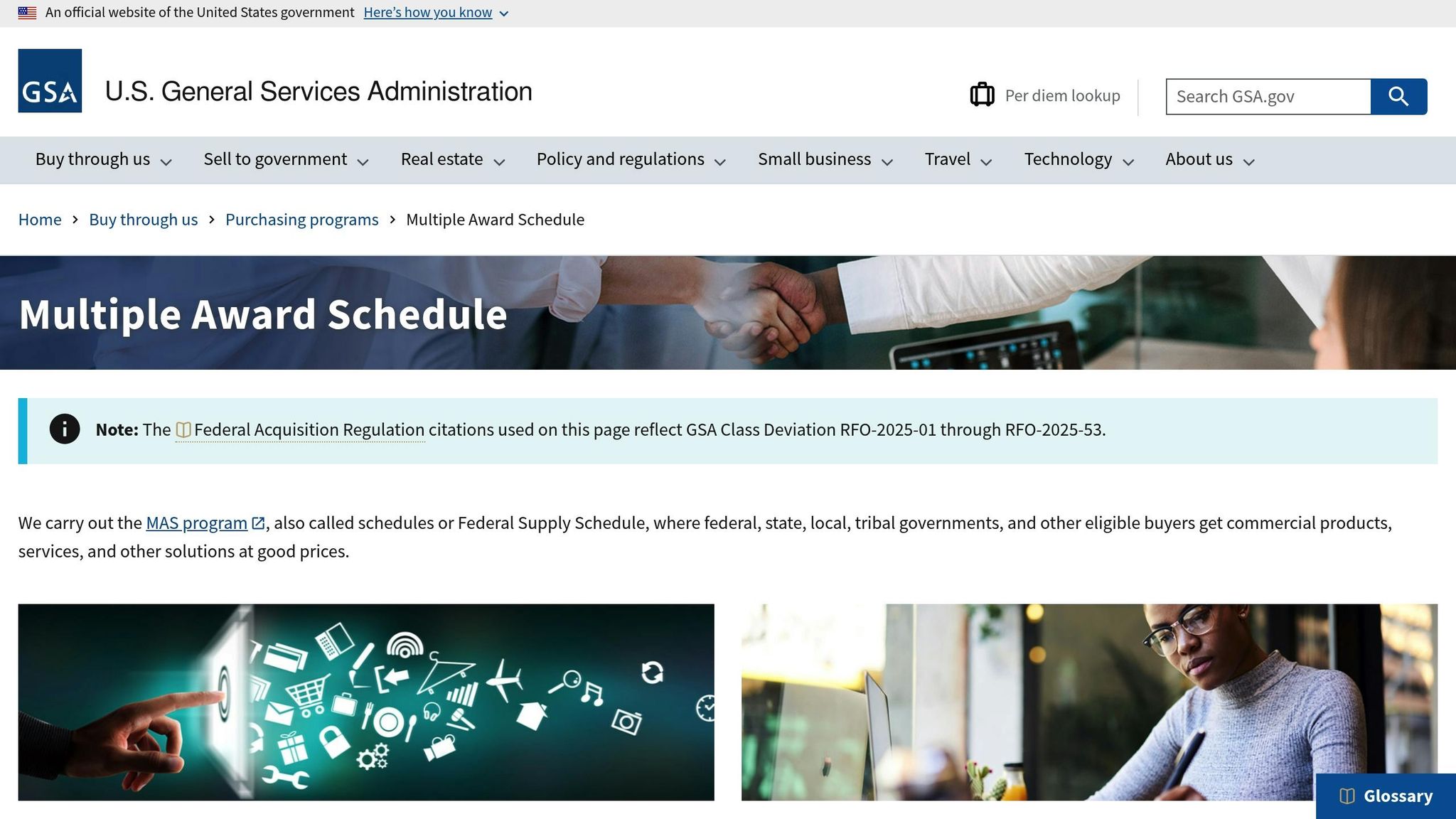
Overlooking the MAS Modification Guide is a common misstep that can lead to instant rejection. This guide isn’t just a helpful resource; it’s the definitive instruction manual for contractors navigating the modification process. It outlines the required forms, permissible modification types, and recent policy updates that directly influence whether your proposal meets compliance standards. Think of it as your GPS – without it, you’re likely to take a wrong turn and end up with incomplete or incorrect documentation flagged during the review.
Submitting outdated, inaccurate, or incomplete documentation is one of the quickest ways to have your modification rejected by a Contracting Officer. Even if your pricing is competitive and your track record is spotless, failing to adhere to the guide’s requirements can stop your proposal from advancing past the initial compliance check.
The guide is packed with tools to help you succeed, including general instructions, detailed checklists for each modification type, and FAQs to address common concerns. Each modification type comes with its own unique requirements, so it’s crucial to identify and review the appropriate checklist before drafting anything. Skipping this step is like trying to assemble a complex piece of furniture without reading the instructions – sure, you might get close, but missing even one critical piece could mean the difference between approval and rejection.
Why the MAS Modification Guide Is Essential
The MAS Modification Guide is critical because it spells out exactly what the General Services Administration (GSA) expects from your submission. It’s not a casual suggestion or a broad overview – it’s a precise, detailed list of requirements that can change periodically to reflect new policies and procedures.
Consider the sheer volume of documentation involved in GSA proposals. These forms can easily exceed 100 pages, with each requiring specific information formatted in a particular way. When the guide is updated, those details often shift. A form that worked six months ago might now demand additional certifications or updated financial disclosures. If you’re relying on memory or an old template, you’ll likely miss these changes.
The guide also specifies which modification types are currently permissible. GSA periodically updates what contractors can request and lays out how those requests must be structured. If you submit a modification request that GSA no longer allows, it will be rejected outright.
Beyond that, the guide helps you avoid pricing and documentation errors. It provides explicit instructions on how to present financial data, which administrative documents are necessary, and how to format everything correctly. This level of detail ensures uniformity across submissions and streamlines the review process for Contracting Officers.
How to Stay Updated on GSA Policy Changes
Staying on top of GSA policy changes takes consistent effort. Waiting until you’re ready to submit a proposal to check for updates is a recipe for disaster – you might discover major changes that require you to start over from scratch.
Here are some strategies to stay informed:
- Regularly check the GSA Modifications page. Make it a habit to review this page monthly. Keep a record of when you last checked and which version of the guide you downloaded to quickly identify updates.
- Participate in GSA training sessions. These sessions, often led by experts, break down new requirements and show you how to apply them to your proposals. They’re also a great opportunity to ask questions and clarify any confusing points before they become major issues.
- Subscribe to GSA notifications. Sign up for email alerts or website updates to stay informed about policy changes, new templates, and solicitation refreshes.
- Reach out to GSA representatives. If you’re unsure about something, don’t leave it to guesswork. Contact GSA directly for authoritative answers that can save you from costly mistakes.
Before you begin preparing any modification, download the latest MAS Modification Guide and locate the checklist for your specific modification type. This should always be your starting point. Carefully review the checklist, noting any differences from previous submissions. To stay organized, create a compliance matrix and check off each requirement as you complete it.
Once your proposal is drafted, conduct a thorough internal audit. Review every section for accuracy, completeness, and compliance with GSA standards. This audit should cover financial documents, pricing details, and administrative paperwork. Assemble a review team with expertise in finance, compliance, and your specific offerings. Finally, assign a dedicated compliance reviewer to ensure everything aligns with the guide before submission.
Taking these steps will help you avoid unnecessary rework and maximize the chances of your proposal being accepted.
Mistake 3: Choosing the Wrong SIN (Special Item Number)
Picking the wrong SIN (Special Item Number) can derail your GSA proposal from the start. It misaligns your offerings with GSA requirements, leading to early rejection and compliance headaches. This often results in mismatched pricing, missing certifications, and insufficient documentation of past performance. When your selected SIN doesn’t align with your services, it raises doubts about whether your business truly meets government procurement needs.
How SIN Categories Work
Understanding SIN categories is key to aligning your proposal with GSA standards. Special Item Numbers are how the GSA organizes products and services in the Multiple Award Schedule (MAS) program. These categories define specific documentation, pricing, and compliance requirements. Federal agencies use SINs to find contractors that match their needs. If your offerings are listed under the wrong SIN, your proposal may be overlooked – or worse, deemed irrelevant because your capabilities don’t align with what the agency is searching for.
Each SIN is unique and comes with its own set of requirements. For instance, a SIN for IT services will require different certifications and performance examples than one for office supplies. Your business structure or offerings might also demand additional documentation beyond what’s standard for the SIN. To navigate this, the GSA eLibrary is your go-to resource. It provides detailed SIN descriptions, pricing structures, and proposal requirements. Review the MAS Solicitation to confirm you meet all guidelines and documentation needs. Carefully study the language in SIN descriptions and compare your services against multiple categories to ensure the best fit. If multiple SINs seem applicable, document why you chose one over the other. Misaligned SINs confuse evaluators and can lead to compliance issues down the line.
Problems Caused by Wrong SIN Selection
Choosing the wrong SIN can result in immediate rejection during the pre-screening process when your documentation doesn’t meet the category-specific requirements. Evaluators will scrutinize whether your paperwork aligns with the selected SIN. For example, one company mistakenly chose a SIN that didn’t reflect its core products. This mismatch caused evaluators to question whether the company’s offerings were relevant to government needs, leading to an automatic rejection.
To prevent this, double-check your SIN selection before drafting your proposal. Start by downloading the latest MAS Solicitation and locate the section that matches your intended SIN. Read the description thoroughly, paying attention to specific requirements and exclusions. Compare your offerings with the examples provided to ensure a clear match. If you’re unsure, reach out to GSA for guidance. Making the right choice upfront can save you from costly rejections and the hassle of reworking your proposal.
Mistake 4: Missing or Inconsistent Administrative Documents
Overlooking administrative details in GSA proposals can result in outright rejection, often due to incomplete submissions. Much like errors in templates, administrative mistakes can derail your entire proposal. The pre-screening process is specifically designed to flag incomplete submissions, ensuring that proposals missing key documentation never even make it to a Contracting Officer for review.
Some of the most common issues include incomplete forms, missing signatures, and incorrect or outdated contact information. Vendors also frequently fail to include essential documents such as corporate information, financial statements, pricing details, product or service descriptions, and compliance certificates. Even minor discrepancies – like inconsistencies between invoices and price templates – can raise red flags.
Keeping Financial Records in Check
Your financial records must be up-to-date and adhere to Generally Accepted Accounting Principles (GAAP). GSA requires these records to confirm that your business can meet its contract obligations. Submitting outdated financial statements or incomplete records – or failing to meet GAAP standards – can lead to immediate rejection.
Contact Information Matters
Errors in contact information are another common pitfall. These include outdated phone numbers, incorrect email addresses, listing former employees as primary contacts, or inconsistent address formatting across documents. Such mistakes can give the impression of carelessness and may delay or derail your proposal.
Building a Compliance Checklist
Paying attention to administrative details is crucial for your proposal’s success. To stay on track, create a checklist that aligns with the specific GSA Schedule solicitation. This checklist should map out every required document, form, and signature.
Organize the checklist into sections:
- Corporate Information: Verify your business registration and System for Award Management (SAM) status.
- Financial Documentation: Ensure financial statements are current, GAAP-compliant, and reflect the most recent fiscal period.
- Compliance Certificates: Include certifications like Trade Agreements Act compliance and any relevant security clearances.
- Contact Information: Double-check that all names, phone numbers, email addresses, and physical addresses are consistent across documents.
Before submission, audit all documents to confirm accuracy, completeness, and compliance. This includes verifying that forms are fully completed, signatures are in place, and all contact details are correct. Make sure every document is the latest version.
For businesses classified as "other than small", include a subcontracting plan in your checklist in addition to the standard administrative requirements. Carefully review the MAS Solicitation to identify any additional documentation required for your business structure or proposal.
Consider engaging a qualified accountant to review your financial records. They can ensure your documentation is current, complete, and formatted correctly according to GAAP. This step helps present your company as financially sound and operationally ready.
Avoiding Frequent Documentation Errors
Even with a checklist, certain errors crop up repeatedly. Missing signatures are one of the most common issues. Ensure that the individual signing the proposal has the authority to bind the company – this is typically the owner, president, or an authorized representative. Blank signature lines or unsigned documents are unacceptable.
To avoid inconsistencies, have team members cross-verify company details across all documents. This includes names, addresses, phone numbers, and email addresses. Pricing information should also match across invoices, Commercial Sales Practices documentation, and price proposal templates.
A helpful strategy is to create a master document listing all key information – company name, address, contact details, pricing rates, and service descriptions. Cross-reference this master document with every submission. Assigning different team members to review various sections can help catch errors that a single reviewer might miss.
Form a review team with expertise in finance, compliance, and your core offerings. The finance team should confirm that all financial documentation is complete and GAAP-compliant. The compliance specialist should ensure forms are properly completed and signed, while a subject matter expert checks that product or service descriptions are accurate and consistent throughout the proposal.
Designate a single point of contact for the proposal. Verify this person’s information is accurate and consistent across all documents. Standardize address formatting – whether you use full state names or two-letter abbreviations – and double-check phone numbers by calling them. Test email addresses to ensure they work.
Keeping Up with Federal Requirements
Your products and services must comply with federal regulations, including the Trade Agreements Act (TAA). Missing compliance certificates can result in immediate disqualification. Include all necessary documentation to certify compliance with these regulations.
To stay ahead of changes, establish a quarterly review schedule. Assign a team member to check the GSA website for updates to requirements, templates, or guidance. Focus on GSA Modifications, Mass Modification Guidance, and MAS Scope and Templates webpages. Trigger updates after a Solicitation Refresh, when GSA announces policy changes, if your corporate information changes, or annually when financial statements are updated.
Incomplete or outdated documentation can lead to immediate disqualification. The pre-screening process is designed to catch these issues, and missing documents can result in automatic rejection. Beyond the immediate loss of time and resources, submitting outdated or incomplete documentation signals a lack of attention to detail, potentially damaging your reputation and complicating future submissions.
Mistake 5: Getting Pricing Details Wrong
Pricing errors can be a major stumbling block in your GSA proposal. These mistakes, whether they stem from administrative oversights or calculation blunders, often lead to immediate rejection or costly delays. GSA reviewers closely examine pricing documentation to spot inconsistencies, as they can signal unreliable business practices or potential compliance risks.
One common issue involves discrepancies between your historical invoices, Commercial Sales Practices (CSP) documentation, and the Price Proposal Template (PPT). Any mismatch here can raise red flags for compliance concerns. Simple errors, like misplaced decimals (e.g., $1,500 instead of $15,000) or inconsistent escalation rates, can derail your proposal entirely. These mistakes not only suggest carelessness but also cast doubt on your ability to manage federal contracts effectively.
Adding to the complexity is the Most Favored Customer (MFC) pricing policy. This rule requires that GSA customers receive pricing equal to or better than what you offer your most preferred commercial clients. Treating GSA as a separate market is a frequent mistake. For example, if your top commercial client pays $100 per unit, you cannot charge GSA $110 per unit without violating MFC principles. Such missteps can disqualify your proposal outright.
Making Sure Pricing Matches Across Documents
Ensuring pricing consistency across all documentation requires a methodical approach. Start by compiling historical pricing data from your invoices over the past 12 to 24 months. This data should include average rates, volume discounts, and any special pricing arrangements. These figures form the backbone of your pricing documentation.
Next, verify that your CSP documentation mirrors this historical data. The CSP should clearly outline your pricing strategy, discount policies, and adherence to MFC guidelines. Once verified, transfer this information into your PPT, double-checking every rate, discount percentage, and total cost for alignment. Maintaining a master pricing spreadsheet that cross-references all three documents can help you catch discrepancies before submission.
For MFC compliance, identify the best rates offered to your commercial clients and ensure your GSA pricing matches – or improves upon – those rates. Include a clear narrative explaining how your GSA pricing compares to your commercial pricing. For instance, you could write:
"Based on our commercial customer invoices from 2024–2025, our average service rate is $175 per hour, and we are proposing $170 per hour to GSA to reflect the volume commitment of this contract."
Before submitting your proposal, compile a comprehensive pricing package. This should include 20 to 30 representative invoices from different customer segments to establish a clear pricing baseline. Add a summary document that breaks down average pricing by product or service, discount structures, and any special arrangements. This package not only demonstrates accuracy but also reassures GSA that your pricing aligns with MFC policies.
Checking Your Math and Pricing Narratives
Accurate calculations and a well-crafted pricing narrative are critical to building a credible proposal. Mathematical errors, such as incorrect multiplication of quantity by unit price or inconsistent application of discounts, are common pitfalls. To avoid these, implement a thorough verification process: have a second person review your calculations, rely on spreadsheet formulas instead of manual computations, and double-check the placement of decimal points and commas. For example, if your unit price is $1,500.00 for 100 units, ensure the total calculates correctly to $150,000.00 – not $15,000.00 or $1,500,000.00.
Your pricing narrative serves as the bridge between raw numbers and GSA’s understanding of your approach. A strong narrative should explain your pricing methodology, justify escalation rates with historical or industry data, and reconcile any differences between your commercial and GSA pricing. For instance, if you propose a 3% annual escalation rate, provide a clear justification – whether it’s based on inflation trends or your cost structure. If your GSA pricing deviates from your commercial rates, explain why, such as offering discounts for volume commitments or simplified delivery processes. Including specific data points and referencing supporting documents strengthens your case.
Before submitting, conduct a detailed pricing audit. Extract all data from your PPT, create a master list of rates and discounts, and cross-check these figures against your invoices and CSP documentation. Ensure your pricing narrative aligns with these numbers. A final comparison of your GSA and commercial pricing will confirm compliance.
Creating a reconciliation spreadsheet is another effective way to catch errors. List each line item with its PPT price, corresponding invoice price, and notes explaining any differences. This not only helps identify inconsistencies but also demonstrates to GSA that your pricing is thoroughly vetted and well-documented. Remember, pricing discrepancies can lead to delays, requests for clarification, or outright rejection. Worse, they can cause long-term issues during contract performance, such as billing disputes or even contract termination. Careful preparation and review can save you from these costly mistakes.
Mistake 6: Providing Weak or Unrelated Past Performance
Your past performance can either solidify your GSA proposal or lead to its rejection. Many businesses make the mistake of submitting projects that, while impressive, don’t directly demonstrate the specific capabilities GSA evaluators are looking for. The result? Rejection during pre-screening – even if the rest of your proposal is strong. GSA evaluators meticulously assess whether your track record aligns with the services you’re proposing, so this connection is critical.
What GSA evaluators want is clear evidence that you can deliver the exact services tied to your Special Item Numbers (SINs). General business achievements or unrelated projects won’t cut it. For instance, if you’re proposing IT consulting services, examples of general business management projects won’t meet the mark. Submitting irrelevant examples raises doubts about your expertise in the specific services you’re offering.
Additionally, the GSA typically expects past performance examples from the last two years. If your examples fall outside this timeframe, evaluators may question whether the services are still part of your core offerings. This is especially crucial in fast-evolving industries like technology, where outdated examples might suggest your methods or tools are no longer relevant. Misaligned or outdated projects can lead to delays, requests for resubmission, or outright rejection of your proposal.
Choosing the Right Past Performance Examples
Selecting the right past performance examples requires more than simply listing your latest projects. Start by mapping your proposed services to relevant SINs, then match each service with past projects that align perfectly. This process helps you identify any gaps before the GSA does.
Focus on projects from the last three to five years that demonstrate relevant, successful outcomes. For example, if you’re proposing cloud migration services, highlight cloud migration projects – not on-premises infrastructure work. Similarly, if you’re offering cybersecurity consulting, showcase specific cybersecurity engagements rather than general IT support.
Each example should include key details like the project name, client type, duration, your role, budget or scope, and measurable results. If your experience in certain service areas is limited, prioritize quality over quantity. Submitting fewer but highly relevant examples is far better than including unrelated projects that dilute your proposal. If necessary, consider narrowing your service offerings until you can present a stronger track record with GSA.
To further bolster your proposal, include detailed descriptions of your company’s capabilities, certifications, and team expertise. Client testimonials and third-party evaluations can also strengthen your case, especially if your past performance examples are limited. If you lack experience in specific areas, partnering with subcontractors with a stronger track record can help – but make sure these partnerships are fully disclosed and documented in your proposal.
Including Numbers and Results
Generic descriptions won’t impress GSA evaluators. They want measurable, specific results. Use metrics like "40% reduction in downtime" or "8% under budget" to provide concrete evidence of your success.
When structuring your past performance examples, include details such as project completion dates, budgets managed, team sizes, client satisfaction scores, and measurable outcomes. For instance:
"Managed a team of 12 to execute a cloud migration project for a Fortune 500 company, completing the project two weeks ahead of schedule and 8% under budget, resulting in $2.3 million in annual operational savings."
Back up your claims with concrete metrics and, if allowed, references or CPAR (Contractor Performance Assessment Reports) ratings. Be prepared for GSA to contact your references, so ensure all documentation is accurate and that your references are ready to discuss your work. Include supporting materials like client contact details, project completion certificates, letters of recommendation, performance evaluations, and case studies.
If past evaluations highlighted areas for improvement, use your proposal to show how you’ve addressed the feedback and improved in subsequent projects. For instance, if a client mentioned poor communication, explain how you implemented new protocols and the positive results that followed. This demonstrates a commitment to growth, which GSA values.
Maintain a performance portfolio that documents project challenges, solutions, and outcomes. Keeping these records organized ensures you’re prepared if GSA requests additional verification. Arrange your examples in reverse chronological order to emphasize your current capabilities. If you have related projects, group them together to illustrate growth or depth in a particular service area. This approach creates a narrative that highlights your expertise and development over time, making your past performance more compelling.
Finally, have your compliance team review this section to catch any misaligned projects, outdated examples, or unverified claims. Identifying and correcting these issues internally can save you from costly rejections or delays.
How to Maintain Template Compliance
Staying compliant with GSA templates is not a one-and-done task – it demands consistent attention, organization, and a keen eye on the latest updates from the GSA. Since the GSA frequently revises its forms and templates, falling behind can disrupt your entire proposal process. A proactive, systematic approach can help you stay ahead of these changes and avoid unnecessary setbacks.
Using Official GSA Resources
The foundation of template compliance lies in using the most current GSA resources. These tools are your go-to references when preparing proposals or modifications.
One essential resource is the MAS Modification Guide, which details required forms, modification types, and policy updates. Before starting any proposal or modification, download the latest version from the GSA website and review it thoroughly. Each type of modification comes with a corresponding checklist in this guide, so don’t rely on older versions – always ensure you’re working with the latest edition.
The Modifications and Mass Modification Guidance webpage is another critical resource. This page hosts the most up-to-date templates, including the frequently updated Price Proposal Template (PPT). Bookmark this page and check it regularly, especially after a Solicitation Refresh.
For required templates, visit the MAS Scope and Templates webpage. Here, you’ll find all the necessary documents for your Multiple Award Schedule offer. Always double-check that the version date of any downloaded template aligns with the current guidelines before starting.
Beyond these core resources, the GSA offers training sessions and webinars where representatives explain the latest requirements and upcoming changes. Attending these sessions can provide clarity on confusing rules and offer insights into how proposals are evaluated.
To avoid constantly monitoring multiple websites, set up a quarterly review schedule for key GSA pages. If possible, subscribe to GSA notifications to stay informed about updates. As GSA Focus puts it, this approach prevents you from "reading through (literally) 100+ page forms… only to find out a new version is released".
Internally, create a reference library that houses the latest versions of all GSA resources. Label each file with its download date so your team can quickly verify they’re using the most current materials. When updates are released, archive old versions clearly marked as outdated. This practice avoids accidental use of obsolete documents while maintaining a record of past requirements.
Once you’ve secured reliable resources, the next step is to establish a robust internal review system to catch errors before submission.
Setting Up Internal Review Processes
Even with the best tools, human error can derail your proposal. That’s why creating an internal review team is essential. This team should bring together individuals with expertise in specific areas to ensure every part of the proposal is carefully examined.
Your team might include:
- Finance professionals: These members ensure all financial documents are accurate, complete, and adhere to Generally Accepted Accounting Principles (GAAP). They also verify consistency in pricing across documents, as discrepancies between invoices, Commercial Sales Practices forms, and the Price Proposal Template can trigger red flags for the GSA.
- Compliance specialists: These experts focus on regulatory adherence. They confirm you’re using the correct modification type in the eMod system and check that all templates are up-to-date and properly formatted. They also ensure your proposal structure aligns with GSA expectations.
- Subject matter experts: These individuals validate the technical content of your proposal. They verify that past performance examples match the services you’re offering and that your capability descriptions are accurate and persuasive.
The review process should follow a standardized checklist, ideally based on the MAS Modification Guide. A compliance matrix can help track each RFP requirement, ensuring nothing is overlooked. The checklist should confirm that all sections are complete, documentation is accurate, and formatting meets GSA standards.
Assign clear responsibilities to team members. For instance, one person might handle administrative details like verifying signatures and contact information, while another focuses on pricing consistency. This division of labor ensures no detail is missed.
Avoid last-minute reviews. Build in enough time for multiple review rounds – early reviews can catch obvious errors, while later rounds focus on subtler issues. Document the entire review process, including who reviewed each section, what issues were found, and how they were resolved. This record not only demonstrates due diligence but also serves as a valuable resource for future proposals.
If you’re uncertain about specific requirements, such as the correct Special Item Number (SIN) to use, don’t guess. Reach out to GSA representatives or consult a professional GSA advisor. Investing time upfront to clarify requirements can save you from costly delays caused by mistakes.
For companies struggling to keep up with GSA changes, professional services can be a game-changer. As GSA Focus explains, "We recently used these personal contacts to adapt ahead of time, anticipating a large change on the GSA’s end… while everyone else was left scrambling, picking up the rubble!". This kind of expertise can help you avoid compliance issues that might waste months of opportunities.
A thorough internal review process is worth the effort. The GSA pre-screens proposals for completeness before assigning them to a Contracting Officer, and missing documents can lead to automatic rejection. Catching these issues internally ensures your proposal moves forward smoothly, saving time and resources while maintaining the quality needed for success.
Conclusion
GSA proposal templates play a critical role in achieving success in federal contracting. As highlighted earlier, even minor mistakes during GSA’s pre-screening phase can lead to immediate rejection, wasting valuable time and delaying your contract awards.
The six common pitfalls – using outdated templates, overlooking the MAS Modification Guide, selecting incorrect SINs, submitting inconsistent administrative documents, pricing missteps, and weak past performance – are all avoidable. The key lies in treating compliance as a continuous process rather than a one-time task. GSA requirements are frequently updated, and staying on top of these changes demands ongoing attention. Templates are regularly revised, often requiring businesses to quickly adapt to new formats and requirements.
The consequences of errors are steep. Submitting a proposal with incorrect templates or missing documentation results in automatic rejection. This not only delays your Schedule award but also costs you opportunities in the competitive federal marketplace. The earlier sections of this article emphasized the importance of maintaining rigorous compliance and thoroughly reviewing every detail of your proposal.
To improve your chances of success, focus on these three practices:
- Verify template versions: Always confirm you’re using the latest templates by checking the GSA’s Modifications and Mass Modification Guidance webpage before submission.
- Prioritize the MAS Modification Guide: Treat this guide as a must-read resource, not just an optional reference.
- Conduct internal reviews: Implement a robust review process where a designated reviewer ensures financial accuracy, compliance, and technical content alignment.
For many small businesses, navigating GSA compliance can feel overwhelming. Attempting a do-it-yourself approach often leads to mistakes and delays, costing you months of potential opportunities. Misunderstandings or compliance oversights can set you back significantly.
Seeking professional guidance can alleviate these challenges. GSA Focus specializes in assisting small businesses with document preparation, compliance checks, and negotiation support. Their expertise allows them to anticipate policy changes and adapt swiftly, ensuring clients remain aligned with GSA’s evolving requirements.
Whether you decide to manage GSA proposals in-house or enlist professional help, one thing remains clear: accuracy in templates, consistent documentation, and ongoing compliance monitoring are non-negotiable. These elements are the difference between securing a Schedule award and facing months of setbacks. Invest the time and effort to get it right from the start, and you’ll position your business to seize the federal contracting opportunities it deserves.
FAQs
How can I make sure I’m using the latest GSA proposal templates to avoid rejection?
When preparing your GSA proposal, it’s crucial to use the latest templates. Always download these directly from the official GSA website or other reliable sources. Requirements and forms can change often, and using outdated versions might result in automatic rejection.
Take the time to carefully review and complete every section of the template, ensuring it aligns with the most recent GSA guidelines. If anything feels unclear, seeking professional help can save you from costly mistakes. For instance, GSA Focus provides expert services to simplify the process and help ensure everything is done correctly.
How can I ensure my pricing complies with GSA’s Most Favored Customer policy?
To make sure your pricing complies with GSA’s Most Favored Customer (MFC) policy, it’s essential to take a close look at your commercial pricing practices. Compare the discounts, terms, and conditions you offer your top commercial customers with those you plan to extend to the GSA Schedule. The rule is straightforward: the government must receive pricing that’s equal to or better than what your MFC gets, so maintaining consistency is crucial.
Take the time to double-check all pricing details for accuracy and ensure your supporting documents are complete and current. If you’re unsure about meeting compliance requirements or want to avoid potential pitfalls, teaming up with a professional service like GSA Focus can make the process much smoother and help you steer clear of costly errors.
How can I choose the right Special Item Number (SIN) for my services to avoid errors and delays?
Selecting the right Special Item Number (SIN) is a key step in ensuring your GSA proposal accurately reflects your offerings and avoids potential rejection. Start by thoroughly reviewing the SIN descriptions in the GSA Schedule solicitation and matching them to the core services or products your business provides. Take note of the scope of each SIN to confirm it fully aligns with what you offer.
If you’re uncertain about which SIN to choose, it’s worth exploring GSA resources or getting professional advice to prevent any missteps. Choosing the correct SIN not only simplifies the approval process but also sets your business up for success in federal contracting opportunities.
Related Blog Posts
- Ultimate Guide to GSA Proposal Errors
- Common GSA Compliance Mistakes And Fixes
- Top Reasons GSA Applications Get Rejected
- Common GSA Proposal Mistakes and How to Avoid Them