

For most small businesses, a GSA Schedule is worth pursuing when two conditions hold: you can show real agency demand for what you sell, and you can commit people and time to market the contract and fulfill orders. The award is only a vehicle. The costs you need to weigh are your time, the Industrial Funding Fee, and ongoing reporting.
TL;DR:
- The Industrial Funding Fee is 0.75% of reported sales; include it in prices, report sales quarterly, and remit on time to avoid contract debt.
- A schedule does not guarantee sales; recurring revenue depends on outreach, agency relationships, orders set aside for small businesses, and repeat blanket purchase agreements.
- Working alone can take two years or more to win an award; administrative modifications take 7 to 10 days, while others can exceed 30 days.
- Before applying, search SAM.gov and agency forecasts for matching opportunities, name three agencies to approach, and confirm staff can handle weekly marketing and quarterly compliance.
- Firms with one large customer or a niche project may be better served by open bids or subcontracting; small business programs can complement a schedule.
Table of Contents
- What do you actually get from a GSA Schedule?
- How much does a GSA Schedule cost in fees and time?
- Who should consider a GSA Schedule?
- What sales can you realistically expect?
- How do you decide if a schedule is worth pursuing?
- What do the application and first year look like?
- How does a GSA Schedule compare with other ways to sell to government?
- How do you build a compliant pricing strategy?
- How do you get more from a schedule once it is awarded?
- What internal resources do you need to manage the contract?
- What problems appear after award, and how do you fix them?
- When do we recommend pursuing a schedule, and when should you wait?
- How do our services help you get a return from a GSA Schedule?
- FAQ
- Sources
What do you actually get from a GSA Schedule?
A schedule pre-approves your business, so agencies can buy without running a separate full bidding process, as SBA’s contracting guide describes. That shortens the path from interest to purchase order. Here is how the main benefits turn into potential revenue:
- Faster buying: Agencies order directly against your contract, and FAR Subpart 8.4 explains how they solicit quotes through eBuy and GSA Advantage.
- Small-business advantage: Under FAR 8.405-5, contracting officers can set aside orders and Blanket Purchase Agreements for small businesses, which narrows the field you compete against.
- Visibility: GSA’s Find opportunities page points to eBuy, eLibrary and the Forecast of Contracting Opportunities, which show where agencies plan to spend.
- Market research: Those same tools let you test demand before and after you apply.
Keep one point in front of you: the contract creates access, not demand. Nobody has to buy from you because you hold one.
How much does a GSA Schedule cost in fees and time?
Budget for three buckets: application effort, the fee on every sale, and upkeep.
- Application time: GSA’s Roadmap to get a MAS contract lists the required documents, training and offer checklist you will work through in eOffer.
- Industrial Funding Fee: The IFF clause requires you to remit a percentage of reported quarterly sales and to build it into your prices. Missing a remittance can create contract debt or lead to termination. The current rate is posted on the IFF rates page at 0.75%.
- Ongoing work: Quarterly sales reporting, price list updates and modifications all take hours, whether yours or a consultant’s. Our breakdown of consultant costs helps you compare paid help with doing it yourself.
Pro Tip: Budget for the application, the IFF baked into your prices, sales reporting, and any needed modifications, then add marketing time on top.
Who should consider a GSA Schedule?
Successful schedule holders tend to share a few traits. Run through this list honestly:
- You are registered in SAM.gov and can point to financials and past performance. Newer firms may have alternatives such as Startup Springboard, so ask before assuming you are too young.
- You sell a product or service agencies already buy commercially, and you can map it to the right Special Item Numbers.
- You can fulfill orders on government timelines and handle quarterly reporting without scrambling.
- You have someone who will market the contract every week, not once.
- Your pricing leaves room for the IFF and for discounts agencies may request at the order level.
Our eligibility requirements guide and eligibility estimator walk through each point in more detail.
What sales can you realistically expect?
GSA’s Roadmap is blunt about this: award does not guarantee sales, and contractors must market their contract to realize revenue.
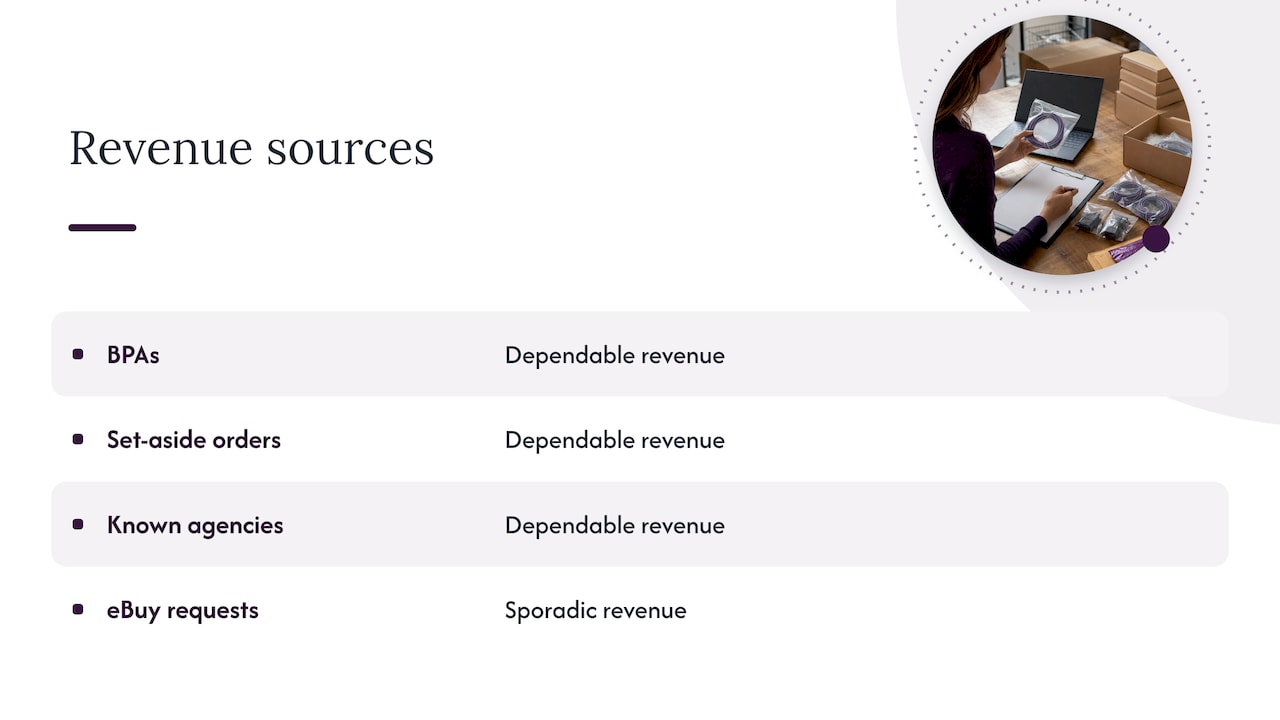
We deliberately avoid quoting an average revenue figure here, because outcomes vary widely by category, agency relationships and effort. What the evidence supports is a pattern. Dependable revenue tends to come from repeat relationships: BPAs, small-business set-aside orders and agencies that already know your name. Sporadic revenue comes from waiting for eBuy requests to find you. Our look at whether a schedule grows your business and the benefits estimator can help you model your own case.
How do you decide if a schedule is worth pursuing?
Treat it as four quick tests, and answer each in writing:
- Market fit: Search Sam, the Forecast of Contracting Opportunities and eBuy-style requests for work like yours. If you cannot find demand, stop here.
- Resources: Do you have staff time, pricing data and the discipline to stay compliant every quarter?
- ROI: Estimate incremental sales, then subtract the application effort, modifications, IFF and marketing time. If the math only works at unrealistic sales, wait.
- Timing: Compare how soon you need revenue with the time from award to first order. A schedule is rarely a quick fix.
Pro Tip: Write down the first three agencies you would approach after award. If you cannot name them, your market-fit test is not finished.
What do the application and first year look like?
Here is the practical sequence:
- Register in SAM.gov and confirm your business details.
- Complete the required training and gather your corporate experience, financials and past performance, following the GSA Roadmap checklist.
- Choose your SINs and build a pricing narrative with supporting evidence, including a commercial sales practices submission when required.
- Submit the offer in eOffer and respond promptly to your contracting officer’s questions.
- After award, plan your modifications. The MAS Modification Guide notes administrative mods may take 7–10 days, while others run 10–30+ days depending on type and documentation.
- Report sales quarterly, remit the IFF on time, and use GSA eTools to find opportunities.
Working alone, plan on two years or more. Our clients are typically awarded in about six months while spending roughly three hours of their own time.
How does a GSA Schedule compare with other ways to sell to government?
A schedule is one route among several, and the right choice depends on how you want to win work.
- Open competitive bids: You respond to individual solicitations posted on SAM.gov. There is no setup fee beyond registration, but every win means a full proposal, and you start from zero each time.
- SBA small-business programs: SBA guidance explains set-asides, sole-source thresholds and programs that can reduce competition for certain contracts. These can pair with a schedule rather than replace it.
- Subcontracting to primes: You work under a larger company, which lowers your compliance burden but also your control over pricing and customer relationships.
- Schedule contract: You pay upfront in effort and ongoing fees, then become pre-approved for repeated orders. FAR ordering procedures exempt many schedule orders from Part 6 competition rules, which is why agencies like the vehicle.
If you sell to many agencies and want repeat business, a schedule usually fits. If you have one big customer or a single niche project, bids or subcontracting may serve you better. Many small firms combine two or three routes.
How do you build a compliant pricing strategy?
Pricing is where many offers stall, so build it deliberately:
- Start with your commercial prices. Gather your published price lists and recent invoices to commercial customers. GSA looks for your pricing to be fair and consistent with how you sell outside government.
- Define your customer categories. Know which customers get discounts and why, because that history shapes the negotiation.
- Map each offering to a SIN. Every product or labor category you list needs a clear description and a price.
- Add the IFF. The IFF clause requires the fee to be included in your award prices, so price it in from the start rather than absorbing it later. The MAS modification guidance also describes the supporting price evidence the eOffer process expects.
- Leave negotiating room. Agencies may ask for extra discounts at the order level under FAR 8.4, so your schedule price should not be your floor.
- Document your reasoning. Write a short pricing narrative that explains discounts and basis of award.
Where pricing questions get complicated, we handle negotiation support for our clients, so the first offer reads cleanly.
How do you get more from a schedule once it is awarded?
Marketing is the baseline. These habits go further:
- Use the forecast, not just eBuy. The Forecast of Contracting Opportunities shows planned procurements, so you can contact agencies before requirements are written.
- Go to training. GSA’s small-business office runs webinars and training on eTools and the forecast, and they are free market research.
- Pursue BPAs. A blanket purchase agreement with one agency can produce steady repeat orders far more reliably than one-off quotes.
- Ask for set-asides. Remind contracting officers that FAR 8.405-5 lets them reserve orders for small businesses.
- Keep your catalog current. Stale prices and descriptions cost you orders quietly, so schedule regular updates through modifications.
- Track every lead. Log agency, contact, date and outcome, so you can see which channel actually pays.
- Plan renewals early. A streamlined offer process exists for established contractors with demonstrated sales, which rewards you for building a track record.
If you sell technology or security services, pair these habits with compliance planning. Cybertech’s market entry playbook is a useful read for cyber startups pairing federal sales with U.S. market entry.
What internal resources do you need to manage the contract?
Think in roles, not headcount. In a small company one person may fill all of them, but each job needs to exist:
- Contract owner: Keeps deadlines, reads GSA notices and owns compliance.
- Pricing and catalog manager: Maintains price lists and prepares modification requests.
- Sales lead: Researches agencies, builds relationships and answers quotes quickly.
- Finance contact: Tracks reportable sales and remits the IFF on time.
To assess your capacity, estimate weekly hours for each role honestly, then compare against what your team can spare without hurting current customers. Pathways to Success stresses due diligence and a schedule-specific business plan, and that planning is where resource gaps show up first.
To optimize, use a shared calendar for quarterly deadlines, a single folder for contract documents, and a standing monthly review of sales, modifications and pipeline. Where hours are tight, outsourcing contract maintenance is often cheaper than a missed report. Our maintenance plans exist for exactly that situation.
What problems appear after award, and how do you fix them?
Most post-award trouble is predictable:
- No orders arrive. This is the most common complaint. The fix is a weekly outreach routine and a target list of agencies, not waiting for eBuy to deliver.
- Reporting slips. Late sales reports or unpaid IFF can become contract debt. Set calendar reminders and assign a backup person.
- Prices go stale. Costs change, but your catalog does not. Plan modifications before your margins erode, remembering that processing times vary by mod type.
- Compliance drift. Product changes, new offerings or new SINs need formal modifications, not informal updates.
- Burnout on the one person who knows it all. Document your process so the contract survives staff changes.
Sustained growth comes from treating the schedule as a sales channel with its own plan, budget and owner, reviewed every quarter. Our contract management service takes much of that routine work off your plate.
When do we recommend pursuing a schedule, and when should you wait?
We think a schedule pays off most for owners who have found real agency demand and will treat the contract as a sales channel. If you cannot yet name buyers, wait and do the market research first. The tradeoff with doing it yourself is speed and compliance risk versus cost, and our clients typically give up only about three hours of their own time. If you are unsure, request a free eligibility check and we will tell you plainly.
— Josh
How do our services help you get a return from a GSA Schedule?
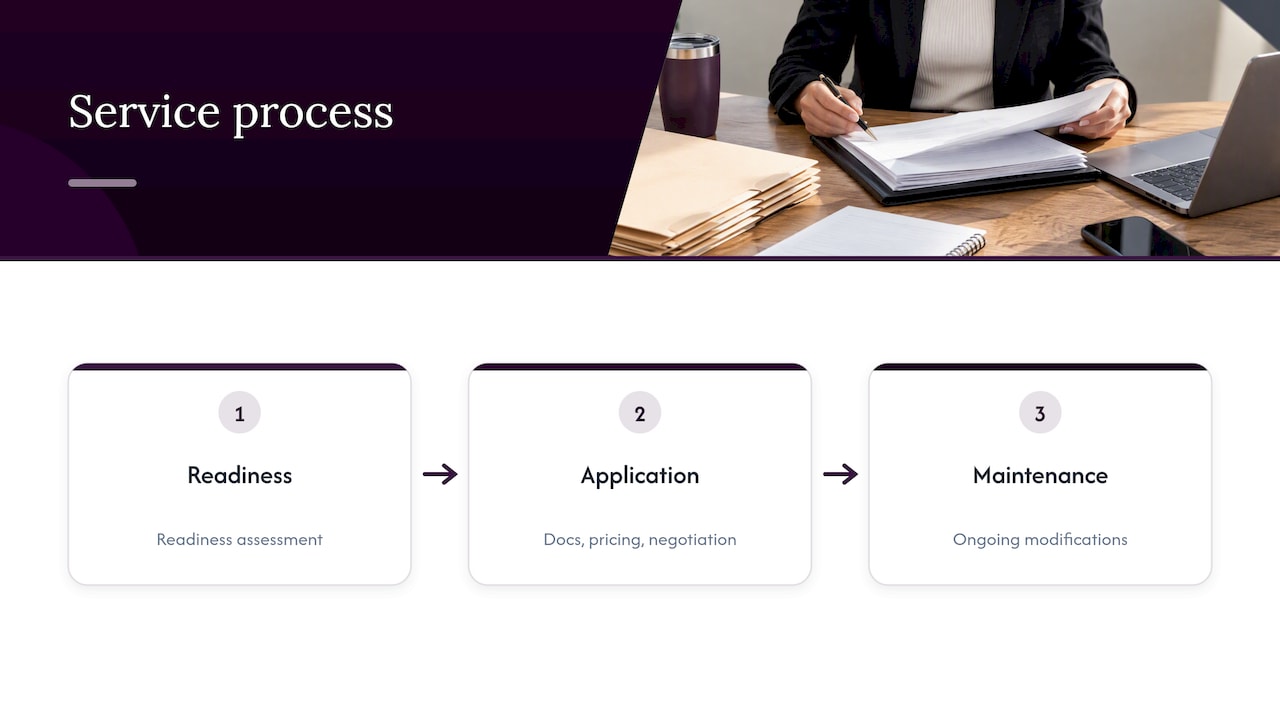
We focus on one job: getting small businesses awarded and keeping them compliant, so you can spend your time selling. We start with a readiness assessment, then handle the full documentation, pricing and negotiation, and offer maintenance plans for ongoing modifications.
Our Startups, Specialty and Streamline packages suit owners who want done-for-you applications, while our maintenance plans suit holders who need regular price list changes. Prefer to work independently? Our GSA DIY Quick Start is built for you. Your next step is simple: book a free eligibility check and find out where you stand.
FAQ
How hard is it to get a GSA Schedule?
The process is document-heavy rather than technically difficult. You need SAM registration, training, financials, past performance and a defensible price list, and most delays come from incomplete or inconsistent paperwork. Working alone often takes two years or more.
How much does it cost to get on the GSA Schedule?
You should account for time, documentation effort and the Industrial Funding Fee on reported sales, currently 0.75%. Many owners also budget for consultant help, which varies by package.
What does it mean to have a GSA Schedule?
It means GSA has pre-approved your business and prices, so agencies can order from you without a separate full bidding process. It does not guarantee any sales.
What is the easiest government contract to win?
No contract is easy, but small set-asides and orders against an existing vehicle carry less competition than open bids. SBA programs can also narrow the field for qualifying firms.
Sources
- Roadmap to get a MAS contract | GSA
- How to win contracts | U.S. Small Business Administration
- 552.238-74 INDUSTRIAL FUNDING FEE AND SALES REPORTING MODIFICATIONS (FEDERAL SUPPLY SCHEDULE) (MAY 2014)
- How to win contracts – Small Business Administration
Recommended
- GSA Schedule Benefits Estimator
- 5 GSA Tips for Small Business Success
- Small Business Perks of GSA Schedule Contracts
- GSA Schedule Savings Calculator