
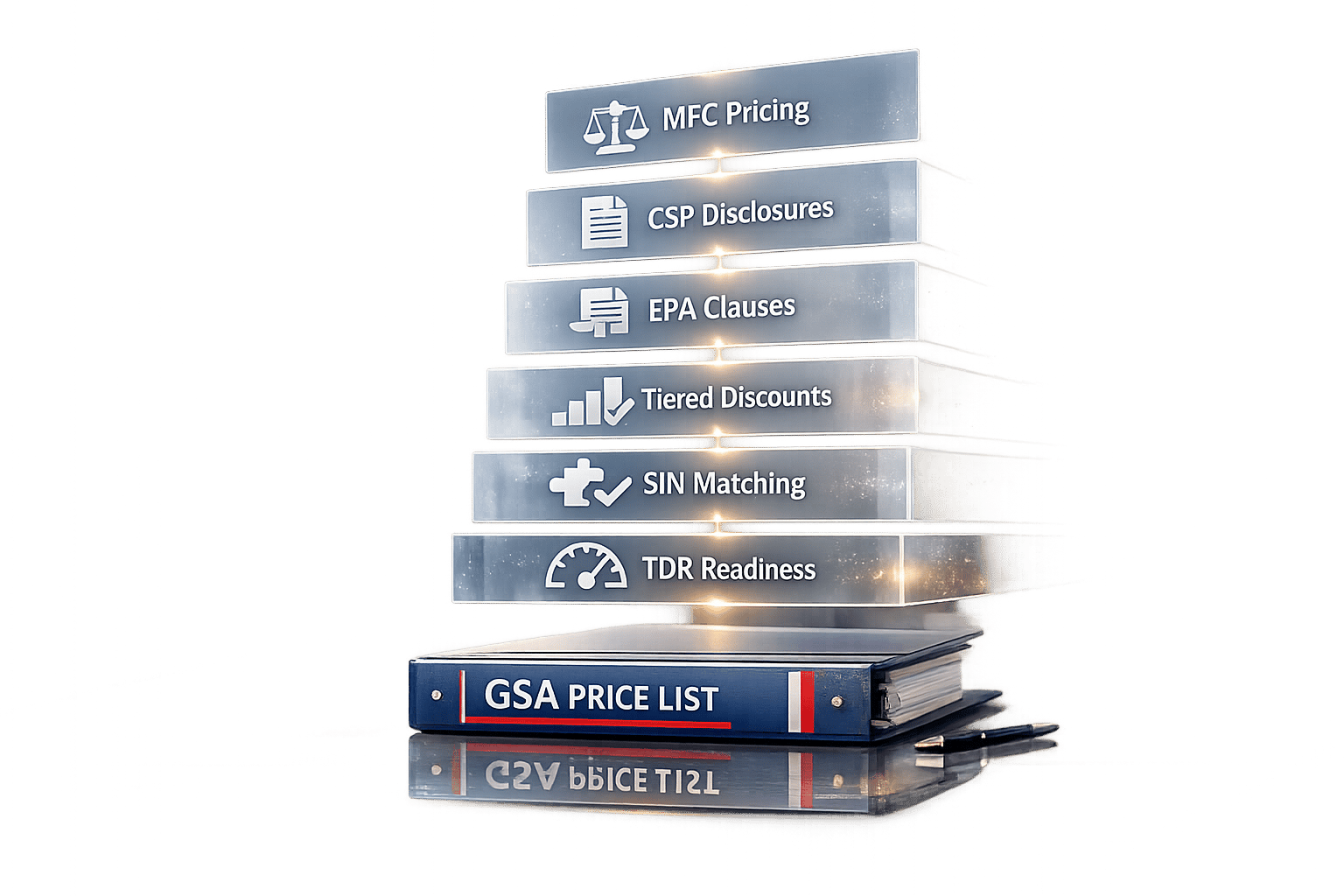
Creating a successful GSA price list is essential for securing federal contracts and ensuring compliance with GSA regulations. This guide covers practical strategies to streamline the approval process, maintain compliance, and maximize your federal contracting opportunities. Key takeaways include:
- Most Favored Customer (MFC) Pricing: Offer the government pricing equal to or better than your best commercial customer to meet fairness requirements.
- Accurate Commercial Sales Practice (CSP) Disclosures: Provide detailed 12-month sales data to avoid fines and delays.
- Economic Price Adjustment (EPA) Clauses: Protect your pricing flexibility for inflation or market changes.
- Volume and Tiered Discounts: Attract federal buyers with competitive bulk pricing while safeguarding profit margins.
- Bundling Products and Services: Simplify purchasing for federal agencies by offering packaged solutions, ensuring individual components are GSA-approved.
- Matching Special Item Numbers (SINs): Align your offerings with the correct SINs to avoid scope violations and tap into high-performing categories.
- Thorough Past Performance Documentation: Build trust with detailed references and performance records.
- Audit-Ready Pricing Records: Maintain detailed, organized records to comply with GSA audits and new Transactional Data Reporting (TDR) requirements.
- Competitor Pricing Research: Use GSA Advantage to benchmark and position your pricing competitively.
- Pre-Submission Rate Negotiation: Ensure your rates are well-supported and aligned with GSA’s “fair and reasonable” standard.
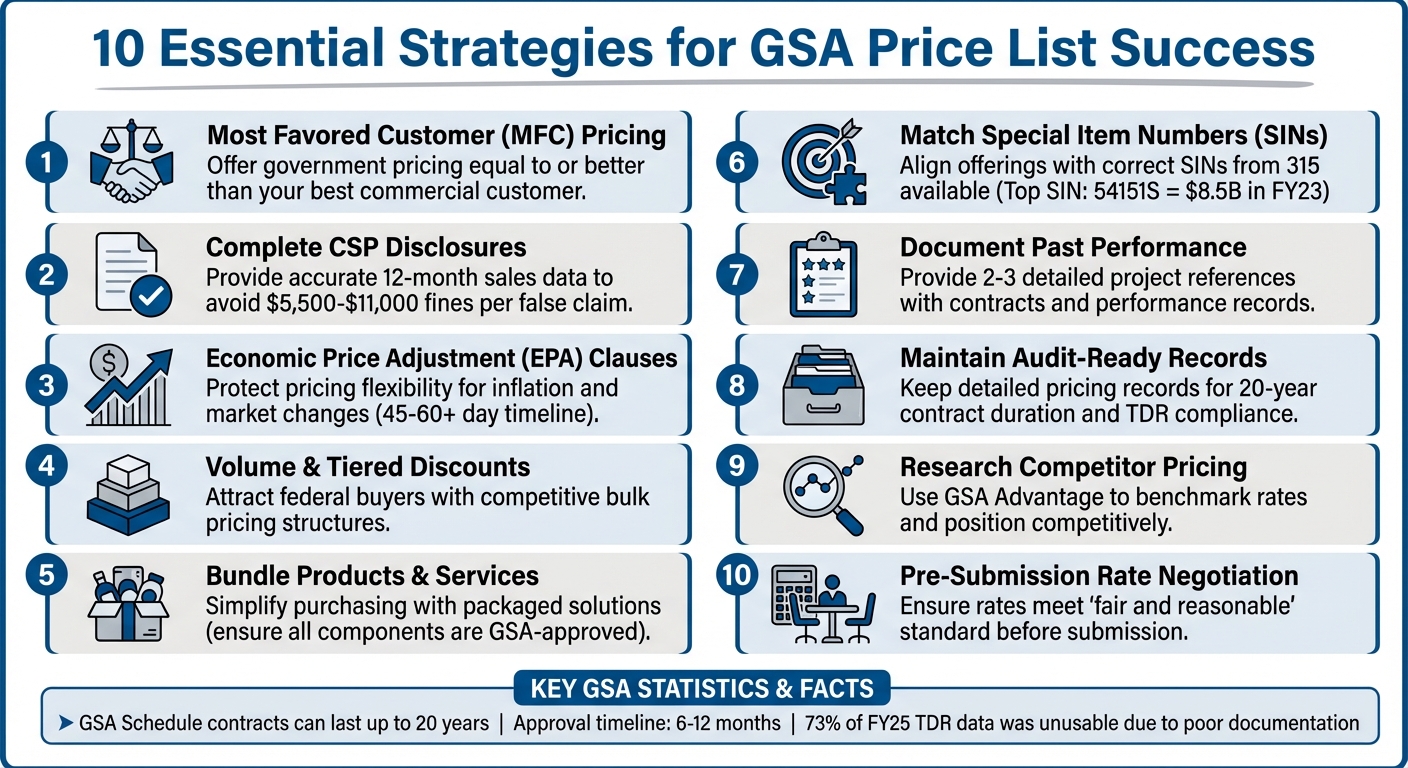
10 Essential Strategies for GSA Price List Success
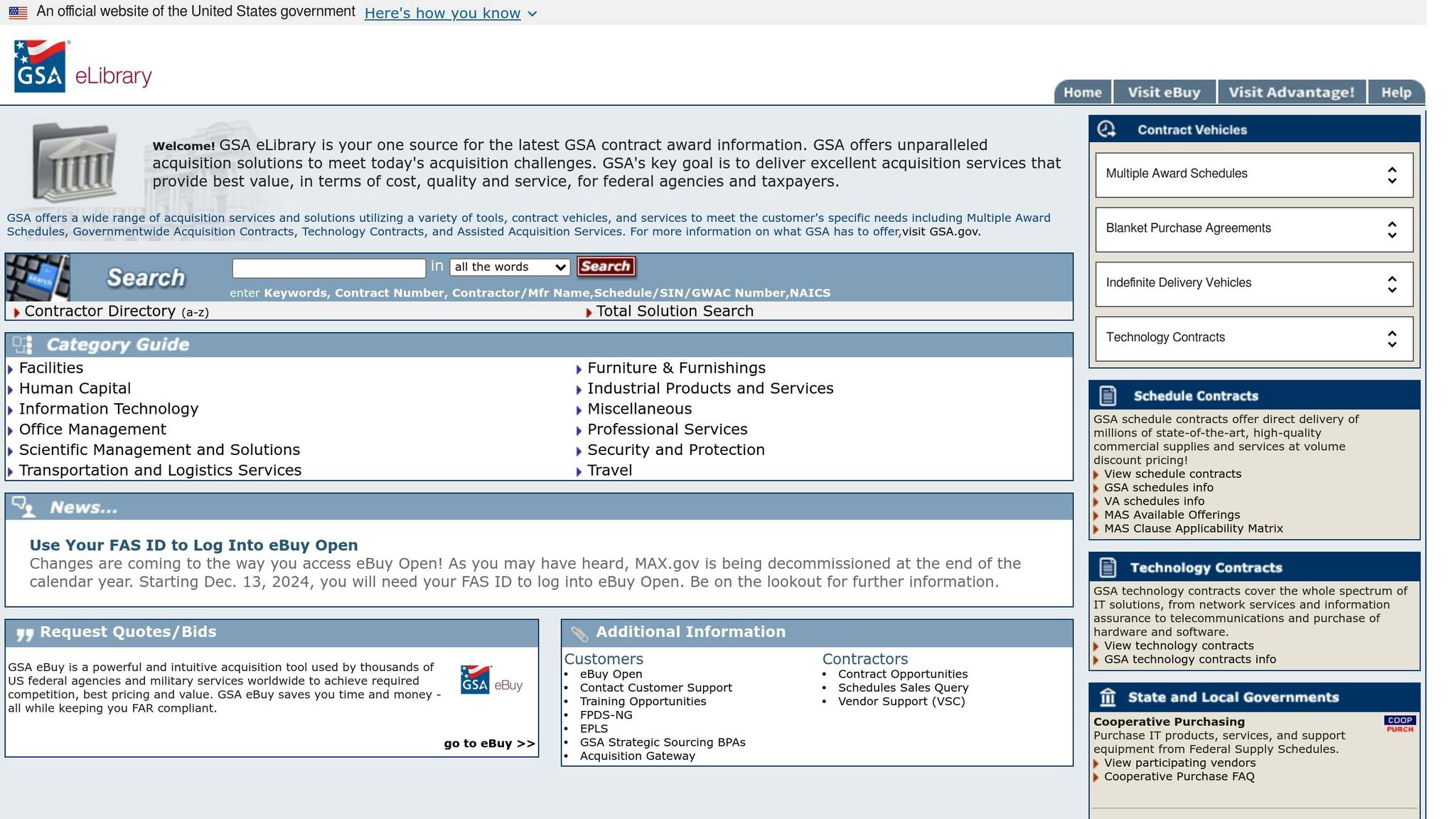
GSA eLibrary – Your GovCon Goldmine for Researching Potential Teaming Partners and Price Comparisons
1. Establish Most Favored Customer Pricing
Most Favored Customer (MFC) Pricing ensures that your pricing stands up to scrutiny as fair and reasonable. This approach requires identifying your best commercial customer and guaranteeing that the government receives pricing equal to or better than what you offer that customer. Without proper documentation, your proposal may face delays or even rejection.
Compliance with GSA Regulations
Your Commercial Sales Practice (CSP) disclosure must clearly outline which customers receive your best pricing and the exact amounts they pay. The General Services Administration (GSA) mandates detailed records of all customer categories, including discount percentages, volume thresholds, and any special concessions granted over the past year. Additionally, the Price Reductions Clause (PRC) requires that any price reductions offered to MFC customers must also be extended to the GSA within 15 calendar days. This ensures the government consistently benefits from your most competitive pricing. Meeting these requirements not only satisfies GSA regulations but also simplifies the approval process.
Efficiency in the Approval Process
Thoroughly documenting your MFC pricing can significantly speed up the GSA review process. When your pricing is clearly tied to commercial transactions, GSA is less likely to conduct extensive market research to validate your rates. On the flip side, vague or incomplete CSP documentation is one of the most common reasons for application rejection. Providing organized records – such as contracts, invoices, and detailed sales histories – demonstrates transparency and consistency, making it easier for GSA to approve your proposal.
Long-Term Sustainability of Your Pricing Strategy
A well-structured pricing strategy not only helps secure initial approval but also ensures the long-term viability of your contract. Setting your MFC pricing too high can lead to rejection, while pricing too low may lock you into unprofitable rates for the duration of the agreement. A smart approach often involves using a rolling average or a representative pricing period instead of relying on a single transaction. This is especially important in competitive markets where prices fluctuate frequently. Such a strategy allows you to maintain flexibility for cost increases and supports Economic Price Adjustment (EPA) requests when market conditions shift. Consistent MFC practices also make contract renewals smoother, as GSA tends to favor contractors with transparent pricing records and a history of adhering to the Price Reductions Clause.
2. Create a Complete Commercial Sales Practice Disclosure
Compliance with GSA Regulations
Your Commercial Sales Practice (CSP) disclosure is a cornerstone of GSA negotiations, requiring a detailed 12-month snapshot of all commercial sales activity. It’s vital to ensure accuracy, as the Office of Inspector General (OIG) can impose fines ranging from $5,500 to $11,000 for each false claim in a CSP disclosure.
Julio Cardenas, Senior Consultant at Coley GCS, highlights the importance of this step:
"Most GSA Schedule contractors adhere to these traditional CSP requirements".
Your CSP disclosure should provide a clear breakdown of customer categories, including discount percentages, volume thresholds, FOB delivery terms, and any concessions like extended warranties or free training. This data helps the GSA assess whether your proposed pricing meets their "fair and reasonable" standard by comparing it to your Most Favored Customer (MFC) and Basis of Award (BOA) benchmarks. It’s essential to update your CSP whenever there are changes in discount structures or customer classifications. Proper documentation not only ensures compliance but also sets the stage for a smoother review process.
Efficiency in the Approval Process
A well-prepared CSP disclosure can significantly speed up the review process. Contracting Officers rely on a five-column format – covering customer category, discount percentage, volume/quantity, FOB delivery terms, and concessions – to quickly verify pricing accuracy. Including details of any deviations, such as one-time clearances or goodwill discounts, can further streamline evaluations.
For example, in 2025, a mid-sized IT firm successfully secured its GSA Schedule on the first attempt by thoroughly reviewing its CSP. In contrast, a small manufacturer experienced a year-long delay due to submitting outdated documentation.
Long-Term Sustainability of Your Pricing Strategy
Regularly auditing your CSP records – preferably on a quarterly basis – helps ensure ongoing alignment with GSA rates and prevents violations of the Price Reductions Clause. It’s equally important to train both your commercial and government sales teams to recognize that special discounts offered to BOA customers can trigger mandatory GSA price reductions within 15 days. For companies managing extensive product catalogs, implementing robust tracking systems for all discounts is crucial.
If you need expert assistance to navigate CSP disclosures and maintain a compliant, competitive pricing strategy, GSA Focus offers comprehensive support tailored to your needs.
3. Use Economic Price Adjustment Clauses
Compliance with GSA Regulations
Economic Price Adjustment (EPA) clauses aren’t a free pass to raise prices – they’re a structured, rule-bound tool tied to the specific clause included in your contract. Capitol 50 Consultants Inc. puts it clearly:
"A GSA Economic Price Adjustment (EPA) is not a general permission to increase prices. It is a limited contractual mechanism governed by the clause incorporated at award."
Before submitting an EPA request, make sure your contract aligns with a commercial price list, market index, or fixed escalation cap. Misaligned triggers often lead to EPA denials. Additionally, any price increase must be applied consistently across your Most Favored Customer (MFC) class to meet the requirements of the Price Reductions Clause. Just like CSP disclosures and MFC pricing, EPA clauses help maintain your contract’s relevance by allowing adjustments that reflect market realities.
Long-Term Sustainability of Your Pricing Strategy
EPA clauses, when used correctly, are vital for keeping your GSA contract practical and competitive over the long haul. These clauses let you adapt to market changes, manufacturer price hikes, and inflation – ensuring you’re not stuck fulfilling orders at outdated prices that could lead to financial losses.
Ray Smith, Founder of Smith Government Consulting, emphasizes the impact of recent regulatory updates:
"MAS Refresh 29 significantly relaxed EPA restrictions. Under current rules vendors are no longer limited by: A fixed number of EPA requests; Maximum percentage increases; Waiting periods between requests."
However, the timeline for EPA modifications has stretched. What once took 21–30 days now requires 45 to 60+ days. To avoid delays, submit your EPA requests at least 60 days ahead of time and request updated manufacturer price lists 30 days before they take effect. If an EPA request is denied, it could lead to future complications, as Contracting Officers may reexamine your original MFC disclosures, potentially increasing audit risks.
Navigating these processes can be complex, but expert assistance can make a big difference. For tailored advice and resources to manage your GSA Schedule contract effectively, check out GSA Focus.
4. Offer Volume and Tiered Discounts
Compliance with GSA Regulations
Volume and tiered discounts play a crucial role in strengthening your GSA pricing strategy, complementing earlier tactics like CSP and EPA. To maintain compliance, it’s essential to disclose these discounts in your Commercial Sales Practices (CSP) for all customer categories. Proper documentation is key – retain records that validate the discounts you offer. This safeguards you from potential contract termination or violations under the False Claims Act.
By structuring significant discounts around specific volume thresholds, you can protect yourself from the Price Reductions Clause (PRC). For example, if deeper discounts are tied to higher purchase volumes, GSA cannot demand the same discounts for smaller, routine orders. This transparent approach not only ensures compliance but also supports your case for "fair and reasonable" pricing during negotiations with Contracting Officers.
Competitiveness in Federal Contracting
Tiered pricing is a powerful tool for standing out on platforms like GSA eBuy and GSA Advantage. It demonstrates value for bulk purchases, aligning with GSA’s transition to Transactional Data Reporting (TDR) and the "best value" standards established under the FY26 NDAA. By mirroring commercial practices, tiered discounts can give you a competitive edge in federal contracting.
For example, if you’re selling IT hardware under a relevant SIN, you might set a base price of $1,000 per unit. From there, you could offer discounts such as $950 per unit for orders of 10–49 units, $900 for 50–99 units, and $850 for 100+ units. This pricing structure should be disclosed in your CSP, backed by a 12-month price list that demonstrates the tiers. If a Contracting Officer pushes for a lower base price, consider enhancing the volume discount terms instead. This approach helps preserve your ceiling price while still offering value.
Long-Term Sustainability of Pricing Strategy
Volume discounts not only encourage larger orders but also help protect your profit margins over the 20-year lifespan of a GSA contract. By spreading fixed costs across higher-volume sales, you can avoid the margin erosion that comes with setting fixed prices too low. This ensures your rates remain viable for the long term.
It’s also important to understand how your SIN’s model – whether PRC or TDR – impacts your pricing obligations. Regularly review your commercial sales to ensure that a one-time special discount for a BOA customer doesn’t unintentionally trigger lower pricing for GSA orders across the board. This proactive approach can help you maintain control over your pricing strategy while staying compliant.
5. Bundle Products and Services
Streamlining the Approval Process
Bundling products and services into a single package can make federal purchasing much smoother by consolidating multiple orders into one. However, to stay within GSA guidelines, it’s essential to list each bundled component separately on your GSA contract. For instance, if you’re combining IT hardware with installation services, both the hardware and labor need individual approval on your Schedule. As Bipin from GSA Contract Services advises:
"Just make sure each component is also listed on your GSA contract, or you risk violating terms."
Additionally, clear documentation in your Commercial Sales Practices (CSP) is key to supporting your bundled pricing strategy.
Staying Within GSA Regulations
When offering bundled deals, your CSP disclosure becomes a critical part of the process. Any bundled discounts extended to your Most Favored Customer must be clearly documented in your CSP. Without this, GSA could apply those bundled discount rates to individual government sales, potentially disrupting your pricing structure. By defining your bundled deals explicitly in your CSP, you protect your profit margins while maintaining the transparency GSA requires.
Gaining a Competitive Edge in Federal Contracts
By ensuring proper documentation and compliance, bundled offerings can give you a strong advantage in the federal marketplace. Federal buyers are drawn to bundled solutions because they provide an all-in-one purchasing option. For example, offering integrated solutions allows you to include additional labor services – such as installation, construction, or repairs – so long as the Ordering Contracting Officer ensures wage rate requirements are met. This flexibility positions you to compete for larger, more complex projects, delivering added value to both your business and government clients.
6. Match Offerings with Special Item Numbers
Compliance with GSA Regulations
Special Item Numbers (SINs) are the backbone of how the GSA organizes contract offerings. The MAS Program divides its catalog into 12 Categories and 315 SINs, each with its own scope and requirements. To ensure your products or services align with these definitions, use the GSA eLibrary to cross-check SIN descriptions and confirm your offerings meet all technical criteria. This step is crucial in avoiding scope violations, which can lead to delays or even contract changes. Matching your offerings to the right SINs from the start lays the groundwork for a smoother approval process.
Efficiency in Approval Process
Choosing the correct SINs can make a world of difference during the contract approval stage. Government buyers use the GSA eBuy system to issue Requests for Quote (RFQs), and these are tied directly to specific SINs. If your schedule doesn’t include the right SINs, you won’t get notified about potential opportunities. As GSA Focus emphasizes:
"Without the correct SIN(s), you miss RFQ notifications "
Taking the time to research SINs that align with your industry keywords and NAICS codes during your application process can save you headaches later. This preparation ensures you’re ready to hit the ground running once your contract is awarded.
Competitiveness in Federal Contracting
The financial impact of selecting the right SINs is hard to ignore. For example, in Fiscal Year 2023, SIN 54151S (IT Professional Services) generated over $8.5 billion in sales, while SIN 541611 (Management and Financial Consulting) accounted for $4.2 billion. These numbers highlight how high-performing SINs can open the door to more bidding opportunities. Keeping an eye on competitors’ SIN selections can reveal areas where your contract might be lacking. Plus, since GSA regularly updates SIN categories to address changing government needs, staying informed about these changes ensures your offerings remain relevant and competitive.
7. Document Past Performance Thoroughly
Compliance with GSA Regulations
When applying for a GSA Schedule, you’ll need to provide 2–3 project references that include detailed contract information, customer contacts, and performance narratives. These references demonstrate your ability to deliver projects on time and within budget. Supporting documents like published catalogs, price lists, invoices, contracts, and quote sheets are essential. However, it’s critical to ensure these documents clearly tie back to the products or services you’re proposing for your GSA Schedule. Submitting false or misleading documents can lead to serious consequences, including contract termination and violations under the False Claims Act. Accurate documentation not only builds trust but also helps streamline the approval process.
Efficiency in Approval Process
Getting your GSA Schedule approved typically takes 6–12 months, depending on the complexity of your offerings. Product-based schedules often move faster than those for services. Incomplete or unclear past performance records can stall negotiations, as contracting officers must verify your history before moving forward. By submitting detailed and well-organized past performance records upfront, you make it easier for GSA to evaluate your application. This not only speeds up the approval process but also boosts your credibility and reliability as a vendor. A smoother approval process means fewer delays and a stronger position in the federal marketplace.
Competitiveness in Federal Contracting
Your past performance record is a critical factor in standing out from competitors in federal contracting. It directly addresses GSA’s main concern: whether you can reliably deliver on your promises. A strong track record not only makes your proposal more appealing but also justifies premium pricing and increases your chances of winning future GSA eBuy opportunities. Even if your federal experience is limited, you can strengthen your application by combining commercial references with federal past performance. This approach ensures agencies reviewing your GSA Advantage catalog see clear evidence of your reliability.
8. Keep Audit-Ready Pricing Records
Compliance with GSA Regulations
When working with the GSA, having detailed and accurate pricing records isn’t just a good practice – it’s a requirement. GSA expects thorough documentation to support your pricing, including catalogs, price lists, invoices, contracts, and quotes. To make your records audit-ready, label each document clearly with the associated product or service and its pricing period. This is especially critical if your current price lists don’t cover older sales reported in your Commercial Sales Practice Disclosure (CSP-1).
Additionally, under the Price Reductions Clause (PRC), you’re required to monitor discounts given to your baseline commercial customers to ensure GSA receives equivalent price reductions. With the introduction of Transactional Data Reporting (TDR) in FY26, all Special Item Numbers (SINs) now fall under this system, replacing PRC. While TDR simplifies some aspects of compliance, it also increases the demand for precise pricing records. A report by the GSA Office of Inspector General in June 2025 revealed that 73% of FY 2025 TDR sales data was unusable due to poor implementation practices. This highlights the importance of maintaining a strong documentation foundation to avoid issues during reviews.
Efficiency in Approval Process
Submitting well-organized and complete pricing records can significantly speed up GSA’s review process. When your documentation clearly supports your pricing, GSA can validate your offer more efficiently, cutting down on review delays caused by missing or incomplete information – one of the leading reasons for rejections. For example, including historical price lists that cover your CSP-1 periods upfront can prevent additional data requests that might slow things down.
Companies that provide fully prepared pricing records, such as labeled invoices and historical catalogs, often see faster approvals, sometimes in less than six months. This level of preparation not only streamlines the initial evaluation but also sets you up for long-term success with your GSA contract.
Long-Term Sustainability of Pricing Strategy
GSA Schedule contracts can run up to 20 years, so maintaining sustainable pricing strategies is crucial. These contracts include an initial five-year term followed by three five-year renewal options. To manage this, you’ll need audit-ready records to support Economic Price Adjustment (EPA) requests. These requests allow you to adjust prices for inflation or rising costs after your first 12 months. Supporting data, such as the Bureau of Labor Statistics‘ Producer Price Index or supplier price increase notices, is essential for justifying these changes.
To stay prepared, centralize all key records – CSP disclosures, BOA agreements, and pricing modifications – in a digital format. This will make it easier to pass Contractor Assistance Visits (CAVs) and audits by the Office of Inspector General (OIG). Regularly auditing your invoices and sales practices – ideally on a quarterly basis – helps ensure compliance with the PRC and alignment between your GSA rates and commercial discounts. By staying proactive, you’ll maintain both compliance and a strong pricing strategy over the life of your contract.
9. Research Competitor Pricing on GSA Advantage
Compliance with GSA Regulations
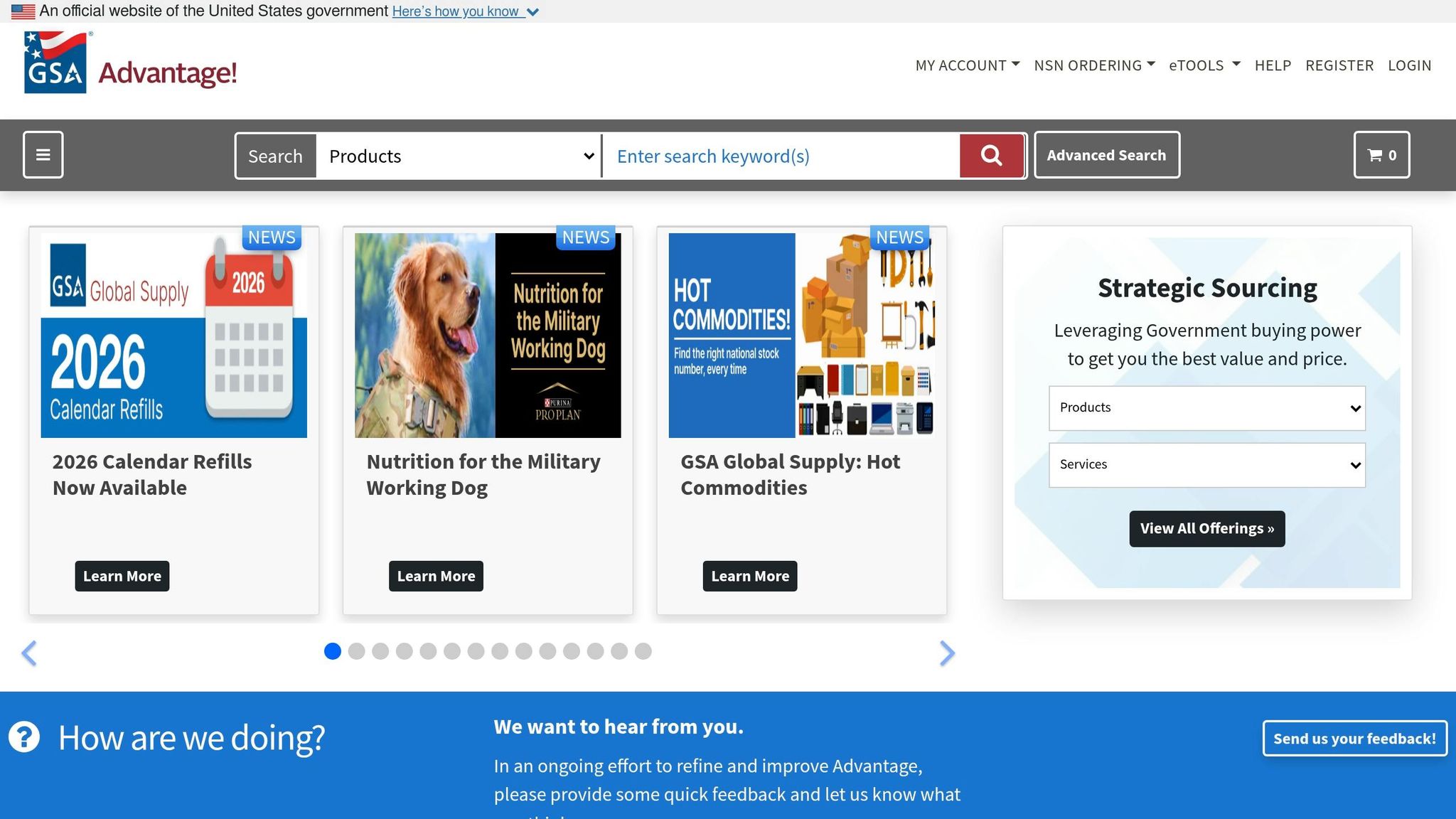
The General Services Administration (GSA) requires contractors to set pricing that is "fair and reasonable", using commercial pricing practices as a benchmark. GSA Advantage, the online marketplace where federal agencies shop for approved contractor offerings, provides a transparent view of competitor pricing within your Special Item Numbers (SINs). This platform is a valuable resource for confirming that your proposed rates align with market standards.
By comparing your pricing to competitors on GSA Advantage, you can ensure your rates meet market expectations while accurately reflecting your commercial discount structure. This approach becomes especially critical as GSA shifts to Transactional Data Reporting (TDR), which validates pricing based on actual sales data rather than historical disclosures. Leveraging this market insight can simplify the review process and improve your chances of approval.
Efficiency in Approval Process
Positioning your pricing competitively – either aligning with or slightly undercutting competitors on GSA Advantage – can reduce the likelihood of GSA requesting additional cost or pricing data. When your rates are in line with market research, GSA can more easily verify that they are fair and reasonable, which can speed up the approval process. On the other hand, pricing that appears too high without clear justification often leads to further scrutiny and delays.
To strengthen your case, consider creating a detailed pricing comparison spreadsheet. Include competitor names, base prices, discount structures, and any special terms they offer. Take note of the types of documentation competitors use for pricing justification, such as published catalogs or commercial contracts. Mimicking these practices shows market awareness and can help avoid unnecessary approval delays.
Competitiveness in Federal Contracting
Understanding your competitors’ pricing is not just about compliance – it’s also key to winning contracts. With the FY26 National Defense Authorization Act (NDAA) shifting GSA’s evaluation focus from "lowest overall cost" to "best value" (which considers quality and past performance alongside price), staying competitive is more important than ever. A thorough analysis of competitor pricing can directly influence your success rate.
Regularly reviewing GSA Advantage gives you insights into pricing trends within your SIN categories, including details like volume discounts and bundled services. The goal isn’t to offer the lowest price – it’s to find the pricing sweet spot that balances market conditions with your commercial practices. This approach keeps you competitive without sacrificing profitability.
Long-Term Sustainability of Pricing Strategy
Monitoring GSA Advantage on a quarterly basis allows you to stay ahead of market changes and adjust your pricing as needed. This proactive approach ensures your rates remain competitive throughout the life of your contract, which could extend up to 20 years with renewals. Staying in tune with market realities makes your pricing more defensible and reduces the likelihood of significant adjustments after the contract is awarded.
Pay close attention to pricing changes driven by GSA’s expanded use of mandatory TDR reporting, which will apply to all SINs starting in FY26. This shift is expected to save agencies $50 million annually, but it will also reshape market dynamics. Treat competitor research as an ongoing process, not just a step for initial approval. This way, you can avoid the pitfalls of repeatedly lowering prices after an award – a practice that can hurt your profit margins and strain your operations in the long run.
10. Negotiate Fair Rates Before Submission
Meeting GSA’s "Fair and Reasonable" Standard
When submitting your pricing to the GSA, it’s essential to demonstrate that your rates are “fair and reasonable.” This isn’t just a suggestion – it’s a requirement. To meet this standard, you’ll need to back up your proposed rates with solid commercial sales data and supporting documents. Think along the lines of recent catalogs, invoices, contracts showing volume discounts, or quote sheets. For SINs (Special Item Numbers) not under TDR (Transactional Data Reporting), completing the price proposal template with absolute accuracy is critical. Any gaps or inconsistencies could lead to your submission being rejected outright.
With TDR validating pricing based on actual sales transactions, the stakes are higher than ever. Your commercial sales practices need to align closely with the pricing you propose to the GSA. Make sure your documentation is clearly labeled and corresponds to the specific SINs. This step ensures your pricing reflects your commercial practices and GSA offerings, making it easier for reviewers to connect the dots. Proper preparation here not only ensures compliance but also reduces the chances of the GSA coming back to you for additional data.
Streamlining the Approval Process
Submitting complete and well-supported pricing documentation is your best bet for avoiding delays during the GSA review process. Their evaluation is thorough, and missing information can result in back-and-forth requests that stretch out your timeline. By preparing in advance – collecting invoices, analyzing your commercial discounts, and benchmarking competitors through tools like GSA Advantage – you can sidestep these delays and keep the process moving smoothly.
This preparation is even more critical now, as the GSA shifts its focus under the FY26 National Defense Authorization Act. The emphasis is moving from the "lowest overall cost" to a "best value" standard. Pre-negotiating rates that align with market norms and highlight your value proposition can significantly speed up the GSA’s verification process.
Building a Sustainable Pricing Strategy
Negotiating fair rates upfront isn’t just about getting your foot in the door – it’s about setting the stage for a contract that could last up to 20 years with renewals. Incorporating Economic Price Adjustment (EPA) clauses during your pre-submission planning adds flexibility, allowing for future price changes without risking compliance issues. Keep in mind, overly aggressive pricing might help you win initial approval, but it can hurt your profitability in the long run as costs fluctuate.
To create a defensible EPA strategy, use reliable market data, such as information from the Bureau of Labor Statistics. This ensures your pricing can adapt to changes while remaining justified. If you’re unsure about navigating these complexities, consider working with specialists like GSA Focus. They offer full-service support, including document preparation and pricing validation, to help small businesses craft competitive and sustainable pricing strategies. Their expertise ensures your rates hold up over time while staying compliant with GSA standards.
Conclusion
Creating a strong GSA price list is a cornerstone of succeeding in federal contracting. Strategies like setting Most Favored Customer (MFC) pricing and maintaining audit-ready records are crucial for not only gaining approval quickly but also ensuring long-term compliance. The GSA’s review process is thorough, and any lapses in pricing documentation or commercial sales practices can lead to delays or even rejection.
Compliance doesn’t stop once your contract is approved. To stay on track, you’ll need to regularly update your Master Price List, perform quarterly audits to catch Price Reduction Clause (PRC) issues, confirm Trade Agreements Act (TAA) compliance, and refresh your catalog every two years to maintain visibility on platforms like GSA Advantage and eBuy.
Navigating GSA pricing requirements, from Economic Price Adjustment (EPA) clauses to other regulatory demands, can be especially challenging for small businesses. Mistakes in this process can result in delayed approvals and missed contracting opportunities, highlighting the importance of expert guidance.
If you’re unsure about any part of the GSA Schedule application process, partnering with professionals can make a huge difference. GSA Focus provides comprehensive services tailored for small businesses, including document preparation, compliance checks, and negotiation support. With a 98% success rate and a refund guarantee, their hands-on approach simplifies the process, freeing you to concentrate on growing your federal contracting business.
A well-prepared GSA price list lays the groundwork for a contract that can last up to 20 years. By combining these strategies with expert assistance, you can open the door to federal contracting opportunities more efficiently and confidently.
FAQs
How do I pick my Most Favored Customer?
To choose your Most Favored Customer (MFC) for a GSA Schedule, pinpoint the customer who benefits from your best discounts, pricing, and concessions. This customer acts as the standard for determining your GSA pricing. To comply with GSA guidelines, ensure the pricing for your Basis of Award (BOA) customer is as good as, or better than, the pricing you offer your MFC.
What records should I keep for a GSA audit?
When preparing for a GSA audit, having the right records in order is crucial. Some of the key documents you’ll need include:
- Sales reports: These provide a clear picture of your transactions and help demonstrate compliance with your GSA contract terms.
- Pricing documentation: This includes price lists, discount records, and any other materials that justify your pricing structure.
- Contract modifications: Keep detailed records of any changes made to your GSA contract, including approvals and supporting documents.
- Product or service descriptions: Ensure these are accurate and match what’s listed in your contract.
- Compliance records: Documents like Trade Agreements Act (TAA) compliance certifications are essential to show adherence to federal regulations.
- Financial statements: These help verify your financial integrity and contract performance.
- Internal controls: Standard operating procedures (SOPs) and other internal processes demonstrate how you maintain compliance.
- Audit correspondence: Maintain records of all communication with auditors to ensure transparency and track progress.
Keeping these records organized and up-to-date isn’t just about staying compliant – it’s about being fully prepared when the audit happens.
When should I use an EPA price increase?
When market conditions shift, inflation rises, or commercial pricing changes, it may be time to consider an EPA (Economic Price Adjustment) price increase for your GSA contract. You can typically request this adjustment 12 months after the initial award, as long as your EPA clause allows it. Just make sure you have the necessary documentation to back up the request.
Related Blog Posts
- GSA Price List Update Success Stories
- Common GSA Compliance Mistakes And Fixes
- 5 GSA Discounting Rules for Compliance
- Top GSA Price List Errors and How to Avoid Them