
Maintaining ethical standards is non-negotiable for GSA contractors. Non-compliance can lead to severe penalties, including fines, contract termination, or even debarment. This guide explains how to align your business with GSA requirements, covering key practices like creating a written code of ethics, training your team, vetting subcontractors, and ensuring accurate GSA listings.
Key Takeaways:
- Written Code of Ethics: Legally required for contracts over $7.5M, detailing disclosure obligations and internal controls.
- Ethics Training: Mandatory for contracts exceeding $6M, focusing on anti-bribery, conflicts of interest, and whistleblower protections.
- Subcontractor Vetting: Essential to avoid risks; check compliance history and certifications.
- Accurate GSA Listings: Ensure transparency and separate GSA sales from commercial sales for proper reporting.
By embedding these practices into daily operations, contractors can build trust, avoid risks, and secure long-term success in the federal marketplace.
GovCon 101 – Ethics
Create a Written Code of Business Ethics
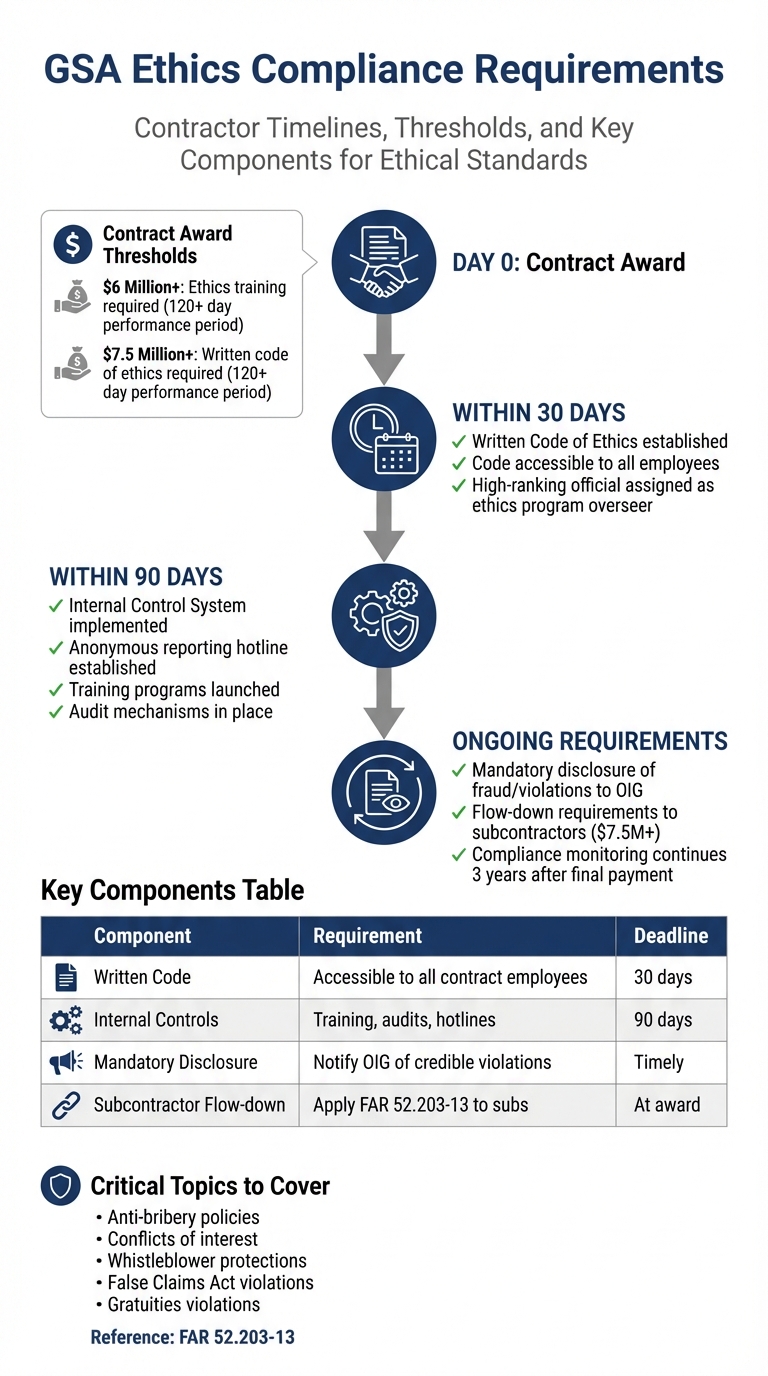
GSA Contractor Ethics Compliance Requirements and Timeline
If you’re a GSA contractor, having a written code of business ethics isn’t just a good idea – it’s a legal requirement. According to FAR 52.203-13, contractors must establish this code within 30 days of being awarded contracts worth more than $7.5 million, provided the performance period is at least 120 days. This code is the foundation for your federal contracting practices and partnerships.
Your ethics code needs to include specific disclosure requirements. For instance, if credible evidence of fraud, conflicts of interest, bribery, gratuities under Title 18 U.S.C., or False Claims Act violations comes to light, you must promptly notify the agency’s Office of the Inspector General (OIG) in writing. This obligation doesn’t end with the contract – it continues for three years after the final payment is made.
Meeting FAR Requirements
FAR 52.203-13 outlines clear expectations for your ethics code. Every employee involved in the contract must have access to the code, and you need to assign a high-ranking official – such as an officer, director, or senior manager – to oversee the ethics program. This person must have the authority and resources to ensure compliance.
For contracts involving larger or non-commercial items, there’s an additional requirement: you must establish an internal control system within 90 days of the contract award. This system should include tools like an anonymous reporting mechanism (think hotlines) to let employees report potential misconduct without fear of retaliation. Such mechanisms are key to identifying and addressing ethical issues early.
FAR 52.203-13 emphasizes: "The Contractor shall exercise due diligence to prevent and detect criminal conduct; and otherwise promote an organizational culture that encourages ethical conduct and a commitment to compliance with the law".
Here’s a quick look at the key requirements:
| Component | Requirement Detail | Deadline |
|---|---|---|
| Written Code | Make the code accessible to all employees on the contract | Within 30 days of award |
| Internal Control System | Include training, audits, and anonymous reporting hotlines | Within 90 days of award |
| Mandatory Disclosure | Notify OIG of credible evidence of fraud or bribery | Timely upon discovery |
| Subcontractor Flow-down | Apply FAR 52.203-13 to relevant subcontracts | At subcontract award |
These requirements provide the structure you need to create an ethics code that aligns with federal contracting standards.
Adapting the Code for GSA Partnerships
When it comes to GSA contracts, there are additional nuances to consider. For example, if you encounter violations related to MAS contracts, you must notify both the ordering agency’s OIG and the GSA Inspector General. To make this process easier, include contact details for the GSA Office of Inspector General’s "FRAUDNET HOTLINE" directly in your ethics code.
Your code should also reflect GSA’s advertising policies. Under GSAM 503.570-1, contractors are prohibited from using GSA references in any advertising that suggests government endorsement or superiority of products.
Additionally, when working with subcontractors, ensure that ethics requirements are "flowed down" to any subcontract exceeding $7.5 million with a performance period longer than 120 days. Make sure to define "full cooperation" clearly – this means providing the government with enough information to identify violations and responsible parties, but without compromising attorney-client privileges.
Provide Ethics Training for Your Team
Strong ethics training forms the backbone of reliable and transparent partnerships, which are crucial for success with GSA Schedules. A written code of ethics is only as effective as your team’s understanding of it. Training ensures everyone knows what’s expected and how to handle ethical challenges. According to a 2012 National Business Ethics Survey, common workplace misconduct includes abusive behavior (21%), misreporting hours worked (20%), lying (19%), and withholding necessary information (18%). Proper training can help address these issues before they escalate into larger problems.
FAR 52.203-13 mandates that contractors with contracts exceeding $6 million and performance periods longer than 120 days provide employee training. Your program should cover key topics like conflicts of interest, anti-bribery policies, gifts and hospitality, information security, whistleblower protections, and how to respond to government inquiries. Employees should also be familiar with internal reporting tools, such as anonymous hotlines, to report potential misconduct without fear of retaliation. Tailoring your training to the unique responsibilities of each team role ensures everyone receives relevant guidance.
Setting Up a Training Program
Customizing ethics training to suit different roles within your organization makes it more effective. For example:
- Executives should focus on corporate compliance and high-profile scandals.
- Managers benefit from training on dispute resolution and accurate recordkeeping.
- General employees should learn about proper resource use and workplace security.
- Contract managers need specialized knowledge of procurement regulations.
Standard e-learning modules, which typically last about 1.5 hours and cost around $19.99 per user, are a cost-effective way to provide basic training. Pairing these modules with live presentations or discussions during staff meetings can make the material more engaging and relatable. Additionally, offering employees a structured decision-making model can be invaluable when they encounter complex ethical dilemmas in procurement or contract management.
Although federal regulations don’t prescribe how often training should occur, your program should align with the size of your company and the extent of its government contracting activities. Annual training sessions can help incorporate regulatory updates and reinforce ethical standards. You might also consider following GSA’s example by offering monthly or quarterly updates, similar to their "Monthly OSDBU National Training" sessions.
Beyond formal training sessions, active involvement from leadership and all stakeholders helps solidify ethical practices across the organization.
Getting Everyone Involved
The tone for a successful ethics program starts at the top. Senior leadership must actively champion ethical standards to ensure they’re embraced across the organization.
John J. Sarno, President of EANJ, emphasizes: "A successful ethics program starts with senior management’s ownership and leadership of the process".
Neglecting executive training can undermine the importance of ethics within the organization. Make ethics training a mandatory part of onboarding for all new hires to establish expectations from the start.
Use diverse delivery methods to maximize participation. Combining online workshops, webinars, and live presentations led by senior management demonstrates a strong commitment to ethical principles. Short, regular discussions – like 5-minute segments during staff meetings – can keep ethics top-of-mind. Interactive techniques such as gamification, role-playing, and quizzes can make training more engaging and impactful, moving beyond passive lectures. Small incentives, like gift cards or public recognition, can further encourage participation and reinforce ethical behavior.
Don’t overlook subcontractors in this effort. Including them in web-based, self-paced training modules ensures that your entire supply chain operates under the same ethical framework, reducing the risk of violations that could jeopardize your GSA Schedule.
Vet Your Subcontractors and Partners
Choosing the right subcontractors and partners is a critical part of maintaining the integrity of your GSA Schedule. The success of your contract hinges on working with partners who are not only reliable but also fully compliant with government regulations. A single misstep by a partner could have serious consequences, potentially putting your entire contract at risk. Consider this: in 2023 alone, $45 billion in government spending went through the GSA Schedule program. That’s a market you cannot afford to lose access to because of preventable mistakes.
Being compliant means navigating a maze of forms and ever-changing regulations. According to GSA policy, any misconduct by a partner or subcontractor can lead to severe consequences, such as rescinding or canceling the contract. Contracting officers, in consultation with legal counsel, have the authority to take these measures if a contract becomes "tainted" by unethical practices. This makes it clear – you’re not just responsible for your own actions but also for the actions of every subcontractor and partner tied to your GSA work. Proper vetting isn’t just a one-time task; it’s the foundation for ongoing diligence.
How to Vet Third Parties
To ensure you’re partnering with the right entities, start by using official resources like GSA eLibrary, FPDS.gov, and USAspending.gov. These platforms allow you to check a potential partner’s prime contracts, confirm their registration (using their Unique Entity Identification or company name), and filter results by NAICS codes or relevant keywords.
Next, verify with the GSA Office of Inspector General that the partner isn’t suspended or debarred. Look into their compliance history, paying close attention to any violations of the Gratuities clause, antitrust laws, or the Covenant Against Contingent Fees. Also, confirm that they don’t misuse GSA contract references in advertising to imply government endorsement.
For contracts above specific dollar thresholds, make sure that the prime contractor has submitted the required small business subcontracting plan, as outlined in FAR 52.219-9. You can use the GSA Subcontracting Directory to identify Other Than Small Business prime contractors who have filed the necessary reports. Finally, assess the partner’s financial and operational health through a contractor responsibility determination.
Why Regular Monitoring Matters
Vetting a partner is just the beginning – ongoing monitoring is equally important to ensure continued compliance. For instance, subcontractors must maintain certifications like 8(a), HUBZone, or WOSB throughout the contract’s term. Additionally, their SAM.gov registration needs to be renewed annually.
Keep an eye on past performance evaluations to identify patterns that could harm your GSA reputation. If your contract includes a small business subcontracting plan, make sure the reports required under FAR 52.219-9 reflect accurate progress.
It’s also crucial to have clear internal protocols in place for employees to report any suspected violations. These could include issues like breaches of the Gratuities clause, antitrust concerns, or improper use of contingent fees. Reporting such issues promptly to the Contracting Officer and the Office of Inspector General gives you a chance to address problems before they escalate. Regular monitoring not only protects your contract but also upholds the ethical standards that are essential for success in federal contracting.
Define Roles and Maintain Clear Communication
A successful GSA partnership hinges on clearly defined roles. Without them, you risk overlapping responsibilities, misaligned expectations, and costly compliance errors. These issues can waste resources and delay contract approvals. By outlining roles upfront, you not only streamline operations but also uphold the ethical standards vital to federal contracting. Clarity in responsibilities paired with consistent communication ensures the partnership stays on track.
Align Expectations Before Signing
Before signing any agreement, it’s essential to establish a shared understanding of each party’s responsibilities through a pre-contract consultation. One of the most pivotal roles in this process is the authorized negotiator – the individual responsible for securing fair pricing during government transactions. Josh Ladick, President and Founder of GSA Focus, emphasizes this point:
"We’ll be there with you, on-call, as your authorized negotiator, to make sure you get the prices your Small Business deserves."
Breaking down tasks effectively is key to avoiding redundant efforts and maximizing efficiency. For instance, in a done-for-you solution, the business owner may only need to dedicate about three hours, while the partner handles the bulk of the workload. Establishing a clear timeline for contract setup and program entry further reduces potential misunderstandings that could disrupt progress or require restarting the application process. Conducting a readiness assessment beforehand ensures your business meets eligibility requirements, saving time and resources.
When roles are clearly defined, keeping lines of communication open becomes the next priority.
Keep Communication Open
Transparency is the foundation of compliance once the partnership begins. For contracts that include a small business subcontracting plan, regular reporting is required to track progress in meeting goals under FAR 52.219-9. Setting a schedule for these reports promotes accountability throughout the contract’s duration.
Leveraging official GSA tools – such as the Subcontracting Directory, GSA eLibrary, and SBA’s SubNet – can help you monitor partners’ past performance and current contract status. These tools are invaluable for catching potential issues early, like expired certifications or lapsed registrations. Clear reporting channels ensure that any challenges are addressed promptly, particularly as regulations evolve, helping you stay compliant and on course.
Maintain Compliance and Accountability
Once you’ve established roles and communication channels, the next priority is creating a robust system of accountability. GSA contracts require detailed, regularly updated documentation, and even small compliance missteps can lead to delays and wasted time. Keeping precise records and adhering to FAR clauses are key to maintaining ethical partnerships. To achieve this, clear oversight mechanisms must be put in place.
Assign a Compliance Officer
FAR 52.203-13 requires GSA contractors to adopt a written code of business ethics and implement a training program within the first 90 days of receiving a contract. A crucial part of this process is appointing a compliance officer, formally documented in your ethics code. This individual should have the authority to access records and stop any non-compliant activities.
The compliance officer’s responsibilities include staying updated on FAR and DFARS changes, conducting annual training sessions, and ensuring policies are consistently enforced. They should also provide regular reports to leadership, which keeps accountability front and center while allowing the business to stay ahead of regulatory changes. As Josh Ladick, Founder of GSA Focus, highlights:
"We recently used these personal contacts to adapt ahead of time, anticipating a large change on the GSA’s end… while everyone else was left scrambling, picking up the rubble!"
Extend Ethics Requirements to Subcontractors
Your commitment to compliance shouldn’t stop with your internal team. Extend key FAR clauses to all subcontractors, holding them to the same ethical standards. Before bringing subcontractors into your supply chain, conduct thorough due diligence, and once onboard, monitor their performance regularly to ensure they align with your ethical requirements.
To address potential issues, set up hotlines and investigation protocols with whistleblower protections. Regular oversight, including performance checks and immediate disclosure of any adverse findings, is essential. These steps help avoid penalties, fines, or even debarment – outcomes that could threaten your GSA Schedule contract. By ensuring every partner in your supply chain meets the same ethical standards, you strengthen the foundation of your GSA success.
GSA Focus provides expertise in compliance assurance tailored for small businesses, guiding them through these complex requirements and helping maintain accountability across all partnerships.
Use GSA Schedule Visibility to Build Trust
GSA platforms like Advantage! and eBuy act as your gateway to government clients and partners. These platforms function as the federal government’s official marketplace, where procurement officers evaluate your reliability and compliance history as previously discussed. Your listings on these platforms serve as a public showcase of your capabilities, and keeping them updated signals that you’re an active and dependable partner. To maintain an active Schedule, contractors must generate at least $100,000 in GSA MAS sales within their first five years, making visibility and trust essential for long-term success.
Create Accurate GSA eBuy Listings
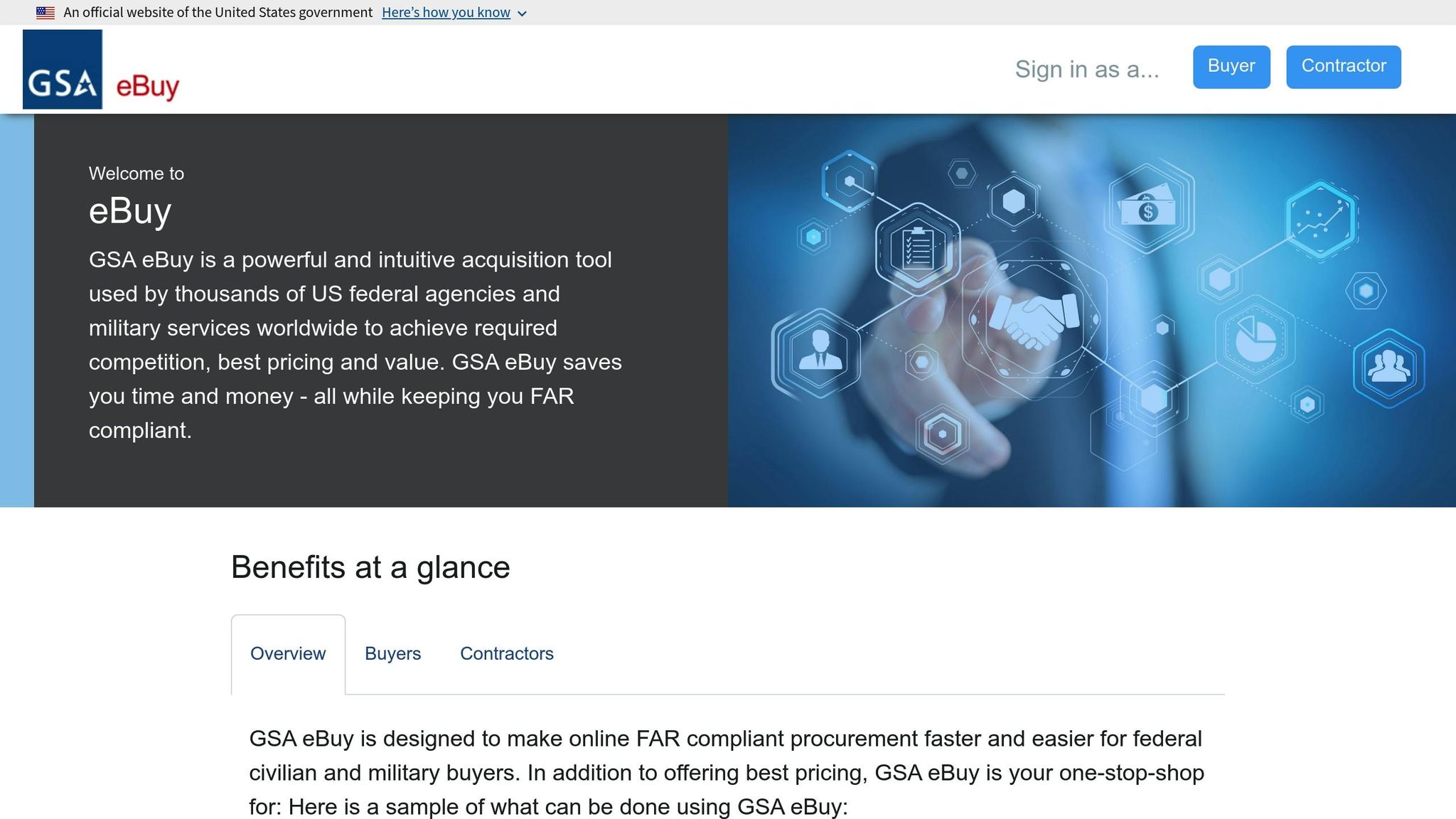
Accurate and well-maintained listings are key to helping buyers quickly understand what you offer. This means using clear images, precise descriptions, and correct part numbers. Additionally, your listings should align with the commitments outlined in your Commercial Sales Practices (CSP) disclosures, as this consistency forms the foundation of a trustworthy relationship with the GSA.
It’s also important to review your marketing materials and listings to ensure they don’t imply government endorsement. As noted in GSAM 503.570-1: "The intent of this policy is to prevent the appearance of Government bias toward any product or service". By adhering to this neutrality policy, you help maintain buyer trust and promote fair competition.
Separating GSA sales from your commercial sales in your accounting system is another critical step. This practice ensures accurate quarterly reporting and proper payment of the Industrial Funding Fee (IFF), which is currently 0.75% of all GSA MAS sales. Regularly updating your listings not only demonstrates active engagement but also helps you avoid compliance issues that could harm your reputation. Clear, accurate listings set the stage for building lasting partnerships while reinforcing your broader compliance efforts.
Build Lasting Partnerships
Your ability to maintain accurate listings and deliver consistent performance builds confidence among federal buyers. Beyond your GSA listings, databases like CPARS, FAPIIS, and PPRIS play a crucial role in verifying your performance, labor compliance, and delivery timeliness. These systems provide a transparent record of your reliability, which procurement officers rely on to minimize risks when awarding future contracts.
As Price Reporter explains: "Building trust and being dependable are super important to keep both the vendors and the government agencies happy and working well together".
To further strengthen your position as a trusted partner, renew your SAM.gov registration annually, respond to mass modifications within 90 days, and consistently monitor your performance records. These actions showcase your commitment to ethical operations and establish you as a reliable partner for the long haul.
For small businesses navigating the complexities of federal contracting, GSA Focus offers guidance to maintain compliant and transparent GSA listings. By ensuring your visibility aligns with ethical practices, you can build trust and position yourself for sustained success in the federal marketplace.
Conclusion
Ethical practices in GSA contracting aren’t just about following the rules – they lay the groundwork for sustainable growth and long-term success. By embedding compliance into your daily operations, you move from merely avoiding risks to creating a system that safeguards profitability and opens doors to federal opportunities. As Michael Perch, CEO of Road Map Consulting, puts it:
"When compliance is treated as part of everyday operations from the start, it stops feeling like a risk and starts feeling manageable".
This mindset shift does more than reduce risk – it creates opportunities. Contractors who prioritize strong ethical standards not only avoid penalties and debarment but also position themselves as trustworthy partners, securing more contracts and building lasting relationships with government agencies. On the flip side, compliance violations can ripple through every sale tied to your GSA Schedule, potentially jeopardizing your entire revenue stream. The message is clear: trust and reliability lead to steady growth and greater opportunities.
From creating a formal Code of Business Ethics to carefully vetting subcontractors and ensuring accurate GSA listings, extending ethical practices across all aspects of your business demonstrates a commitment to integrity. Government contracts demand the highest level of public trust, and handling public funds requires impeccable conduct.
To succeed, establish clear ethical guidelines, train your team, monitor compliance rigorously, and maintain transparent communication. These steps not only meet regulatory expectations but also position your business as a dependable partner in the federal marketplace.
For small businesses navigating this space, GSA Focus provides guidance to help maintain compliance and build a strong ethical foundation. By prioritizing ethics from the outset, you’re not just safeguarding your current contracts – you’re laying the groundwork for the long-term success and reputation of your business in the federal contracting arena.
FAQs
What happens if I don’t have a written code of ethics for my GSA contract?
Failing to maintain a written code of ethics directly violates FAR 52.203-13, a key requirement for GSA contractors. Ignoring this obligation can result in severe repercussions, including administrative actions, contract termination, suspension, or even being barred from federal contracting altogether.
Having a written code of ethics is more than just a requirement – it’s a clear statement of your dedication to compliance and integrity. It helps safeguard your business from potential risks while reinforcing your reputation in the government contracting space. This commitment is crucial for building trust and ensuring the longevity of your GSA partnership.
Why is subcontractor vetting important for GSA Schedule compliance?
Subcontractor vetting is a key step in maintaining compliance with your GSA Schedule. As the prime contractor, you’re responsible for ensuring that every subcontractor in your supply chain aligns with the ethical, performance, and small-business standards set by the Federal Acquisition Regulation (FAR). This process confirms that subcontractors are not debarred or suspended and comply with requirements like the Small Business Subcontracting Program.
Taking the time to carefully evaluate a subcontractor’s qualifications and integrity can help you avoid compliance violations, audits, or penalties. It also ensures that subcontractors are equipped to meet specific FAR clauses in your subcontracting plan, such as Utilization of Small Business Concerns and Small Business Subcontracting Plan clauses. Ignoring these requirements could lead to liquidated damages or other serious consequences.
To make this process easier, GSA Focus offers a detailed subcontractor vetting service. This allows you to maintain compliance while concentrating on delivering quality and value to your federal clients.
How can I ensure my GSA Schedule listings stay accurate and compliant?
To keep your GSA Schedule listings accurate and in line with requirements, it’s crucial to fully understand and follow the obligations outlined in your contract. Start by uploading your awarded price list to GSA Advantage! within 30 calendar days of receiving your contract. Make sure to register for a FAS ID, submit sales data through the FAS Sales Reporting Portal, and monitor your industrial funding fee reports. Staying on top of these tasks ensures your pricing, product descriptions, and financial reporting align with GSA standards.
Regular maintenance is just as important. Conduct periodic reviews of your listings to verify that product details, pricing, and terms remain consistent with your contract. Tools like the Vendor Support Center can help you manage contract changes, ensure compliance with the Trade Agreements Act, and remove items that don’t meet regulations. If this process feels overwhelming, partnering with GSA Focus could be a smart move – they provide expert guidance to simplify compliance and lighten your administrative load.
Related Blog Posts
- How to Track GSA Contract Compliance
- Top 5 Compliance Issues in GSA Contracts
- Common GSA Compliance Mistakes And Fixes
- Checklist for GSA Construction Contract Compliance