
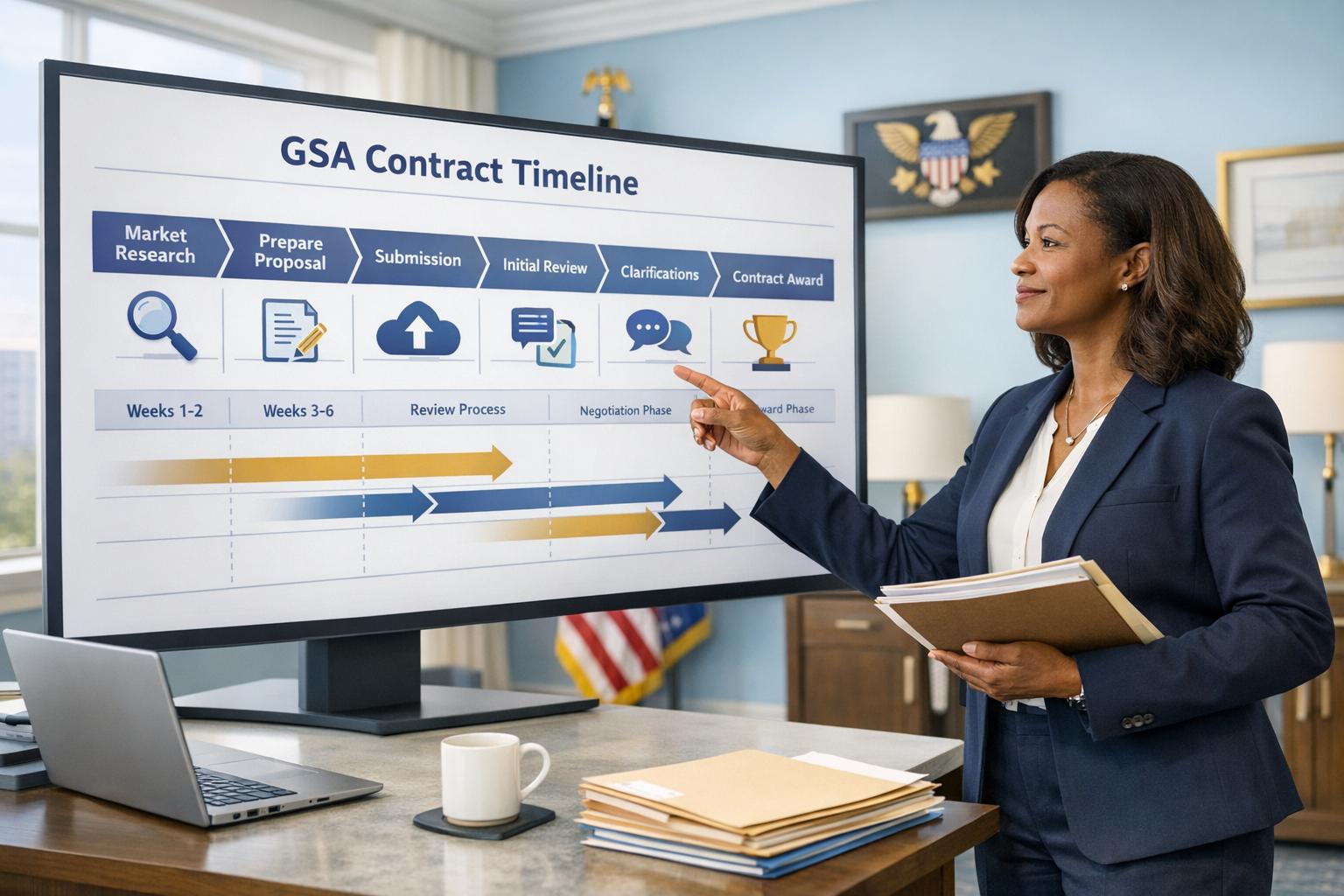
Understanding the GSA Contract Process
Navigating the path to securing a federal contract can be daunting, especially when timelines feel like a moving target. For businesses aiming to work with the government, estimating the duration of the General Services Administration (GSA) contract process is a critical first step. Whether you’re just registering on SAM.gov or finalizing your proposal, having a rough idea of the wait time helps with planning and resource allocation.
Why Timelines Matter
The journey to a GSA agreement varies widely—some businesses wait over a year, while others move faster due to their size or preparation. Small businesses, for instance, might see slightly quicker processing thanks to federal initiatives. Beyond that, each stage, from initial registration to final approval, carries its own set of challenges and delays. Agency workloads or incomplete documentation can stretch things out, so patience is key.
Planning for Success
Tools that estimate your wait based on current progress can be a game-changer. They offer a glimpse into what lies ahead, letting you align budgets and timelines accordingly. If you’re stepping into government contracting, remember to double-check requirements early and consider expert guidance to avoid common pitfalls. A little foresight goes a long way in this complex arena.
FAQs
How accurate is this GSA contract timeline calculator?
Our tool provides an estimate based on average timelines from industry data, like 12-18 months if you’re just starting out or 3-6 months post-submission. But keep in mind, every case is unique. Factors like agency workload, the complexity of your proposal, or even unexpected delays can shift the timeline. Use this as a planning guide, not a guarantee, and check with a GSA consultant for specifics on your situation.
Why does being a small business affect the timeline?
Small businesses often get a slight edge in processing due to federal programs that prioritize their applications to encourage diversity in contracting. We’ve factored in a 1-month reduction in the estimated range to reflect this potential boost. That said, it’s not a hard rule—some small businesses still face standard delays depending on the agency or contract type.
What if my GSA contract stage isn’t listed in the options?
We’ve covered the most common stages, from ‘not started’ to ‘proposal submitted,’ to keep things simple. If you’re in a niche spot—like dealing with revisions or appeals—pick the closest stage and note that your timeline might differ a bit. For a more tailored estimate, reaching out to a GSA advisor could help clarify where you stand.