

Want to win federal contracts? Your past performance documentation is key. These documents prove your ability to deliver quality work on time and within budget – essential for securing a GSA Schedule Contract. Here’s a quick breakdown of what you’ll need and how to prepare:
- Identify Required Documents: Gather CPARS reports (minimum 3) or 3-5 customer references with project details if CPARS isn’t available.
- Collect & Organize Data: Ensure customer references include names, contacts, project descriptions, values, and dates. Store everything in a clear, centralized system.
- Use Past Performance Questionnaires (PPQs): When CPARS is unavailable, send PPQs to clients for detailed feedback on quality, timeliness, cost management, and customer service.
- Write Detailed Project Narratives: Highlight your approach, challenges, solutions, and measurable results for key projects.
- Review for Compliance: Double-check all documents for accuracy, recency, relevance, and alignment with GSA requirements.
Pro tip: Missing or disorganized materials can delay or derail your application. Take the time to ensure everything is complete and professionally presented. Ready to dive into the details? Let’s get started.
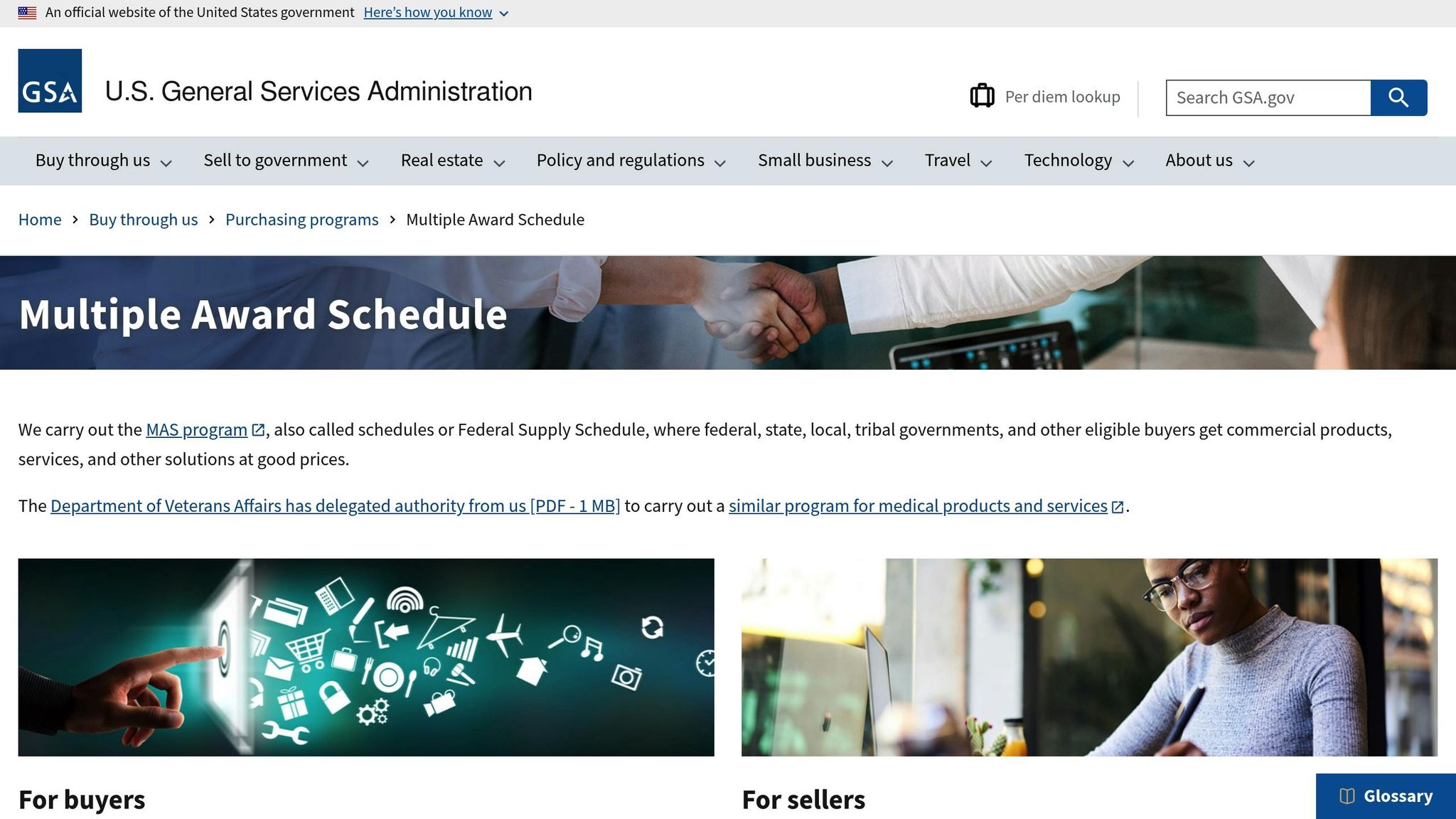
GSA Schedule – Part 2 of 3: Getting Onto The GSA Schedule Proposal Prep
Step 1: Know What Past Performance Documents You Need
Before diving into your GSA submission, it’s crucial to identify the past performance documents that best highlight your track record. This first step helps you focus on selecting materials that effectively represent your performance history. There are three primary types of past performance documentation to consider. Understanding these options will help you determine the best mix for your GSA Schedule application.
CPARS Reports
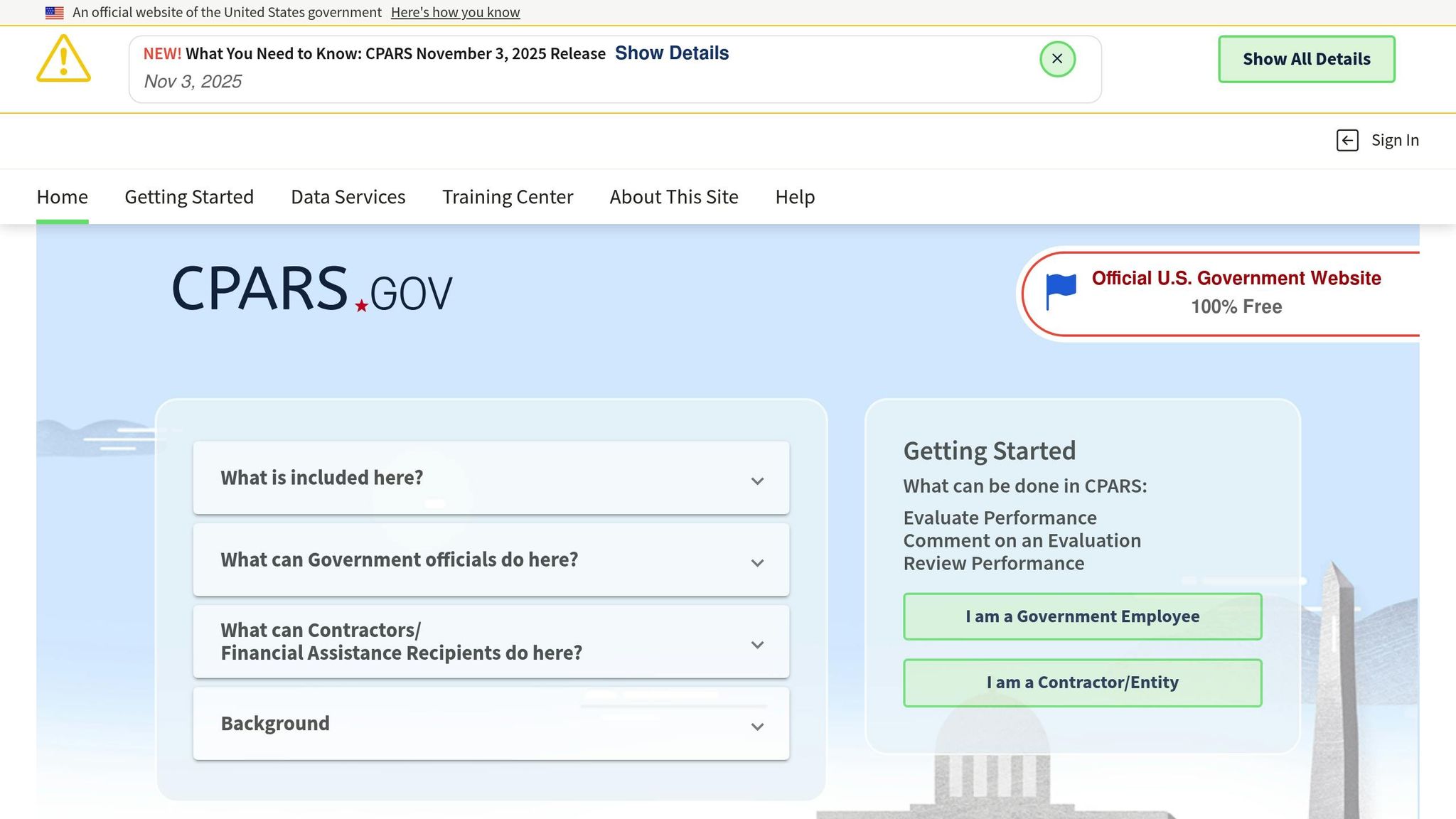
CPARS, or the Contractor Performance Assessment Reporting System, contains official evaluations submitted by federal agencies after completing contracts. These reports provide standardized ratings on key performance areas like quality, timeliness, and cost management.
For your GSA submission, make sure your CPARS reports align with the scope of your proposal. You’ll need at least three CPARS reports to support your application. If you don’t have enough CPARS reports, you can use Past Performance Questionnaires (PPQs) to fill in the gaps.
Past Performance Questionnaires (PPQs)
PPQs are structured forms designed to gather direct feedback from clients about your performance. They’re especially helpful if you lack sufficient CPARS reports or want to showcase work from private sector contracts. PPQs allow you to present non-federal contract performance in a format that GSA evaluators can easily review alongside federal assessments.
Past Project Narratives
Past project narratives offer a detailed, written account of specific projects, showcasing how your company approaches and executes its work. These narratives provide context that standardized reports like CPARS can’t capture. They also give you the opportunity to emphasize your strengths and provide a deeper understanding of your project outcomes. A strong narrative should include the project’s scope, methodology, results, and adherence to contractual requirements.
| Document Type | Minimum Required | Recency Requirement | Relevance Requirement | Key Content/Sections |
|---|---|---|---|---|
| CPARS Reports | 3 | Last 3 years | Must align with GSA proposal scope | Quality, timeliness, cost control, etc. |
| Past Project Narratives | As needed | Last 3 years (recommended) | Match complexity/scope of proposal | Scope, methodology, results, compliance |
Step 2: Collect and Organize CPARS Reports or Customer References
After identifying the specific past performance documents required, the next step is gathering your CPARS reports or, if those aren’t available, customer references. This process demands precision because missing or disorganized documentation can delay your GSA application.
If you lack sufficient CPARS reports, you’ll need to provide three to five customer references for projects completed within the last three years. Each reference must meet GSA’s documentation standards.
Make sure each customer reference includes the following details:
- Customer Name: The full legal name of the client organization.
- Point of Contact: Contact information for a client representative (name, phone number, and email address).
- Project Description: A brief summary of the work performed and your role.
- Dollar Value: The total value of the project in U.S. dollars.
- Period of Performance: Start and end dates formatted as MM/YYYY – MM/YYYY.
| Required Detail for Customer Reference | Description |
|---|---|
| Customer Name | Full legal name of the client organization |
| Point of Contact | Name, phone number, and email address of the client representative |
| Project Description | A concise summary of work performed and your role |
| Dollar Value | Total value of the project in U.S. dollars |
| Period of Performance | Start and end dates (MM/YYYY – MM/YYYY) |
Check for Relevance and Recency
Your past performance documents should align closely with the services or products you’re proposing in your GSA Schedule application. Relevance matters more than the size of the project. Focus on contracts that mirror the scope, complexity, and technical requirements of your proposed offerings.
GSA’s three-year recency rule is non-negotiable. Projects older than three years, no matter how successful, won’t weigh as heavily in your evaluation. If recent work is limited, include projects that demonstrate transferable skills or related capabilities within the required timeframe.
Pay close attention to scope alignment between your past work and your GSA proposal. For example, a $50,000 IT support contract could be more valuable to your application than a $500,000 construction project if your focus is IT services. GSA evaluators prioritize evidence that you can handle the type and scale of work you’re proposing.
Once you’ve confirmed the relevance and recency of your documentation, the next step is to organize it for quick and easy access.
Organize Information for Easy Access
Good organization is just as important as collecting the right documents. The GSA application process involves extensive paperwork – sometimes exceeding 100 pages – so creating a streamlined system will save time and prevent delays.
Start by setting up a centralized digital repository with clearly labeled folders for each document type. Create separate folders for CPARS reports, customer references, and any supporting materials. Use a consistent naming convention that includes details like the client name, project value, and completion date. This makes it easy to locate specific files if GSA evaluators request additional information.
Keep both digital and physical copies of critical documents, especially signed customer references and official CPARS reports. Store contact details for all references in a separate, easy-to-access document so you can quickly reach out if GSA requests clarification. When possible, include backup contact information, as personnel changes at client organizations can complicate verification.
To simplify the process further, consider creating a master spreadsheet summarizing key details from each reference or CPARS report. This allows you to quickly spot gaps in your documentation and ensure you’re presenting the strongest possible case for your GSA application.
Given the complexity of GSA compliance requirements, working with an expert can make the process far more manageable. If you need help gathering and organizing your past performance documents, partnering with a service like GSA Focus can ensure everything is in order.
Step 3: Create and Send Past Performance Questionnaires (PPQs)
When CPARS reports fall short or aren’t available, Past Performance Questionnaires (PPQs) become your go-to resource for showcasing your track record to GSA evaluators. To make the most of PPQs, you’ll need a solid plan and clear communication. Your goal? Collect detailed feedback that highlights your strengths while keeping the process simple for your clients.
Aim to gather at least three completed PPQs for relevant projects. Once your questionnaires are ready, the next step is ensuring your clients complete them promptly.
Designing Effective Questionnaires
The way you structure your PPQs can make or break the quality of responses you get. Keep the language straightforward and the layout clean. To make it easier for your clients, pre-fill project details wherever possible.
Focus your questions on these key evaluation areas:
- Quality: How well was the work executed?
- Timeliness: Were deadlines consistently met?
- Cost Management: Was the budget adhered to?
- Customer Service: How responsive and communicative were you?
Go beyond simple yes/no questions – prompt your clients to share specific examples. This ensures richer, more meaningful feedback.
| PPQ Section | Key Information to Gather |
|---|---|
| Project Overview | Project name, description, contract value, performance dates |
| Quality Assessment | Technical skill, adherence to standards, problem-solving ability |
| Schedule Performance | On-time delivery, milestone tracking, schedule management |
| Cost Management | Budget control, cost efficiency, overall value |
| Customer Service | Communication, responsiveness, relationship building |
Include clear instructions at the beginning of the PPQ. Explain the purpose of the questionnaire, how long it will take to complete, and how their feedback will support your GSA Schedule application. Pre-filling sections like project names and dates can make the process smoother, leaving clients to focus on the performance-related questions.
Encouraging Clients to Complete PPQs
Getting clients to fill out PPQs can sometimes be a challenge, but a little effort goes a long way. Start by making the process as convenient as possible. Personalized follow-ups work better than generic emails – explain how their input directly impacts your federal contracting goals.
Here are a few tips to ensure timely responses:
- Set clear deadlines and send reminders as the due date approaches.
- Offer multiple ways to complete the PPQ, such as fillable PDFs or online survey links.
- Provide your contact information in case clients have questions or need assistance.
- If necessary, schedule a quick call to go over the questionnaire together.
Once you’ve collected the responses, organize the feedback into a polished, strengths-focused summary. Highlight standout quotes and ratings to help GSA evaluators quickly see your best attributes.
Managing PPQs alongside other GSA documentation can feel overwhelming, but efficient planning makes all the difference. For added support, consider expert services like GSA Focus to help streamline the process and strengthen your application.
Step 4: Write Clear Past Project Narratives
Past project narratives act as your opportunity to showcase successful project execution in a way that you control. Unlike Past Performance Questionnaires (PPQs), which rely on client feedback, these narratives allow you to tell your story on your terms. For the federal government, past performance is one of the most critical factors in awarding contracts, as it serves as a key indicator of a contractor’s ability to succeed in future projects. That’s why crafting clear, detailed narratives is a crucial part of your GSA Schedule application.
Each narrative should focus on a specific project, explaining what was accomplished and how effectively it was executed. These narratives demonstrate your ability to manage federal contracts and complement other documents like CPARS and PPQs by providing a more detailed, controlled account of your performance.
Key Sections of a Narrative
A strong project narrative follows a logical structure, making it easy for GSA evaluators to assess your capabilities. Start with a clear project overview, then dive into your approach, challenges, and measurable results.
Project Introduction and Scope
Begin by setting the stage. Provide the client’s name, the contract value, the project duration, and a concise description of what you delivered. Be specific about the scope of the project. For example, if you managed an $2.3 million IT modernization project over 18 months, state that clearly upfront.
Methodology and Approach
This section highlights your expertise and project management skills. Explain the strategies you used, the team structure you implemented, and any unique solutions you developed to meet the project’s goals.
Challenges and Problem-Solving
Here’s where you can showcase how you stand out from competitors. Every project has its hurdles, and how you address them demonstrates your real-world problem-solving skills. Detail the specific challenges you faced and the steps you took to overcome them. Whenever possible, quantify the impact. For instance, did you resolve a technical issue that saved the client $50,000 or recover a project that was 15% behind schedule?
Results and Outcomes
Focus this section on measurable achievements. Include metrics like cost savings, time reductions, performance improvements, or client satisfaction scores. For example, if your project resulted in a 25% increase in system efficiency or prevented $100,000 in penalties, make sure to include those details.
| Narrative Section | Key Elements to Include | Example Metrics |
|---|---|---|
| Challenge | Problem scope, constraints | Budget, timeline |
| Solution | Approach, strategies | Implementation methods |
| Results | Quantifiable outcomes | Cost savings, delivery time |
Lessons Learned and Continuous Improvement
Wrap up by briefly discussing how the project helped you improve your processes or enhance your skills. This shows your commitment to growth and excellence.
Keep your narratives concise – 2-3 pages is ideal. Use clear headings, bullet points for key achievements, and bold text to emphasize critical information.
Match GSA Requirements
Once your narrative is well-structured, align it with the specific GSA evaluation criteria. Each narrative should directly connect to the GSA Special Item Numbers (SINs) you’re targeting and meet the complexity requirements outlined in the solicitation. Generic project descriptions won’t cut it. You need to draw clear connections between your past work and the needs of federal contracts.
Start by reviewing the GSA solicitation requirements for your target SINs. Identify the capabilities, certifications, or experience levels GSA is looking for. Then select projects that best showcase those qualifications. For instance, if the solicitation emphasizes cybersecurity compliance, choose narratives that highlight your experience with federal security standards like FedRAMP or FISMA.
Scale and Complexity Matching
Federal contracts often involve larger budgets, longer timelines, and more intricate requirements than commercial projects. If you’re applying for SINs that typically involve $500,000+ projects, avoid submitting narratives about $25,000 engagements. A mismatch in scope could raise doubts about your ability to manage federal-scale work.
Compliance and Standards Alignment
Throughout your narratives, emphasize your experience with relevant certifications, security clearances, and regulatory compliance. Mention any quality standards you upheld during the project. The Federal Acquisition Regulation (FAR) requires past performance to be a major factor in evaluating offers for commercial products and services. Demonstrating your familiarity with federal requirements strengthens your application.
Client Verification Details
Add credibility by including complete contact information for project references. Provide names, titles, phone numbers, and email addresses. Since GSA may contact these references directly, ensure they are prepared to speak positively about your work.
When choosing which narratives to include, consider the complexity of federal procurement. Projects involving multiple stakeholders, strict compliance requirements, or mission-critical deliverables are particularly compelling. For example, a narrative about managing a multi-phase technology implementation across several government agencies will resonate far more with GSA evaluators than a simple software installation for a small business.
Step 5: Review and Check Documentation for Compliance
Once you’ve crafted your narratives and gathered all the necessary documents, the review phase becomes your last line of defense against errors that could derail your application. The GSA application process is notoriously complex, involving over 100 pages of forms and strict compliance standards that even seasoned contractors can struggle with. A single mistake could force you to restart the process, costing you both time and resources.
This step isn’t just about proofreading for typos – it’s about ensuring every document aligns with GSA’s exacting standards. Evaluators will closely examine your submission for gaps or inconsistencies, and any issues could halt your progress before you even reach the negotiation stage. Use this time to address deficiencies and ensure your documentation meets the latest solicitation requirements.
Fix Gaps or Problems
During your review, you might uncover issues that need immediate attention. Common problems include incomplete reference details, outdated CPARS reports that fall outside the three-year window, or narratives that fail to clearly align with your target Special Item Numbers (SINs).
Address Missing or Weak References
If references are missing or insufficient, act quickly. Contact former clients who can vouch for projects completed within the past three years. Make sure each reference represents a distinct contract or order.
Update Outdated Documentation
If your best references are too old, focus on selecting more recent projects with similar scope and capabilities. This may require updated testimonials or creating new Past Performance Questionnaires (PPQs) to reflect your latest work.
Strengthen Narrative Connections
Review your narratives to ensure they directly tie to your target SINs and highlight the complexity and scale of federal contracting. If a narrative feels generic or lacks relevance, rewrite sections to emphasize compliance, security protocols, or the coordination required for federal projects.
For particularly challenging gaps, you might benefit from professional guidance. As GSA Focus explains:
"Dealing with compliance… Hiring lawyers, googling 1,000 things a day, etc."
Specialists can offer insights and solutions that might not be immediately apparent, saving you valuable time.
Final Checklist for Submission
Once you’ve addressed all issues, use the following checklist to confirm your application is complete and compliant.
Document Completeness Verification
- Ensure you have at least three past performance references from distinct contracts or orders, all completed within the last three years.
- Verify that each reference includes full contact details, project specifics, and clear relevance to your proposed offerings.
- Confirm CPARS reports are in the official format and align with GSA’s requirements.
Formatting and Presentation Standards
- Double-check that all documents have consistent formatting, including font sizes, margins, and headers.
- Clearly label and organize documents in the order specified by the GSA solicitation.
- Ensure all pages are numbered and multi-page documents are properly compiled for digital submission.
Accuracy and Internal Consistency
- Cross-check details across documents to ensure consistency in project dates, contract values, and client names.
- Verify that dollar amounts are in U.S. currency format and dates follow the MM/DD/YYYY format.
Contact Information Verification
- Test all phone numbers and email addresses provided for references.
- Confirm that each contact’s full name, title, organization, and details are up to date.
| Document Type | Key Verification Points | Common Issues to Check |
|---|---|---|
| CPARS Reports | Official format, within 3 years, relevant SINs | Outdated reports, missing ratings |
| Customer References | Complete contact info, from distinct contracts | Duplicate clients, unreachable contacts |
| Project Narratives | Clear SIN alignment, demonstrates federal complexity | Generic descriptions, missing metrics |
Final Compliance Review
Before submitting, ensure your documentation package meets all the requirements outlined in the current GSA Multiple Award Schedule (MAS) solicitation. Check that your past performance demonstrates the required experience levels, contract values, and technical capabilities for your target SINs.
As GSA Focus cautions:
"some compliance issue, or a simple misunderstanding can lead you to waste months of opportunities"
Taking the time for a thorough review – or seeking help from experts familiar with GSA requirements – can save you from setbacks and set your application up for success.
Conclusion: Simplify Your GSA Application Process
Navigating the GSA application process can feel overwhelming, but a well-organized approach can make all the difference. A key part of securing your GSA Schedule application lies in thorough documentation of past performance. By focusing on five essential steps – gathering the required documents, obtaining CPARS reports or customer references, crafting clear questionnaires, writing detailed project narratives, and conducting comprehensive compliance reviews – you set yourself up for success in federal contracting.
Why is past performance so important? It’s the cornerstone that demonstrates your ability to deliver on future federal contracts. With GSA Schedule contracts potentially lasting up to 20 years, the quality of your documentation becomes a long-term investment in your business’s federal contracting future. However, the numbers tell a challenging story: only 4% of small businesses secure a GSA Schedule, and even fewer effectively maintain them over time.
The complexity of the process is a major hurdle. As GSA Focus puts it:
"Getting into the GSA Program is complicated… messy… and stressful."
The application process involves over 100 pages of forms and strict compliance requirements. Even seasoned contractors can stumble, as a single error or misunderstanding might force you to start over – potentially losing months of opportunities in the federal marketplace.
This is where professional assistance can be a game-changer. GSA Focus, for instance, boasts a 98% success rate and handles 95% of the paperwork for its clients. Their streamlined, done-for-you approach reduces client involvement to just 3 hours, while they manage over 100 hours of documentation. This method speeds up the process by 4–6 times compared to going it alone. With experts managing the heavy lifting, you can ensure your documentation aligns with federal standards, increasing your chances of success.
Current requirements include three CPARS reports or three to five customer references with detailed narratives. Staying updated on these evolving standards and maintaining compliance across all documentation demands specialized expertise and constant vigilance.
Your past performance documentation isn’t just paperwork – it’s your business’s story of reliability and capability. Properly prepared, it opens doors to lucrative federal contracts and positions your business for long-term growth. On the other hand, incomplete or incorrect documentation can result in delays that cost you months – or even years – of progress.
Whether you choose to manage the process in-house or seek expert guidance, the effort you invest in preparing your GSA application will directly impact your success. Take the time to ensure your documentation is accurate, complete, and compliant. By doing so, you’ll be ready to secure valuable federal contracts and build a thriving future in the federal marketplace.
FAQs
What mistakes should I avoid when preparing past performance documents for a GSA Schedule application?
When working on past performance documents for your GSA Schedule application, there are a few common missteps that could slow things down or complicate the process. Here’s what to watch out for:
- Incomplete or incorrect details: Double-check that all project specifics – like dates, performance metrics, and other key data – are accurate and fully filled in. Missing or inaccurate information can create unnecessary delays and might even raise concerns during the review.
- Not customizing your examples: Your past performance should tie directly to the services or products you’re offering under the GSA Schedule. Using generic or unrelated examples can weaken your application and make it harder for reviewers to see your alignment with the requirements.
- Sloppy formatting: Keep your documents organized, professional, and easy to navigate. A cluttered or poorly formatted submission can make it harder for evaluators to assess your qualifications effectively.
By taking the time to fine-tune your documents for accuracy, relevance, and readability, you can set yourself up for a smoother application process and a better chance of approval.
How can I make sure my Past Performance Questionnaires (PPQs) showcase my company’s strengths effectively for GSA evaluators?
To make your Past Performance Questionnaires (PPQs) stand out, focus on presenting your company’s strengths with precision and professionalism. Highlight past projects that directly align with the requirements of the GSA Schedule application, ensuring each example is clear and relevant. Include measurable results – like cost reductions, improved processes, or on-time project completion – to showcase your achievements effectively.
Double-check that your references are accurate and include up-to-date contact details for each project. Structure the information in a way that’s easy for evaluators to follow, making it simple to see the value and dependability your company offers for federal contracts. Customizing your PPQs to address the GSA’s specific needs can make a strong case for your approval.
Why is it important to match past project narratives with specific GSA Special Item Numbers (SINs), and how can you do this effectively?
Aligning your previous project experiences with specific GSA Special Item Numbers (SINs) is an essential step in showcasing your qualifications for government contracts. Why? Because it directly connects your expertise to the services or products the government needs, making it easier for contracting officers to assess your suitability.
Start by thoroughly reviewing the SIN descriptions to understand their scope and requirements. Then, map your past projects to these SINs, focusing on how your work aligns with the government’s expectations. Use straightforward, precise language to describe your contributions, and make sure to emphasize measurable results. Tailor each project narrative to spotlight the skills, experience, and outcomes that directly correspond to the services or products under the SIN. This targeted approach not only strengthens your application but also ensures it meets GSA’s criteria.
Related Blog Posts
- How to Use Past Performance in GSA Proposals
- Ultimate Guide to Marketing with Past Performance
- Ultimate Guide to GSA Past Performance Requirements
- 4 Barriers to GSA Contracts for Small Businesses