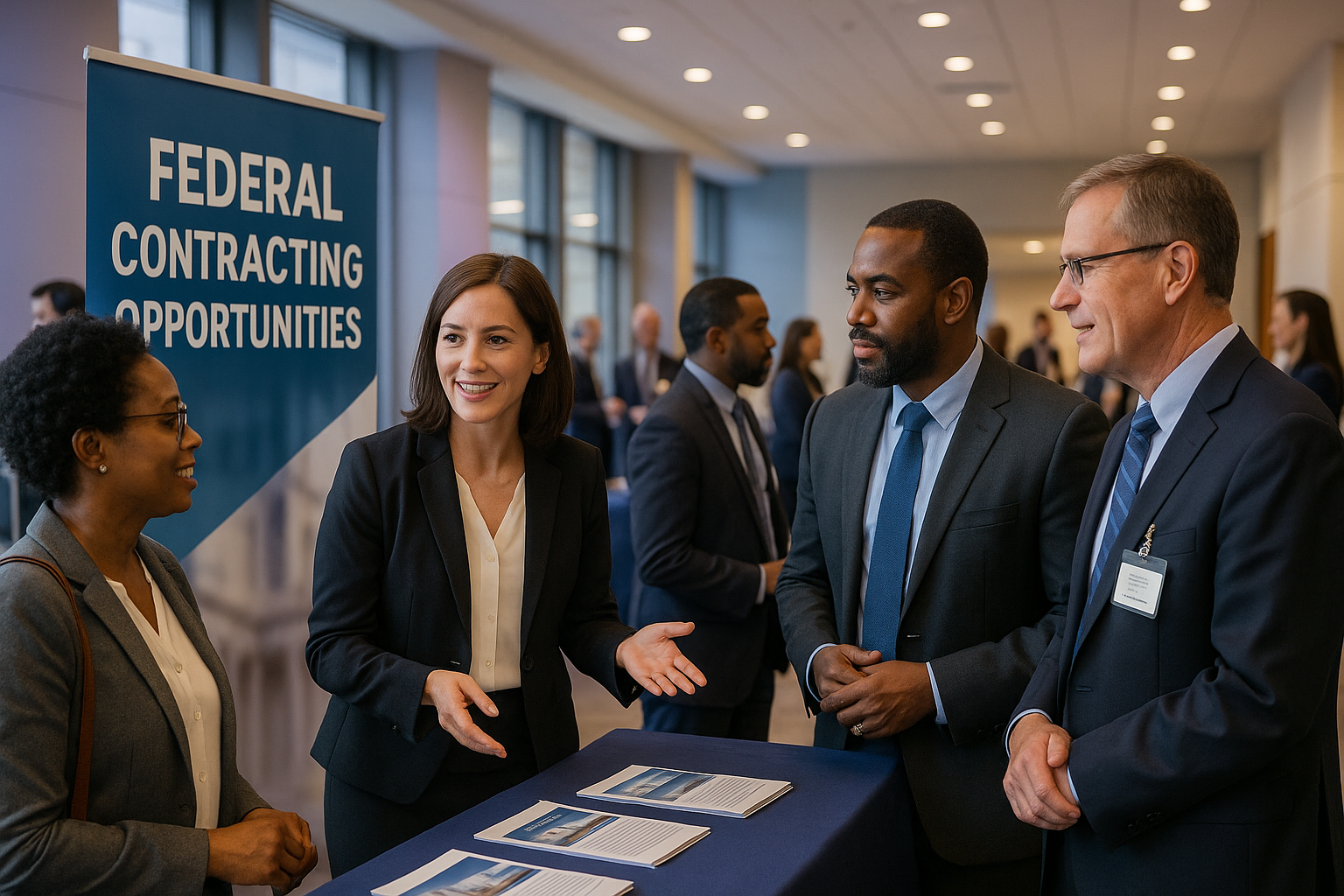
Federal contracting events are a direct path for small businesses to connect with government buyers. These events let you meet decision-makers, learn about upcoming opportunities, and gain insights to refine your strategy. Success depends on preparation, professional materials, networking, and timely follow-up. Here’s a quick breakdown:
- Find Events: Use platforms like SAM.gov, agency websites, and local PTACs to locate relevant events.
- Prepare Materials: Bring business cards and a tailored capability statement that highlights your strengths and past performance.
- Research Agencies: Review procurement forecasts, recent contracts, and agency priorities to tailor your pitch.
- Network Effectively: Focus on meaningful conversations, ask about challenges, and respect their time.
- Follow Up: Send personalized emails within 48 hours, referencing your discussions and offering solutions.
Attending with a GSA Schedule Contract can significantly boost your credibility. With preparation and clear communication, these events can open doors to federal opportunities.
How to Prepare for Federal Matchmaking | Government contracting business development
What Are Federal Contracting Events
Federal contracting events are meetings designed to bring together government procurement officials and businesses interested in securing federal contracts. These events provide a platform for agencies to discuss their upcoming needs and for businesses to gain insights into the federal procurement process. They help both sides align on expectations and requirements. Up next, we’ll look at how to locate these events and pick the ones that best suit your business goals.
How to Find and Choose the Right Events
When it comes to federal contracting, choosing the right events is a strategic first step. Attending the right events can help you connect with key decision-makers, showcase your capabilities, and identify opportunities that align with your business goals. Here’s how to find and evaluate these events effectively.
Where to Find Federal Contracting Events
To start, you’ll need to know where to look. Here are some reliable sources to help you identify relevant federal contracting events:
- SAM.gov: Use filters for agency, location, and date to pinpoint procurement conferences, industry days, and networking events that align with your interests.
- Agency websites: Many federal agencies, such as the Department of Defense and the General Services Administration, regularly host industry days and vendor outreach events. These are typically announced 30–60 days in advance.
- Professional associations: Groups like the National Contract Management Association (NCMA) and the Association of Procurement Technical Assistance Centers (APTAC) host events that connect contractors with government buyers. Membership often grants access to exclusive networking and training opportunities.
- Local PTACs: Your local Procurement Technical Assistance Center is a great resource for regional events tailored to your business size and industry. They can also provide insights into the federal contracting landscape in your area.
Once you’ve identified potential events, the next step is to dig into the details to ensure they’re worth your time.
How to Review Event Details
Not all events are created equal. To make the most of your time and resources, thoroughly review each event’s specifics:
- Event agenda: Look for sessions that align with your industry or the contracts you’re pursuing. Events featuring panel discussions with contracting officers or program managers are especially valuable for networking.
- Attendee list: Check which agencies will be represented and at what level. Events with senior-level officials often provide better opportunities for meaningful conversations than those attended by junior staff.
- Registration requirements and costs: Some events may require pre-registration, specific documentation, or even security clearances. Factor in travel costs, fees, and time commitments when evaluating your options.
- Event size and format: Smaller, more focused events often offer better networking opportunities than large conferences, where it can be harder to connect with decision-makers. Virtual events can save on costs but may limit personal interactions.
Once you’ve selected events that seem like a good fit, take the time to research the agencies that will be attending.
Research the Agencies That Will Attend
Preparation is key to making a strong impression at federal contracting events. Here’s how to research the agencies you’ll encounter:
- Procurement forecasts: Review each agency’s procurement plans and contracting priorities. The Federal Procurement Data System is a valuable tool for identifying agencies that frequently award contracts in your industry.
- Recent contract awards: Check SAM.gov for details on recent awards. This will give you a sense of the types of contracts the agency is issuing and their typical value, helping you tailor your approach.
- Small business goals: Agencies that meet or exceed their small business contracting goals are often more open to working with new vendors. The Small Business Administration’s annual scorecards can help you identify these agencies.
- Agency representatives: Look up the individuals who will be attending, such as contracting officers or program managers. Platforms like LinkedIn and agency websites can provide insights into their roles and responsibilities, allowing you to prepare more targeted conversations.
What Materials to Bring and How to Prepare Them
Once you’ve identified the right events to attend, the next step is to ensure you’re equipped with materials that make a strong impression. At federal contracting events, your materials act as an extension of your business. They’re not just tools for the moment – they’re what agencies will refer back to long after your conversation ends. That’s why it’s essential to make them professional, clear, and specifically tailored to federal agencies. Preparing these documents with care can set you apart.
Essential Documents and Marketing Materials
Here’s what you’ll need: business cards and a one-page capability statement.
For business cards, go for a double-sided design on light-colored paper. Include all the essentials: your company name, title, website, email, UEI, NAICS codes, and logo. These details help federal agencies quickly identify your business and its qualifications.
Your capability statement, on the other hand, should be a concise yet powerful summary of your business. It needs to highlight your core competencies, past performance, certifications, and what sets you apart from competitors. To complement these materials, prepare a 20–30 second elevator pitch that clearly communicates your business’s purpose, unique value, and pricing structure.
Tailoring Materials for Federal Agencies
Generic materials won’t cut it in the federal contracting space. To stand out, adapt your documents to the specific needs of federal agencies. For example, customize your capability statement by including relevant NAICS codes, contract vehicles, and examples of past performance that align with the agency’s goals. This level of detail demonstrates that you’ve done your homework and understand their priorities.
Your online presence is just as important. Federal buyers expect to see a professional, user-friendly website. Make sure your site is easy to navigate, loads quickly, and provides instant access to your capability statement and contracting history. These elements reinforce your credibility and professionalism.
If your business has a GSA Schedule, highlight it prominently. Federal buyers are often looking for vendors who can offer streamlined purchasing through GSA contracts, so showcasing this capability can give you an edge.
sbb-itb-8737801
How to Network and Engage at Events
Federal contracting events are where connections transform into opportunities. These gatherings are not your typical networking scenes – federal buyers come with distinct needs, operate under tight budgets, and follow strict procurement rules. To make an impact, your approach needs to be intentional, professional, and centered on solving their specific challenges.
How to Create an Effective Elevator Pitch
Your elevator pitch is your first impression, so make it count. In just 30 to 60 seconds, you need to clearly explain who you are, what you do, and why your solution matters to the federal agency. The key? Focus on their challenges and how you can help.
"A well-crafted elevator pitch tailored to government buyers is a powerful tool for opening doors to new opportunities." – fedbizadmin, Crafting the Perfect Elevator Pitch for Government Buyers: A Step-by-Step Guide
Start by researching the agencies attending the event. Dive into their mission statements, recent projects, and current priorities. Whether they’re tackling cybersecurity issues, working on sustainability goals, or upgrading infrastructure, this knowledge lets you craft a pitch that resonates.
Structure your pitch with a simple framework: introduce yourself, explain what you do, highlight what sets you apart, show how you can solve their problem, and end with a clear next step. For instance, if you’re speaking to an agency focused on energy efficiency, you could say:
"Hi, I’m Jamie from EcoTech Solutions. We specialize in energy-efficient lighting systems for federal facilities. Our proprietary technology reduces energy consumption by 25%, helping agencies meet sustainability goals while cutting operational costs. May we schedule a brief meeting next week?"
Keep your language simple and avoid industry jargon. Federal buyers prefer clear and direct communication. Practice until your pitch feels natural, and adapt it based on the setting – use a conversational tone at networking events or include specific performance metrics in formal discussions. Always have your capability statement ready to share as a follow-up. A strong pitch sets the foundation for meaningful conversations at these events.
Networking Tips That Work
To stand out at federal events, focus on being both professional and genuinely helpful. Here’s how:
- Set Clear Goals: Instead of trying to meet everyone, prioritize agencies that align with your expertise. Research their key personnel ahead of time to make your efforts more targeted.
- Ask About Their Challenges: Engage by asking thoughtful questions like, "What are the biggest challenges your agency is facing?" or "How are you addressing new sustainability requirements?" This shows your interest in problem-solving.
- Be a Good Listener: Pay close attention, take notes, and use what you learn to personalize your follow-up.
- Respect Their Time: Federal employees often juggle multiple responsibilities at these events. Keep your conversations concise, and if they’re interested, suggest scheduling a deeper discussion later.
- Exchange Information Wisely: When swapping business cards, jot down key details about your conversation. These notes will make your follow-up more effective.
- Join Smaller Sessions: Breakout sessions and presentations provide quieter opportunities to engage with agency representatives and gain insights into their priorities.
Following Up After the Event
The real effort starts once the event wraps up. Many vendors miss out by neglecting to follow up. Here’s how to keep the momentum going:
- Act Quickly: Send personalized follow-up emails within 48 hours. Reference specific points from your conversation and explain how your solution addresses their needs. Include your capability statement and any relevant case studies.
- Leverage LinkedIn: Connect with new contacts on LinkedIn, adding a personal note that references your discussion and expresses interest in staying connected.
- Offer Value in Follow-Ups: Share additional resources like white papers, insights, or information about upcoming opportunities. This positions you as a helpful resource rather than just another vendor.
- Stay Organized: Keep a detailed log of your interactions, including contact details, conversation notes, follow-up dates, and next steps. Federal contracting often involves long sales cycles, so staying on top of your outreach is crucial.
- Maintain Regular Check-Ins: Even if there’s no immediate opportunity, periodic updates or sharing relevant news can keep you on their radar as future needs arise.
How GSA Focus Can Help You Succeed
Federal contracting events can open up a world of opportunities, but making the most of them requires solid preparation. A GSA Schedule Contract not only boosts your credibility but also gives you direct access to federal buyers at these events. That’s where GSA Focus comes in – helping small businesses streamline their GSA Schedule management and stand out in the competitive federal marketplace.
Simplifying GSA Schedule Management
Navigating the GSA Schedule process can feel like a full-time job, especially for small businesses already juggling growth and event preparation. GSA Focus steps in with a comprehensive, all-in-one solution that takes the stress out of acquiring and managing your GSA Schedule.
Their team handles everything – from preparing the necessary documents to negotiating with GSA officials. With a 98% success rate, they know how to secure terms that work in your favor. This means you can focus on building connections at federal events while they manage the paperwork. Plus, they ensure your entire process stays compliant, reducing risks and avoiding unnecessary delays.
But their support doesn’t stop once you’ve secured your GSA Schedule. GSA Focus offers ongoing contract management, ensuring you remain compliant and ready to seize opportunities long after your contract is awarded. They also guide you on how to present your GSA capabilities effectively, helping you make a lasting impression at federal events.
Opening Doors to Federal Opportunities
Having a GSA Schedule Contract transforms how you’re perceived at federal contracting events. When you can confidently tell agency representatives that you’re on the GSA Schedule, it instantly builds trust and shows you understand the federal procurement process. GSA Focus helps you get to this point – and beyond.
Their services go beyond just securing your contract. They provide marketing support tailored to GSA contracts, ensuring your materials showcase your strengths and resonate with federal buyers. Their team knows what agencies are looking for, helping you stand out in a crowded room.
To make things even easier, GSA Focus offers a secure online platform for managing your contract documents. This tool simplifies sharing and accessing your information, so you can follow up with potential leads quickly and professionally after events.
The company’s support doesn’t end there. With ongoing advisory services, GSA Focus remains a resource as you navigate the complexities of federal contracting. Their refund guarantee highlights their confidence in delivering results, letting you invest in their services with peace of mind.
Key Points for Federal Contracting Event Success
Federal contracting events can be a game-changer for your business, but success hinges on four critical elements: preparation, professional materials, strategic networking, and timely follow-up. When these pieces come together, they can open doors to valuable opportunities.
Do Your Homework
Preparation is everything. Before the event, research which agencies will be attending and what they’re currently looking for. Dive into resources like SAM.gov to check recent contract awards and upcoming procurement needs. This way, you can focus your efforts on the agencies that align with your services and avoid wasting time on irrelevant connections.
Stand Out with Professional Materials
First impressions matter, and your materials can make or break how you’re remembered. Your capability statement should clearly highlight your strengths, including your GSA Schedule status, to establish credibility. Be ready with both digital and printed versions so you’re prepared for any follow-up scenario.
Master the Art of Networking
Networking isn’t just about handing out business cards – it’s about making meaningful connections. Prepare a concise, 30-second elevator pitch that communicates your unique value and practice it until it feels natural. At the event, focus on quality over quantity. A few strong conversations can be far more impactful than a stack of business cards.
Follow Up Like a Pro
What you do after the event is just as important as what you do during it. Send personalized follow-up emails within 48 hours, referencing your conversations to show genuine interest. If you have a GSA Schedule, mention it – it simplifies the procurement process and gives you an edge with federal buyers.
The GSA Schedule Advantage
A GSA Schedule Contract isn’t just a credential; it’s a game-changer. It signals to federal agencies that you’re ready and capable, making their procurement process smoother. With GSA Focus’s expertise, you can approach events with confidence, knowing their support – from contract acquisition to management – has your back. Their 98% success rate speaks volumes about the value they bring.
When you combine thorough preparation, polished presentation, and the credibility of a GSA Schedule, you set yourself up for success. Each event becomes an opportunity to expand your reach in the federal market.
FAQs
What advantages does a GSA Schedule Contract offer at federal contracting events?
Having a GSA Schedule Contract can be a game-changer for businesses looking to thrive at federal contracting events. It gives you direct access to the U.S. federal government – arguably the largest buyer of goods and services in the world – unlocking a wealth of sales opportunities.
Beyond access, holding a GSA Schedule Contract signals that your business has undergone a rigorous vetting process and meets strict government standards. This stamp of approval can elevate your credibility and help establish trust with potential government buyers, making it easier to land contracts and build meaningful relationships.
How can small businesses customize their capability statements to stand out with federal agencies?
To make your capability statement stand out, customize it for each federal agency you’re targeting. Focus on showcasing your core strengths, relevant experience, and use keywords specific to the agency’s mission and procurement goals. This approach shows that you understand their priorities and positions your business as a reliable and professional partner.
Include essential details like your NAICS codes, certifications, and any experience that aligns with the agency’s focus areas. Keep the document clear, concise, and visually engaging to ensure it’s easy to read. By tailoring your capability statement to each agency, you improve your chances of grabbing the attention of federal buyers and outshining your competition.
What are the best ways to follow up with agency representatives after a federal contracting event?
Following up after a federal contracting event is a crucial step in turning introductions into meaningful partnerships. Begin by sending personalized emails within a few days to thank agency representatives for their time. Use this opportunity to reference your conversation and share any materials or information that might align with their specific needs or interests.
Maintain an open line of communication by periodically reaching out about upcoming opportunities, procurement schedules, or updates related to your services. This not only demonstrates your genuine interest but also helps ensure your organization stays top of mind. To gauge the effectiveness of your follow-ups, keep track of outcomes such as scheduled meetings, potential teaming arrangements, or invitations to submit proposals.
When you approach this process with professionalism, consistency, and a proactive mindset, you build trust and position your business as a reliable partner for future federal contracting opportunities.
Related posts
- Ultimate Guide to Federal Buyer Relationships
- Ultimate Guide to Engaging Procurement Officials
- How to Access GSA Small Business Support Programs
- Federal Contract Award Lifecycle Explained