

If you’re buying or selling a government contracting business, assuming your GSA Schedule contract transfers automatically is one of the most expensive mistakes you can make. What is GSA contract novation? It’s the formal, three-party legal process that must happen before federal contract rights can legally move from one company to another. Skip it, and you don’t just face delays. You risk losing the contract entirely. This guide walks you through the legal framework, the exact steps required, and the practical strategies that separate smooth transitions from costly ones.
Table of Contents
- Key takeaways
- What is GSA contract novation and why it exists
- The novation process, step by step
- Government concerns and common pitfalls
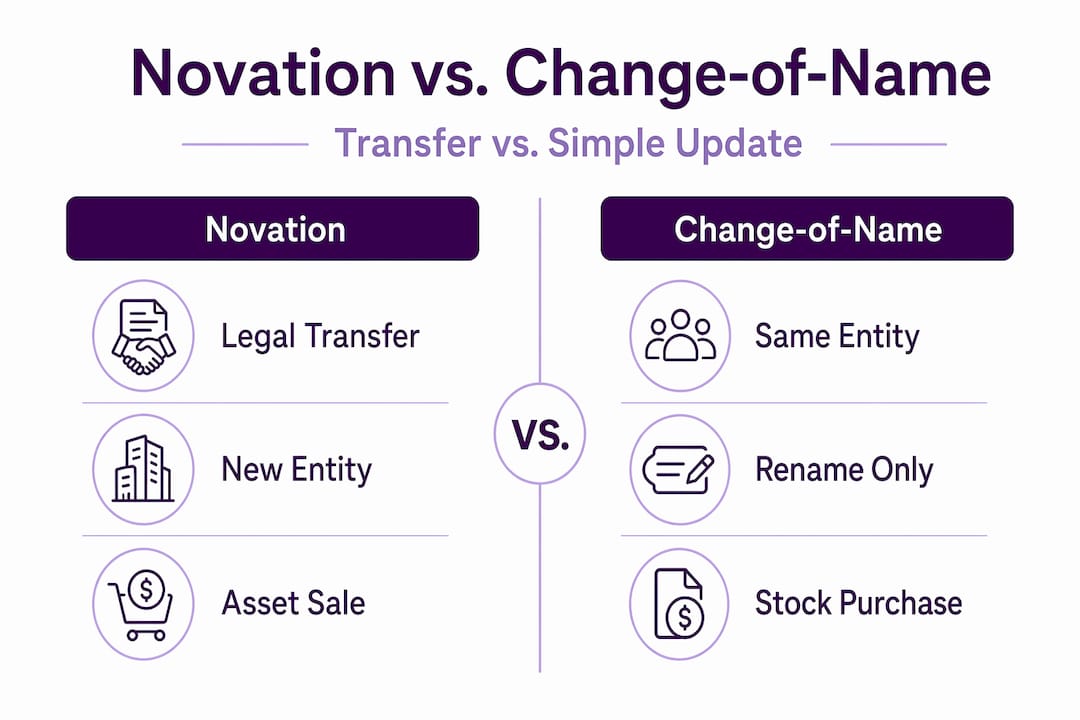
- Novation vs. change-of-name vs. stock purchase
- Practical strategies for a smoother novation
- My take on what contractors consistently get wrong
- How Gsascheduleservices can help with your novation
- FAQ
Key takeaways
| Point | Details |
|---|---|
| Novation is legally required | Federal law prohibits contract transfer without government approval during mergers or asset sales. |
| Three parties must agree | A novation agreement binds the seller, buyer, and the U.S. government in a single legal document. |
| Documentation completeness matters | Submitting a complete package the first time is the single biggest factor in approval speed. |
| Small business contracts face extra scrutiny | Contracting officers can deny novation if the transfer appears to undermine small business program goals. |
| Pre-novation risk is real | Until the agreement is executed, the original contractor stays on the hook legally, so purchase agreements need strong protections. |
What is GSA contract novation and why it exists
At its core, a GSA contract novation is a formal, three-party legal agreement required to transfer federal contract rights during mergers, acquisitions, or asset sales. The three parties are the original contractor (the transferor), the successor company (the transferee), and the United States government. All three must sign for the transfer to be legally valid.
The legal backbone here is FAR Subpart 42.12, which standardizes the novation process across federal agencies. Without it, federal contracting would be a free-for-all. The Anti-Assignment Act, codified at 41 U.S.C. § 6305, prohibits assigning government contracts or claims to third parties without statutory authority. Novation is one of the narrow exceptions that makes a lawful transfer possible.
Why does the government care so much? Because when you signed your GSA Schedule, the government vetted your company’s past performance, financial stability, and technical capabilities. A new owner brings unknowns. Novation forces the successor to formally assume all existing obligations and prove they can actually perform. The original contractor also guarantees performance by the transferee and waives any claims against the government for transferred contracts. That mutual accountability is what makes the system work.
It’s worth separating novation from a simpler process called a change-of-name agreement. If your company just changes its legal name but the underlying entity stays the same, you don’t need a full novation. A lighter agreement handles that. Novation is specifically for situations where ownership and assets move from one legal entity to a different one.
Pro Tip: If your transaction involves a stock purchase rather than an asset purchase, the contracting entity technically doesn’t change. That means novation may not be required at all. Always confirm the transaction structure with legal counsel before assuming you need to file.
The novation process, step by step
Understanding how to novate a GSA contract means understanding the specific sequence of actions, documents, and approvals required. There’s no shortcut, but there is a clear path.
Identify the responsible contracting officer. The responsible contracting officer for novation is generally the one holding administrative responsibility for the highest dollar volume of contracts for your company. This is your primary point of contact throughout the process. Identifying them early is the single most important first step.
Gather your documentation package. The six required documents are: the purchase agreement, the instrument of assumption (where the successor formally accepts all obligations), legal opinions from counsel for both parties, current and future balance sheets, a list of all contracts being transferred, and surety consent where applicable. Missing even one of these stops the process cold.
Submit the package. Submission procedures vary by contract vehicle. For GSA OASIS+ and some other contracts, submissions go through FedConnect, which has file upload size limitations you’ll want to plan around. For GSA Schedule contracts, you’ll typically submit directly to the contracting officer managing your schedule.
Respond to government requests. After submission, the contracting officer reviews your package and may request additional information or clarification. Respond quickly and completely. Delays in your response time directly extend the overall timeline.
Wait for execution. Novation typically takes several months and may require coordination with multiple agency contracting officers if your contracts span different agencies, including DoD. Budget at least three to six months from submission to a signed agreement, and plan for longer if complications arise.
Manage the pre-novation period. Until the agreement is executed, the predecessor company remains the government’s legal counterparty. That means invoices, performance obligations, and contract communications still run through the original entity. You need operational plans to manage this gap.
Pro Tip: File your novation package as soon as the purchase agreement is signed, not after the deal closes. Earlier submission means earlier approval, and the pre-novation period carries real financial and legal exposure for both parties.
Government concerns and common pitfalls
The government is not a passive participant in this process. Contracting officers have discretion to approve novations only when they determine approval is in the government’s interest. That’s a meaningful standard with real teeth.

The biggest concern you’ll encounter, especially with GSA Schedule contracts, is the small business angle. If the transferor holds small business set-aside contracts and the successor doesn’t qualify as a small business, the contracting officer must consult Small Business Technical Advisors. In mixed MAS contracts, set-aside contract items may be canceled rather than transferred. Contracting officers will also push back hard on any novation that looks like it’s designed to circumvent small business program requirements.
Beyond the small business issue, here are the most common pitfalls contractors run into:
- Incomplete submissions. Incomplete documentation is the number one cause of novation delays. A missing legal opinion or outdated balance sheet sends the package back to the starting line.
- Poor communication with the contracting officer. Treating the contracting officer as a bureaucratic obstacle rather than a partner damages your chances. They have discretion here.
- Ignoring pre-novation liabilities. The buyer technically performs work during the pre-novation period, but the seller holds the contract. If something goes wrong with performance, the original contractor faces consequences.
- Underestimating the timeline. Buyers who structure deal terms assuming a 60-day novation often find themselves in trouble when the process takes five months.
- Failing to address transition services. Without a clear Transition Services Agreement (TSA), managing invoices, payments, and day-to-day performance during the pre-novation period becomes chaotic.
Before closing any government contractor acquisition, your purchase agreement must include indemnity and cooperation clauses that explicitly protect the buyer during the pre-novation period. This is non-negotiable. (source)
Building a positive relationship with contracting officers before you need something from them pays dividends. That relationship is one of the factors that can influence novation outcomes in your favor when the government is weighing its discretion.
Novation vs. change-of-name vs. stock purchase
Not every business transition requires a full novation. Understanding when you actually need one prevents unnecessary work and protects you from filing the wrong thing.
| Scenario | Process Required | Key Distinction |
|---|---|---|
| Asset sale or transfer to a new legal entity | Full novation agreement | Legal entity changes; government must approve new party |
| Legal name change only, same entity | Change-of-name agreement | Less documentation, faster process; entity is unchanged |
| Stock purchase, original entity continues | No novation required | Contracts stay with the same legal entity |
| LLC conversion without ownership change | Typically no novation | Organization changes but underlying ownership unchanged |
| Merger where one entity absorbs another | Full novation required | Original contracting entity ceases to exist |
The critical variable is whether the legal entity holding the contract continues to exist after the transaction. A stock purchase is the clearest example of no novation needed. You bought the company’s shares, not its assets. The company itself, including its GSA contracts, still exists as the same legal entity. Nothing transfers because nothing changed from the government’s perspective.
Organizational restructures are trickier. Converting a corporation to an LLC, for example, typically does not require novation if ownership remains the same and the new entity assumes all contractor obligations under a change-of-name agreement. But the moment new ownership enters the picture, or assets move between distinct legal entities, you’re back in novation territory. When in doubt, consult both your attorney and your contracting officer before assuming you’re exempt.
Practical strategies for a smoother novation
Managing the GSA contract transfer process well comes down to preparation, timing, and relationships. Here’s what the contractors who get this right consistently do:
- Contact the contracting officer before you submit. A brief heads-up call before sending the package signals professionalism and opens a communication channel that benefits you throughout the review period.
- Prepare a complete package the first time. Review the FAR Subpart 42.12 checklist against your documents before submission. One missing item can add months to your timeline.
- Structure payment terms around the novation timeline. Buyers should negotiate deal structures that account for the pre-novation period. Holdbacks, escrows, or seller financing tied to novation completion protect both parties.
- Use a Transition Services Agreement. TSAs manage contract performance during the pre-novation period and keep invoice submission and payment flow moving smoothly to the successor.
- Include indemnity clauses in the purchase agreement. This protects buyers if the predecessor creates performance issues while still holding the contracts legally.
- Maintain full compliance records throughout. Review your GSA Schedule maintenance checklist to make sure all contract obligations stay current during the transition period. Lapsed reporting or pricing updates can give the government grounds to cancel rather than transfer.
Pro Tip: If you’re acquiring a company with contracts across multiple agencies, assign one team member as the dedicated novation coordinator. Tracking deadlines, document requests, and approvals across multiple contracting officers simultaneously requires focused attention or things fall through the cracks.
My take on what contractors consistently get wrong
I’ve seen a lot of government contractor acquisitions. And what surprises me most, every time, is how consistently buyers underestimate the complexity of the novation process until they’re already in the middle of it.
The assumption I see most often is that novation is just paperwork. Sign a few forms, submit them, wait for rubber-stamp approval. That assumption has cost contractors real money. I’ve watched deals where the buyer structured their entire integration plan around a 90-day novation, only to spend eight months in review limbo because of a single incomplete document submission or a contracting officer with legitimate performance concerns about the successor.
What I’ve learned is that the relationship with the contracting officer matters far more than most acquisition lawyers acknowledge. Government approval is discretionary. That word carries weight. A contracting officer who knows you, trusts your team’s capabilities, and has seen your company perform well is a very different audience than a stranger reviewing a cold submission. Early, transparent communication with contracting officers is not just good manners. It’s strategy.
I also think contractors undervalue the risk-management side of the pre-novation period. The buyer is doing the work. The seller holds the contract. That creates a window of real exposure that purchase agreement indemnities and TSAs exist to manage. If your deal documents don’t address this clearly, you are exposed, and reviewing the risks of contract cancellation during transitions underscores exactly what’s at stake.
The contractors who handle novations well treat them like the business-critical legal processes they actually are. Not an afterthought. Not a formality. A process that deserves the same rigor you’d bring to any major compliance obligation.
— Josh
How Gsascheduleservices can help with your novation
GSA contract novation is one of the most documentation-intensive and relationship-dependent processes in federal contracting. Getting expert guidance early can mean the difference between a smooth transition and a contract cancellation that wipes out years of built-up contract value.
Gsascheduleservices works directly with contractors navigating acquisitions, mergers, and contract transfers. From organizing your novation documentation package to managing communication with contracting officers, the team understands what government reviewers look for and how to present your successor’s capabilities effectively. Whether you’re buying a company with existing GSA contracts or selling and want to protect contract value through the transaction, start with a personalized discovery session to understand exactly what your situation requires.
FAQ
What is GSA contract novation in simple terms?
A GSA contract novation is a formal three-party legal agreement between the original contractor, the successor company, and the U.S. government that legally transfers federal contract rights during a business sale or acquisition.
How long does the GSA novation process take?
Novation typically takes several months from submission, with complex cases involving multiple agencies often running five to eight months or longer depending on documentation completeness and government review.
Is novation required for a stock purchase of a government contractor?
No. In a stock purchase where the original contracting entity continues to exist, the contracts remain with that entity and novation is not required. Only transactions that move assets to a new legal entity trigger the novation requirement.
What documents are required for a GSA contract novation?
The six required documents are: the purchase agreement, instrument of assumption, legal opinions from both parties’ counsel, current and projected balance sheets, a complete list of contracts being transferred, and surety consent if applicable.
Can the government deny a GSA contract novation request?
Yes. Contracting officers have discretion to deny novation if approval is not in the government’s interest, particularly when the successor does not demonstrate sufficient capability or when the transfer appears designed to circumvent small business set-aside requirements.
Recommended
- Navigating GSA Contract Vehicles: Your Guide
- Navigating GSA Contract Vehicles: Your Guide
- What is a GSA Contract? Everything to know about a GSA Contract
- GSA Contract Cancellation