

Billions of dollars in federal contracts flow through the GSA Schedule system every year, yet most small and medium-sized businesses either don’t know the pipeline exists or only react to opportunities after they’ve already been posted publicly. The GSA opportunity pipeline is a managed, prioritized list of potential federal contracting opportunities accessible through GSA Schedule (MAS) contracts, built around early identification and pursuit using tools like GSA eBuy, SAM.gov, and agency forecasts. If you’re chasing RFPs the moment they appear, you’re already behind. This article shows you how to get ahead of the curve, build a pipeline that works, and win more federal business with less wasted effort.
Table of Contents
- Understanding the GSA opportunity pipeline
- Step-by-step: Building a functional GSA opportunity pipeline
- Expert strategies for opportunity selection and winning bids
- SMB tips: Getting started and maximizing opportunities
- Why most GSA opportunity pipeline advice falls short
- Ready to build your GSA opportunity pipeline?
- Frequently asked questions
Key Takeaways
| Point | Details |
|---|---|
| Focus, don’t chase | Target a select few high-fit GSA pipeline opportunities — scattershot approaches rarely work for SMBs. |
| Proactive tracking wins | Early pipeline identification using tools like SAM.gov and GSA eBuy gives you a real advantage. |
| Win with process | Use scoring, Go/No-Go frameworks, and rigorous documentation to maximize your Pwin and contract value. |
| Partner and document | Team up, document everything for compliance, and be audit-ready as government tech evolves. |
Understanding the GSA opportunity pipeline
The GSA opportunity pipeline is not a single database or a government-run list you subscribe to. Think of it as your own curated, living document of federal contract leads, ranked by fit and realistic win probability. You build it, you maintain it, and you use it to make smarter decisions about where to focus your energy and resources.
GSA Schedule contracts give you access to a set of procurement channels that are simply not available to businesses without a schedule. Agencies use these channels to post solicitations directly to pre-vetted vendors. If you’re not on the schedule, you don’t even see those opportunities. That’s the first major reason SMBs miss out.
The GSA Forecast of Contracting Opportunities is one of the most underused tools in the pipeline. It shows you what agencies plan to buy months or even years before a formal solicitation is posted. Monitoring agency budgets, SAM.gov postings, and GSA eBuy for RFQs and RFPs posted exclusively to Schedule holders gives you a significant lead time advantage over competitors who only react to public postings.
Here’s a quick comparison of the core tools and what each one offers:
| Tool | What it shows | Best used for |
|---|---|---|
| SAM.gov | Active solicitations, awards, vendor data | Identifying posted opportunities and competition |
| GSA eBuy | RFQs posted to MAS Schedule holders only | Finding exclusive, pre-qualified leads |
| GSA Forecast | Planned agency purchases before solicitation | Early identification and pre-positioning |
| USASpending.gov | Historical award data by agency and vendor | Competitor tracking and market sizing |
| Agency budget documents | Planned spending by category and fiscal year | Long-range pipeline planning |
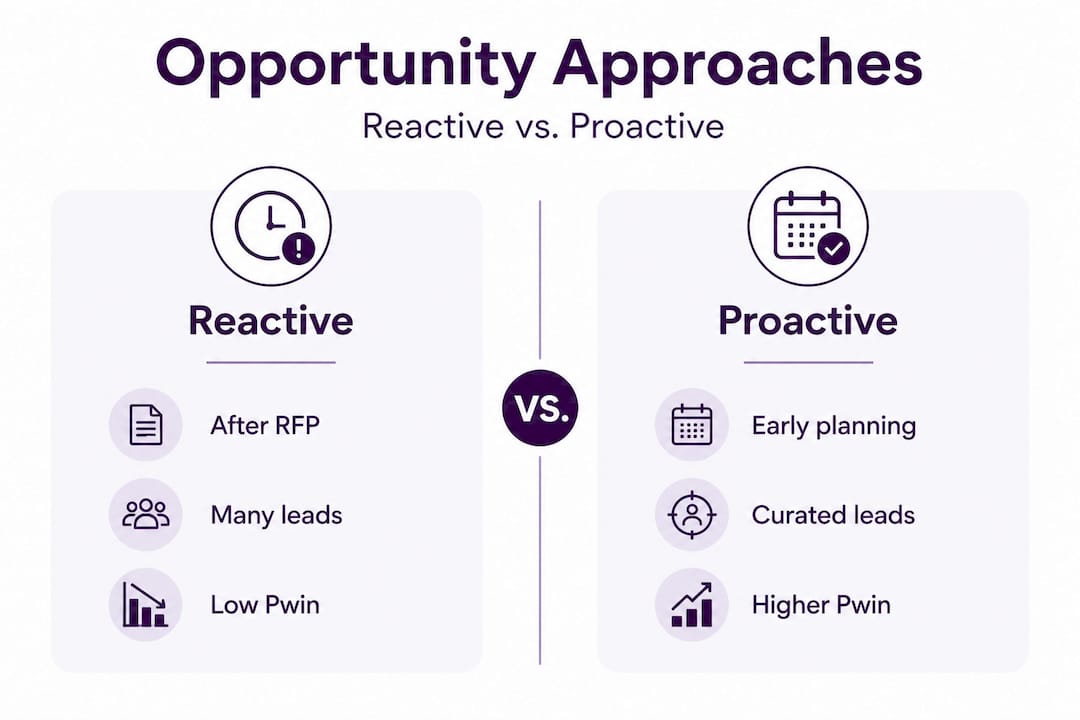
Most SMBs make one critical mistake: they treat the pipeline as a search engine rather than a strategy. They log in to SAM.gov, search for keywords, and respond to whatever looks interesting. This reactive approach means you’re competing against dozens of vendors who’ve been building relationships with that agency for months. You’re starting cold. They’re starting warm.
A proactive pipeline approach means you’re monitoring GSA contract vehicles and agency forecasts continuously, so by the time an RFP is posted, you already understand the agency’s priorities, know the likely competition, and have positioned your solution accordingly. That’s the difference between a long shot and a well-prepared bid.
Key behaviors of SMBs with strong pipelines:
- They check GSA eBuy and SAM.gov at least weekly, not just when they need new business
- They track agency budget cycles and fiscal year-end spending patterns
- They maintain a running list of opportunities at different stages, from early intel to active bid
- They qualify every lead before investing proposal resources
- They build relationships with contracting officers before solicitations drop
Step-by-step: Building a functional GSA opportunity pipeline
Building a pipeline sounds complicated, but it breaks down into five repeatable stages. Once you internalize these stages, the whole process becomes a routine rather than a scramble.
Identify. Use SAM.gov, GSA eBuy, and the GSA Forecast of Contracting Opportunities to find leads that match your NAICS codes, capabilities, and target agencies. Set up automated alerts on SAM.gov so you’re notified when relevant solicitations are posted.
Qualify. Not every lead deserves your time. Score each opportunity based on three factors: fit with your capabilities, level of competition, and your realistic probability of winning (Pwin). If an opportunity scores low on all three, move on immediately.
Shape. This is the step most SMBs skip entirely. Shaping means engaging with the agency before the RFP drops. Attend industry days, respond to Requests for Information (RFIs), and request informational meetings with program managers. This positions you as a known quantity and gives you insight that shapes a stronger proposal.
Bid. Once a solicitation is posted, you’ve already done the groundwork. Your proposal should reflect the agency’s language, priorities, and pain points, because you’ve been listening for weeks or months. This is where preparation pays off directly.
Track. After submission, track the status of every bid in your pipeline. Use a simple spreadsheet or a CRM to log submission dates, expected decision timelines, and outcomes. Over time, this data tells you which opportunity types and agencies you win most often.
The pipeline methodology built around these five stages also introduces a critical concept: weighted revenue. You calculate it by multiplying the potential contract value by your estimated Pwin. For example, a $500,000 contract with a 40% Pwin is worth $200,000 in weighted revenue. A $2 million contract with a 10% Pwin is worth only $200,000 in weighted revenue too, but it requires far more resources to pursue. Weighted revenue helps you prioritize smarter.

Pro Tip: Build your pipeline in a simple spreadsheet first. Track opportunity name, agency, estimated value, Pwin, stage, and weighted revenue. Review it every week. Once you have 10 or more active leads, consider moving to a CRM built for government contractors.
Here’s a comparison of reactive versus proactive pipeline approaches:
| Approach | Reactive (RFP chasing) | Proactive (pipeline building) |
|---|---|---|
| When you engage | After RFP is posted | Months before RFP drops |
| Agency relationship | Cold | Warm, established |
| Proposal quality | Generic, rushed | Tailored, informed |
| Win rate | Low (often under 15%) | Higher (25-40% target) |
| Resource efficiency | Poor, high waste | Focused, prioritized |
If you’re considering a GSA Schedule contract or already have one, building this pipeline structure is the single most impactful thing you can do to start accessing GSA opportunities more consistently.
Expert strategies for opportunity selection and winning bids
Once your pipeline is running, the next challenge is deciding which opportunities to actually pursue. This is where many SMBs make a second critical mistake: they say yes to too many bids and win very few of them.
The 80/20 rule applied to government contracting means focusing your proposal resources on the 20% of opportunities that represent your highest Pwin. These are the contracts where you have strong past performance, a clear differentiator, and an established agency relationship. Spreading your team thin across 20 mediocre bids is far less effective than going deep on four strong ones.
Go/No-Go decision making is a formal process where you evaluate each opportunity against a set of criteria before committing resources to a proposal. Criteria typically include: Does this fit our core capabilities? Do we have relevant past performance? Do we know the agency’s priorities? Is the competition manageable? If you can’t answer yes to most of these, the answer should be no.
“Incumbents carry a 60-80% Pwin advantage on recompetes. If you’re chasing a contract where a strong incumbent is in place and you have no prior relationship with the agency, your realistic win probability is often in the single digits.” Building Your GSA Pipeline
That quote should change how you look at your pipeline. Incumbency is a powerful force in federal contracting. It doesn’t mean you should never challenge an incumbent, but it does mean you need a clear, documented reason why you can win before you invest proposal resources.
Key strategies for improving your win rate:
- Attend every industry day relevant to your target agencies, even if no solicitation is imminent
- Respond to RFIs with thoughtful, capability-focused responses that position your solution
- Track competitor awards on USASpending.gov to understand who wins what and why
- Calibrate your Pwin historically by comparing your estimates to actual outcomes. If you’re estimating 40% Pwin and winning 10% of the time, your estimates need adjustment
- Partner with IT modernization partners or other prime contractors to gain access to opportunities where teaming strengthens your position
Compliance and documentation are becoming more strategic, not less. As AI-assisted proposal evaluation tools become more common in federal procurement, your documentation quality directly affects your score. Vague capability statements and generic past performance narratives no longer get you through the door. Every claim needs to be specific, measurable, and verifiable.
GSA Schedule qualification is the foundation. Without it, you can’t access the exclusive solicitations that make the pipeline valuable. Once you’re qualified, the real work of building relationships and shaping opportunities begins. That’s how you grow your business with a GSA Schedule over the long term rather than just landing one contract and stalling out.
SMB tips: Getting started and maximizing opportunities
If you don’t have a GSA Schedule yet, the fastest formal route is through eOffer, the GSA’s online application system. The typical MAS eOffer timeline runs 3 to 6 months from submission to award. That’s not instant, but it’s the most direct path to accessing the full pipeline.
While you’re waiting for your schedule, or if you’re not yet ready to apply, teaming as a subcontractor is a legitimate and often underrated strategy. You partner with a prime contractor who already holds a GSA Schedule and contribute your capabilities to their bid. This gives you real federal contracting experience, past performance references, and agency relationships that strengthen your own future bids.
Direct awards through Blanket Purchase Agreements (BPAs) and Delivery Order contracts are another avenue worth understanding. The GSA Schedule number process explains how these mechanisms work and how to position yourself to receive them.
Common pitfalls new SMBs make in their first year of pipeline building:
- Rushing the application. Incomplete or inaccurate submissions cause delays that set you back months. Take the time to get it right.
- Ignoring past performance documentation. Every contract you complete, even small ones, should be documented with specific outcomes, dollar amounts, and agency contacts. You’ll need this for future proposals.
- Not leveraging relationships. Government contracting is relationship-driven. Contracting officers and program managers remember vendors who engage thoughtfully before solicitations are posted.
- Treating compliance as a checkbox. Annual schedule reviews, price list updates, and contract modifications require ongoing attention. Letting these slip can cost you your schedule entirely.
- Overestimating Pwin. New contractors consistently overestimate how competitive they are. Be honest about your current position and build toward stronger bids over time.
Pro Tip: Set a calendar reminder 90 days before your GSA Schedule’s annual review date. Use that window to update your price list, add new labor categories or products if relevant, and review your sales reporting. Staying ahead of compliance requirements protects the schedule you worked hard to earn.
Why most GSA opportunity pipeline advice falls short
Here’s an uncomfortable truth: most articles and webinars about building a GSA pipeline focus almost entirely on tools and tactics. Log into SAM.gov. Set up alerts. Check GSA eBuy. That’s useful, but it misses the deeper issue.
The businesses that consistently win federal contracts don’t win because they have better software or more alerts set up. They win because they’ve built genuine relationships with the agencies they serve, they make disciplined Go/No-Go decisions, and they document everything with a level of rigor that most SMBs find uncomfortable at first.
Tracking every available RFP is not a pipeline strategy. It’s a distraction. We’ve seen businesses with 50 active opportunities in their tracker win nothing for 18 months, while a competitor with 8 carefully selected, well-shaped bids closes 3 contracts in the same period. Volume is not the goal. Quality, focus, and readiness are.
The rise of AI in proposal evaluation is changing the game in ways that most SMBs haven’t fully absorbed yet. When an algorithm is scoring your technical narrative, vague language and generic claims don’t just fail to impress, they actively hurt your score. This means that GSA contract eligibility criteria and compliance documentation are now strategic assets, not just administrative requirements.
The SMBs that will win the most federal business over the next five years are the ones building systems now: systems for tracking relationships, documenting performance, making clear bid decisions, and continuously improving their Pwin estimates based on real outcomes. That’s not glamorous advice. But it’s what actually works.
Ready to build your GSA opportunity pipeline?
Building a high-performing GSA opportunity pipeline takes the right structure, the right tools, and the right guidance from people who’ve navigated the process before. At GSA Schedule Services, we help small and medium-sized businesses move from confusion to contract wins faster than going it alone. Whether you need help with your initial schedule application, want to sharpen your opportunity qualification process, or need support building a compliant, competitive proposal strategy, our advisors are ready to work with you directly. Explore our consulting and discovery services to get personalized pipeline support built around your specific capabilities and target agencies.
Frequently asked questions
What is a GSA opportunity pipeline, in simple terms?
It’s a prioritized list of federal contract leads you can pursue through the GSA Schedule system, managed so you spot, qualify, and go after the best ones rather than chasing random RFPs. The pipeline focuses on early identification using tools like GSA eBuy, SAM.gov, and agency forecasts.
How do I know if a contract in the GSA pipeline matches my business?
You qualify each contract based on agency need, competition level, and your realistic win probability (Pwin). The pipeline qualification process uses scoring on fit, competition, and Pwin drawn from SAM.gov, GSA eBuy, and forecast data.
What’s the fastest way for SMBs to access GSA contract opportunities?
The standard route is through eOffer with a typical timeline of 3 to 6 months, but teaming as a subcontractor or pursuing direct awards are faster alternatives while your schedule application is in process.
Which GSA tools should I check regularly for new pipeline leads?
Monitor the GSA Forecast of Contracting Opportunities, SAM.gov, and GSA eBuy on a weekly basis, since eBuy posts RFQs exclusively to Schedule holders that never appear on public procurement boards.
Recommended
- I Have My GSA Contract, Now What?
- GSA Government Contracts: How to Win Your Piece of the $45 Billion
- Fourth Step – GSA Registration (GSA Advantage, E-buy, … )
- Unlock GSA Contract Opportunities for Growth
- Prime contractors: A guide to IT modernization partnerships