
If you run a small or medium-sized business and have never explored G S A auctions, you are leaving real money on the table. The General Services Administration’s official auction platform gives any registered participant access to federal surplus property, from vehicles and heavy equipment to office furniture and electronics, often at a fraction of retail cost. Many SMB owners assume these government surplus auctions are too complicated or reserved for large contractors. That assumption is wrong, and this guide will show you exactly how to register, bid, and win.
Table of Contents
- Key takeaways
- G S A auctions: how the official platform works
- How to register, bid, and stay compliant
- GSA auctions vs. other government auction types
- Operational tips for SMBs bidding on surplus
- Why SMBs benefit more than they realize
- My honest take on why SMBs miss this
- Ready to take your federal procurement further?
- FAQ
Key takeaways
| Point | Details |
|---|---|
| Open to all registered bidders | GSA auctions are not limited to large contractors; any eligible business or individual can register and bid. |
| Read every lot’s terms first | Each auction lot carries its own sale conditions that override general terms and define your buyer obligations. |
| Distinguish auction channels | GSA Fleet vehicle sales and GSA surplus auctions are separate channels with different inventory and processes. |
| Build a bidding pipeline | Use the platform’s status filters to track closing lots instead of browsing broadly. |
| Logistics matter as much as price | Winning a bid means nothing if you cannot meet pickup deadlines and transportation requirements. |
G S A auctions: how the official platform works
GSA Auctions (gsaauctions.gov) is the federal government’s primary marketplace for surplus property disposal. When federal agencies retire equipment, vehicles, real property, or other assets, those items flow through this platform and become available to the public. The inventory is genuinely varied. You might find a fleet of pickup trucks, laboratory equipment, server racks, or construction machinery depending on what agencies are clearing out.
The platform organizes listings into clear status categories that make monitoring much easier than most buyers realize. The auction home page shows lots labeled as “New Today,” “Closing Today,” “Preview,” and “Closed,” which lets you scan for urgency without wading through thousands of irrelevant items.
The search tools include:
- Keyword search for specific item types or agency descriptions
- Category filters covering vehicles, electronics, real property, office equipment, and more
- Distance/zip code filters that limit results to auctions within a defined radius of your location
- Advanced search options for price range, auction status, and owning agency
The distance filter is particularly useful for SMBs because pickup logistics are a real cost. An auction 15 miles from your warehouse is fundamentally different from one 900 miles away, even if the items look identical. Treating proximity as a hard filter early in your search saves time and prevents costly surprises later.
Pro Tip: Set a daily habit of checking the “Closing Today” tab. Lots that are hours from closing often have suppressed competition because casual browsers miss them. That is where you find better value.
How to register, bid, and stay compliant
Getting started with GSA auction listings is straightforward, but the process has specific requirements you need to follow in the right order.
Create an account on gsaauctions.gov. Registration is free and open to individuals, small businesses, and larger organizations. You will need a valid email address, contact information, and agreement to the platform’s terms of use.
Review the General Sale Terms (Standard Form 114C). Before you bid on anything, read the general sale terms governing all purchases. These define your rights and obligations as a buyer, including the “as-is” nature of all sales.
Read the lot-specific terms for every auction you target. This step is where most new bidders cut corners. Each auction lot functions as its own mini-contract, with special terms that can override or supplement the general conditions. These lot-level terms define pickup windows, payment requirements, and any restrictions on who can buy.
Place your electronic bid before the listed closing time. Bids are submitted electronically through the platform. The system tracks your bid in real time, and some lots use automatic bid extension if bidding activity spikes near closing.
Confirm payment method and limits. Credit card payments are accepted but often subject to per-transaction limits. Larger purchases typically require wire transfer or other approved methods. Check each lot’s payment terms before you bid, not after you win.
Arrange pickup within the required window. After winning, you are on a clock. Most lots specify a tight pickup window, often measured in days, not weeks. Failure to pick up forfeits your payment and can affect your bidding privileges.
Pro Tip: Before bidding on any lot, write down three things: the closing time, the pickup deadline, and the pickup location. If you cannot logistically satisfy all three, skip that lot. The price does not matter if you cannot collect the item.
GSA instructs all buyers to review both general and special terms before placing any bid, and this is one instruction worth following literally.
GSA auctions vs. other government auction types
Not all government surplus auctions are the same channel, and confusing them wastes time. Here is a clear breakdown.
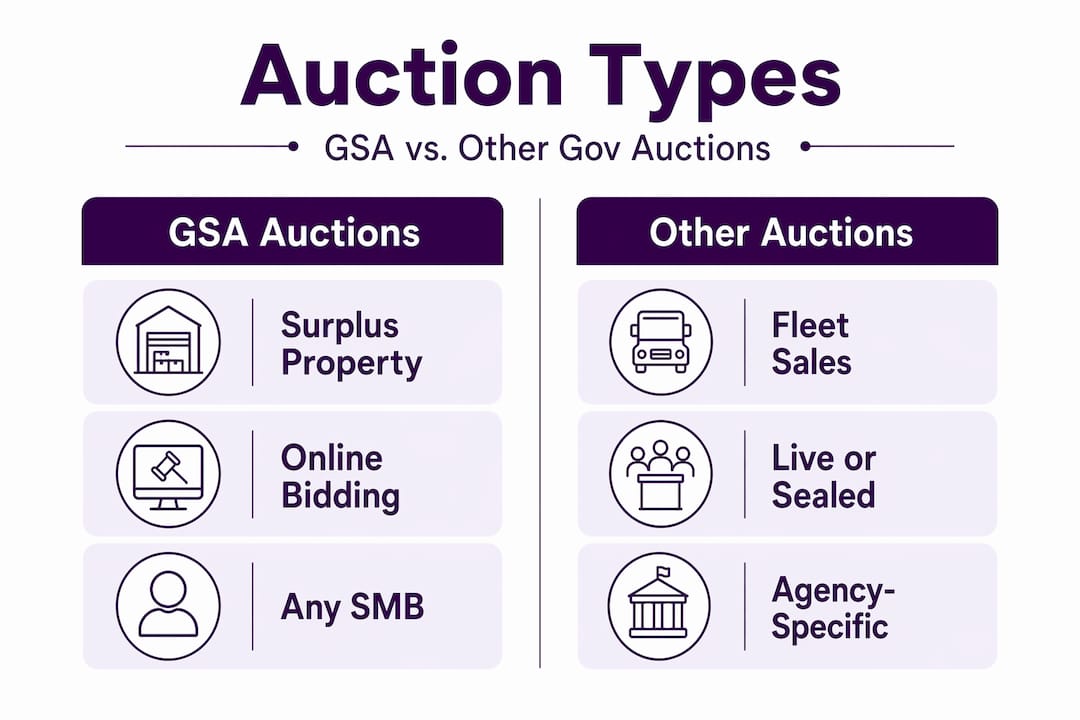
| Auction type | What it sells | Who runs it | Process |
|---|---|---|---|
| GSA Auctions (surplus) | General federal surplus property including vehicles, equipment, furniture, electronics | General Services Administration | Primarily online via gsaauctions.gov |
| GSA Fleet vehicle sales | Government-owned fleet vehicles ready for resale | GSA Fleet program via PPMS | Separate platform with fleet-specific listings |
| U.S. Marshals Service | Seized and forfeited property | Department of Justice | Mixed formats, often through contracted auctioneers |
| Treasury/IRS auctions | Seized financial assets and property | Department of Treasury | Varies by asset type and case |
The most common point of confusion is between GSA Fleet vehicle sales and general GSA surplus auctions. Confusing these two channels leads SMBs to misread expectations, pricing, and required processes. Fleet sales run through PPMS and focus specifically on government vehicles that were maintained under the federal fleet program. Surplus auctions include vehicles too, but also everything else federal agencies no longer need.
Beyond GSA, federal auction format varies widely depending on the owning agency. Some agencies run in-person sales. Others use sealed mail-in bids. Online auctions through gsaauctions.gov are the most accessible format for SMBs because they require no travel to participate in the bidding phase.
Operational tips for SMBs bidding on surplus
Most guides focus on finding auctions and placing bids. The part they skip is where most SMBs actually lose money or lose deals. Here is what experienced buyers do differently.
Know what you are tracking. Treat your auction activity like a sales pipeline. Experienced bidders use platform tools strategically to focus on lots nearing their close date rather than browsing the full catalog. This narrows focus and increases your chances of winning items you have genuinely evaluated.
Key habits that separate successful SMB bidders from frustrated ones:
- Study the full lot description. Photos can be misleading. Item condition grades like “scrap” or “fair” carry specific federal definitions. Read the text description line by line.
- Map the pickup location before bidding. Is the item at a federal facility with access restrictions? You may need to schedule pickup in advance or bring identification documents.
- Understand removal responsibility. For large or heavy items, you are responsible for removing them from the site. That may mean renting equipment or hiring a contractor.
- Check for environmental restrictions. Some surplus items, particularly vehicles or industrial equipment, may have conditions related to fluid disposal or hazardous materials handling.
- Track your bids across multiple lots. If you are actively monitoring several auctions, deadlines and logistics can pile up fast.
Pro Tip: Build a simple spreadsheet with columns for lot number, closing date/time, pickup location, pickup deadline, item description, and your maximum bid. Reviewing this daily keeps you from getting caught off guard when you win multiple lots in the same week.
Effective bidders track closing times and pickup logistics meticulously, often using spreadsheets or task management tools to stay organized.
Why SMBs benefit more than they realize
Most SMBs think about federal procurement exclusively in terms of winning contracts to sell goods or services. GSA auctions flip that equation. Here you are the buyer, and the federal government is essentially liquidating assets below market value.
“Surplus items are sold at below retail prices, open to all registered participants, supporting SMB equipment acquisition and federal procurement experience.” GovAuctions, 2026
The practical benefits go beyond just saving money on equipment. When you participate regularly in buying from GSA auctions, you build familiarity with federal procurement processes, terminology, and compliance requirements. That knowledge transfers directly to the selling side of federal business. A contractor who has navigated GSA auction terms, SF-114C, and agency-specific procedures already has more federal fluency than most competitors bidding on the same contracts.
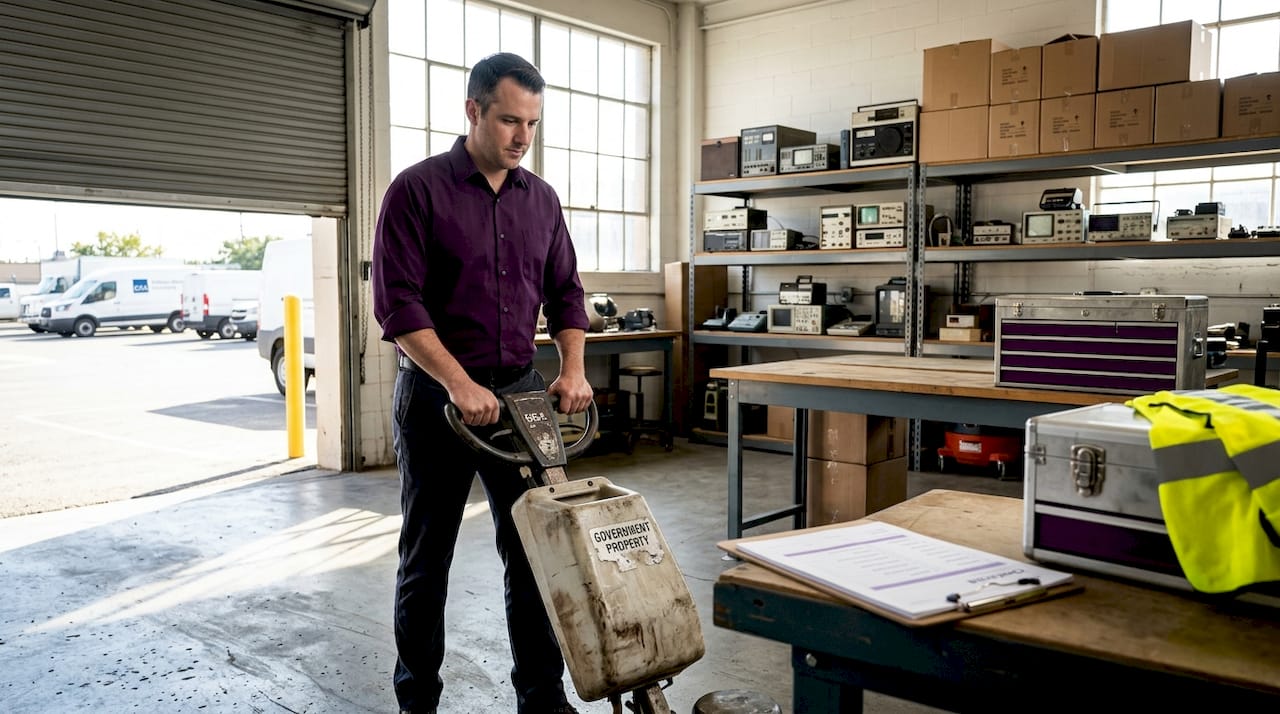
There is also a specific opportunity in specialized equipment. Federal agencies sometimes surplus highly specialized items, technical lab gear, military-grade hardware, or proprietary systems, that would cost multiples more through commercial channels. For niche businesses, a single well-targeted auction win can deliver outsized value. Check out what GSA auctions offer for a broader breakdown of item categories and their business applications.
For contractors already holding or pursuing a GSA Schedule, combining auction participation with contract growth creates a compounding advantage. You reduce operating costs through surplus procurement while simultaneously generating revenue through your schedule contract. That two-sided engagement with the federal market is something most SMBs never fully develop, but it is well within reach.
My honest take on why SMBs miss this
I have worked with a lot of small businesses on their federal procurement strategies, and the GSA auction opportunity comes up less often than it should. When I ask why, the answer is usually the same: “It seemed complicated” or “I didn’t think we qualified.”
Both of those beliefs are wrong, but I understand where they come from. The GSA website is not designed for first-time visitors. Terms like SF-114C and PPMS are not self-explanatory. And the sheer volume of listings can feel paralyzing without a clear system.
What I have learned is that the complexity is mostly front-loaded. Once you read the general sale terms once and complete your first couple of bids, the process becomes genuinely routine. The bigger mistakes I see SMBs make are not about registration or bidding. They are about logistics. People win auctions they cannot fulfill because they never confirmed pickup feasibility before bidding.
My honest advice: start with something small and local. Find a lot within an hour of your location, read every word of the terms, and bid modestly. Treat your first win as a learning exercise, not a financial play. The beginner’s breakdown of GSA auctions is a good starting point before you touch the live platform. After one completed purchase, the whole process will feel far less intimidating, and you will have practical experience that most of your competitors simply do not have.
— Josh
Ready to take your federal procurement further?
Understanding how GSA auctions work is one piece of a larger federal procurement strategy. If your business is ready to move beyond one-off surplus purchases and build a reliable revenue stream from government contracts, Gsascheduleservices is built for exactly that. The team at Gsascheduleservices helps SMBs and contractors secure GSA Schedule contracts, handle the paperwork, and position themselves for long-term federal sales growth. Start with a free discovery session to identify which procurement paths fit your business and what it takes to get there fast.
You can also explore growing through a GSA Schedule to see how the contract side of federal business complements everything you have learned here about the auction side.
FAQ
What are GSA auctions?
GSA auctions are the federal government’s online marketplace for surplus property disposal, where registered buyers can bid on items ranging from vehicles and electronics to industrial equipment. The platform is managed by the General Services Administration at gsaauctions.gov.
How do I bid at GSA auctions?
Register for free at gsaauctions.gov, review the General Sale Terms under Standard Form 114C, then place electronic bids on specific lots before their listed closing time. Always read the lot-specific terms before bidding, since each lot carries its own conditions.
Are GSA Fleet vehicle sales the same as GSA surplus auctions?
No. GSA Fleet vehicle sales run through a separate platform (PPMS) and focus exclusively on government-owned fleet vehicles, while GSA surplus auctions cover a much broader range of federal property including equipment, furniture, and electronics.
Can small businesses participate in government surplus auctions?
Yes. GSA auction listings are open to any registered participant, including individuals and small businesses. There is no size requirement to bid or win.
What happens after you win a GSA auction bid?
After winning, you must complete payment using an approved method and arrange pickup within the window specified in the lot terms. Failing to pick up forfeited items can result in losing your payment and affecting future bidding privileges.
Recommended
- Government procurement strategies that help SMBs win GSA bids
- GSA Auctions for Dummies
- Government Contract Opportunities 2026: SME Guide
- What are GSA Auctions?