

The General Services Administration auction is the official U.S. government online marketplace where individuals and businesses bid competitively on surplus federal personal and real property. Known formally as GSA Auctions, the platform gives any registered buyer access to thousands of government-owned assets sold below market value. Sales are governed by Standard Form 114C, a binding contract that covers payment, removal, and dispute procedures. Whether you are a first-time buyer or a seasoned reseller, understanding how this federal auction system works is the difference between a smart purchase and a costly mistake.
What types of property are sold through General Services Administration auctions?
The range of items available through federal auction services is broader than most buyers expect. Government auction items span computers, lab equipment, artwork, jewelry, vehicles including cars, trucks, and boats, mobile homes, and military surplus. That variety means both individual buyers and businesses can find assets that match their specific needs, from office equipment to fleet vehicles.
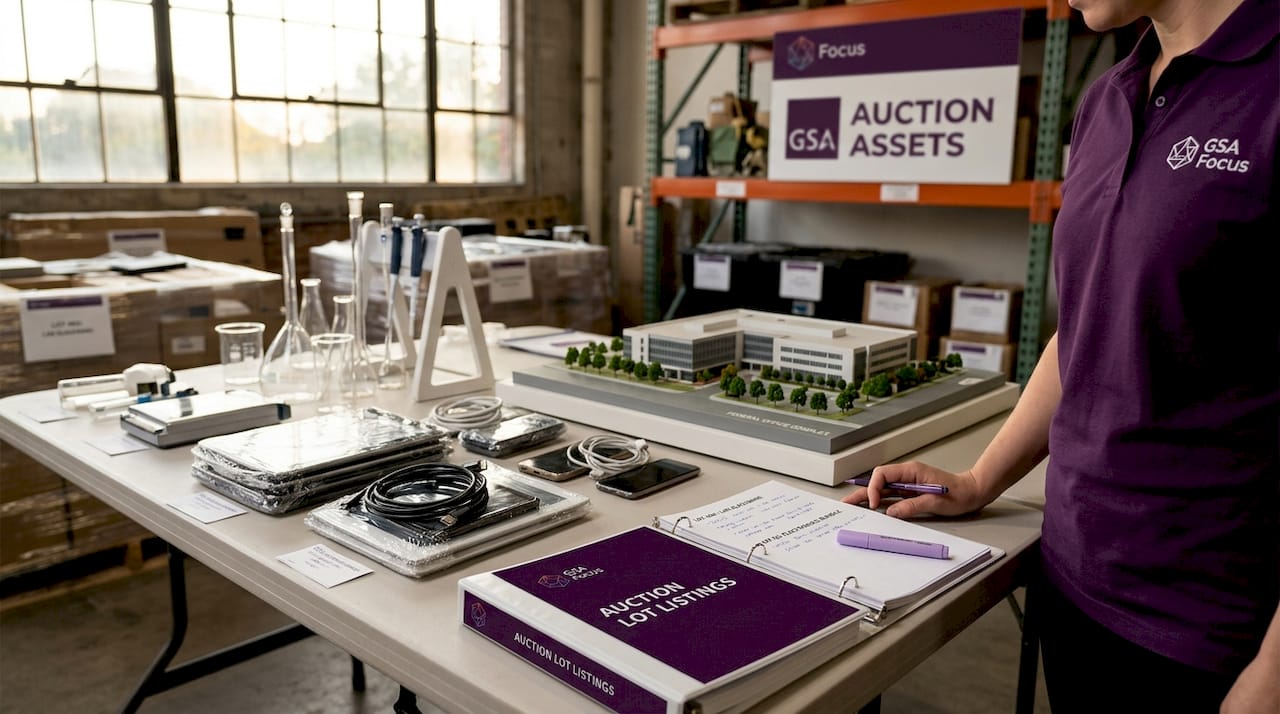
The platform organizes inventory into two primary categories:
Surplus personal property covers the widest range of items. This includes:
- Office furniture, computers, and electronics from decommissioned federal offices
- Vehicles of all types, from sedans and pickup trucks to heavy-duty government fleet assets
- Scientific and laboratory equipment from federal research agencies
- Artwork, jewelry, and collectibles transferred from various federal programs
- Industrial tools and machinery no longer needed by owning agencies
Real property refers to federal land and buildings. The General Services Administration manages the sale of excess federal real estate through a separate but related process, typically involving sealed bids or negotiated sales rather than the standard online auction format.
Two specialized categories deserve attention. Forfeited property consists of assets seized by federal law enforcement agencies and transferred to GSA for sale. Exchange/sale property is surplus equipment that agencies sell to offset the cost of acquiring replacement items. Both categories follow the same Standard Form 114C terms but may carry unique lot conditions that require careful reading before you bid.
How does the GSA auction process work for bidders?
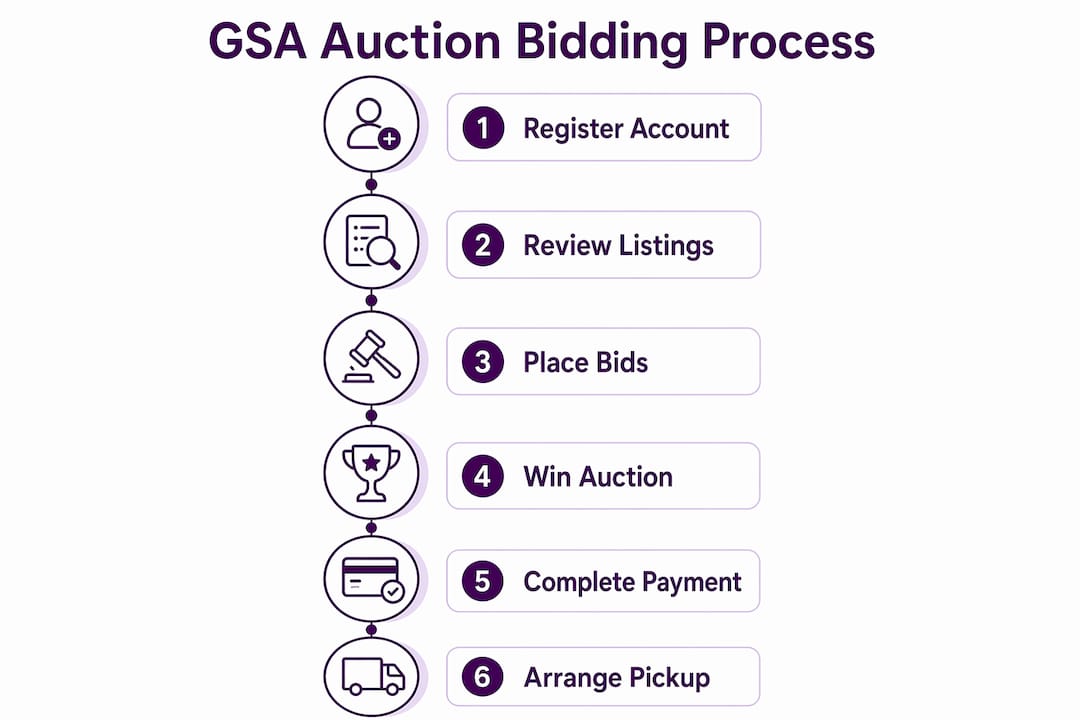
The GSA auction process runs entirely online through the GSA Auctions platform, with electronic bidding windows that open and close on fixed schedules. Here is how to move from registration to a winning bid:
Create a free account. Visit GSA Auctions and register as a bidder. You will need a valid email address, contact information, and agreement to the platform’s terms of service. Registration is open to U.S. citizens and eligible entities.
Browse GSA auction listings. The Auctions Home page organizes active sales into four primary categories: Preview (upcoming auctions not yet open for bidding), New Today (recently listed items), Closing Today (auctions ending within 24 hours), and Bid Deposit Only (sales requiring a financial deposit before you can place a bid). Use the advanced search filters to sort by item type, location, status, and deposit requirements.
Review the lot invitation thoroughly. Every listing includes a lot invitation that details item condition, location, inspection instructions, removal requirements, and any special terms layered on top of Standard Form 114C. Read this document completely before placing any bid.
Inspect the property when possible. Owning agencies manage property inspection access and provide photos or transport to consolidated sales sites when feasible. Physical inspection before bidding is always worth the effort for high-value lots.
Place your bid electronically. Enter your maximum bid amount during the open bidding window. The platform uses a proxy bidding system, meaning it will automatically bid on your behalf up to your stated maximum. Monitor the auction closely as the closing time approaches, since last-minute bids are common.
Await notification. Winning bidders receive an automated notification with payment instructions and removal deadlines.
Pro Tip: Filter by “Closing Today” every morning to catch auctions with low competition. Many buyers focus on new listings and overlook items closing within hours, which often sell at significantly lower prices.
What are the payment and post-auction requirements for successful bidders?
Winning a bid is only the beginning. Meeting payment and removal requirements on time is where many first-time buyers stumble, and failure to comply can result in forfeiture of your deposit and disqualification from future auctions.
Accepted payment methods include:
- Wire transfers: The preferred method for large purchases. Contact the regional sales office listed in your lot invitation for specific wire instructions.
- Credit cards: Accepted up to a maximum of $24,999.99 per transaction, with a limit of one card per transaction. Debit cards with PIN requirements are generally not accepted.
- Government-issued checks: Federal, state, and local government checks are accepted. Personal checks and standard debit cards are typically not.
Post-payment responsibilities are equally binding:
- Removal deadlines are strict. Your lot invitation specifies the exact window for removing purchased property. Missing this deadline can trigger storage fees or forfeiture.
- Coordinate with the owning agency. The agency holding the property manages access for pickup. Contact their designated representative early to schedule removal logistics, especially for large or heavy items.
- Transport is your responsibility. GSA does not arrange shipping or delivery. You must plan and fund all transportation from the property’s location to your destination.
- Document everything at pickup. Photograph the item’s condition upon receipt and retain all correspondence with the agency. This documentation protects you if a dispute arises later.
Pro Tip: Before you bid on any item over $5,000, call the Sales Contracting Officer listed in the lot invitation. Ask directly about removal logistics, access hours, and any site-specific requirements. This five-minute call prevents the most common post-auction complications.
What strategies and best practices increase success at GSA auctions?
Preparation separates buyers who consistently find value from those who overpay or face legal complications. The table below compares reactive versus proactive bidding approaches across the key decision points in the GSA surplus auction process.
| Decision point | Reactive approach | Proactive approach |
|---|---|---|
| Reading auction terms | Skim the listing title and price | Read Standard Form 114C and the full lot invitation before bidding |
| Property inspection | Skip inspection to save time | Schedule inspection and photograph all visible conditions |
| Bid deposit rules | Discover deposit requirements after bidding | Filter by “Bid Deposit Only” upfront and confirm deposit requirements early |
| Payment planning | Figure out payment after winning | Pre-arrange wire transfer details or confirm credit card eligibility before the auction closes |
| Removal coordination | Contact the agency after payment clears | Reach out to the owning agency during the bidding period to understand access and logistics |
Experienced bidders treat the Standard Form 114C and lot invitations as binding rules, not background reading. These documents govern payment, removal, claims, and dispute procedures. Ignoring a single clause can void your purchase or expose you to financial liability.
Documentation is your legal shield. CBCA case history shows that buyers who pursue refunds or damages after disputed sales succeed most often when they have thorough records of listing descriptions, inspection findings, and all correspondence with agency contacts. Take screenshots of every listing before bidding. Save every email.
Timing your bids strategically also matters. Placing your maximum bid early signals intent but invites counter-bids. Waiting until the final minutes of an auction window reduces the time competitors have to respond, though it carries the risk of technical delays. The most effective approach combines a reasonable early bid with active monitoring in the final hour.
Finally, build a relationship with Sales Contracting Officers. These GSA representatives manage the auction process end to end, from property cataloging to payment administration. Buyers who communicate professionally and ask smart questions before bidding consistently report smoother post-auction experiences.
Key takeaways
Success at a General Services Administration auction requires reading all binding contract terms, pre-planning payment logistics, and documenting every step from inspection through removal.
| Point | Details |
|---|---|
| Know what sells | GSA auctions offer vehicles, electronics, lab equipment, real property, and forfeited assets across hundreds of active listings. |
| Register and filter first | Use the Bid Deposit Only and Closing Today filters on GSA Auctions before placing any bid to avoid eligibility surprises. |
| Payment limits matter | Credit cards are capped at $24,999.99 per transaction; wire transfers are the standard method for larger purchases. |
| Read Standard Form 114C | This binding contract governs every purchase, covering payment, removal deadlines, and dispute procedures. |
| Document everything | Photograph items at inspection and pickup, and save all agency correspondence to protect yourself in any post-auction dispute. |
Why most bidders leave money on the table at GSA auctions
I have watched buyers approach GSA auctions the same way they approach eBay, and it costs them every time. The platform looks familiar enough that people skip the legal groundwork, assume the photos tell the full story, and bid based on gut feel. That works fine for a $40 office chair. It fails badly on a $15,000 fleet vehicle with undisclosed mechanical history.
The part that surprises most people is how much leverage you actually have before you bid. Calling the Sales Contracting Officer is not just allowed. It is encouraged. These officers want clean transactions. They will answer direct questions about condition, access hours, and removal constraints if you ask them professionally. Most bidders never call. That silence is your competitive advantage.
The other underrated move is learning the GSA compliance requirements that govern what happens after you win. Dispute resolution through the Civilian Board of Contract Appeals (CBCA) is real, and interagency disclosure obligations mean property history can span multiple agencies. Buyers who treat documentation as optional find this out the hard way.
My honest advice: treat your first two or three GSA auction wins as education, not profit centers. Bid on lower-value lots, practice the full process from registration through removal, and build your knowledge of the platform’s filters and contract terms. The buyers who do this consistently outperform those who jump straight to high-value lots with no process experience behind them.
— Josh
How Gsascheduleservices can support your GSA auction success
Participating in a General Services Administration auction is straightforward once you understand the rules, but the compliance and registration requirements can slow down businesses that are new to federal procurement. Gsascheduleservices offers discovery and compliance support designed specifically for businesses that want to participate in government sales without getting tripped up by paperwork or legal terms. The team helps clients work through registration requirements, understand contract obligations, and position themselves for consistent success across federal procurement channels. If you are ready to move from curious observer to confident bidder, explore the GSA auction basics and connect with the Gsascheduleservices team to get started on the right foot.
FAQ
What is a General Services Administration auction?
A General Services Administration auction is an official U.S. government online sale where surplus federal personal and real property is sold to the public through competitive electronic bidding. All purchases are governed by Standard Form 114C and any additional lot-specific terms.
How do I register to bid at GSA auctions?
Registration is free at the GSA Auctions website. You create an account with a valid email address and agree to the platform’s terms before browsing GSA auction listings or placing bids.
What payment methods does GSA accept from winning bidders?
GSA accepts wire transfers, credit cards up to $24,999.99 per transaction, and federal or state government checks. Personal checks and PIN-based debit cards are generally not accepted.
What happens if I win a bid but cannot remove the property in time?
Failure to remove property within the deadline specified in your lot invitation can result in storage fees, forfeiture of your deposit, and potential disqualification from future GSA auctions. Contact the owning agency and Sales Contracting Officer immediately if you anticipate a removal delay.
Are bid deposits required for all GSA auctions?
Bid deposits are required only for certain sales, which are identified by the “Bid Deposit Only” filter on the GSA Auctions platform. Confirming deposit requirements before bidding prevents wasted effort and protects your eligibility.
Recommended
- GSA Auctions for Dummies
- What are GSA Auctions?
- GSA Multiple Award Schedule – Solicitation 006 sneak peek (210419)
- Government Contract Opportunities 2026: SME Guide