

Order-level materials are permitted under GSA Multiple Award Schedule orders only when they meet three conditions: they are not the primary purpose of the order, they are clearly identified as items outside the contractor’s Schedule or BPA, and someone has made a fair-and-reasonable price determination for each one. Add one more constraint on top of that: OLMs cannot exceed a third of the total order or BPA value. Since the Revolutionary FAR Overhaul, these procedures now live in GSAR subpart 538.71, replacing the older 538.72 framework.
TL;DR:
- Contractors must hold the OLM Special Item Number on their Schedule contract before proposing order-level materials to ensure lawful quoting.
- OLMs cannot constitute more than one-third of the total order or BPA value, requiring careful tracking across multiple orders and agreements.
- Fair-and-reasonable pricing must be documented for each OLM, with three quotes above the Simplified Acquisition Threshold unless an approved purchasing system is in place.
- Proper RFQ procedures demand explicit listing, separate CLINs, and retention of all documentation, including quotes, basis of estimate, and approvals, to ensure audit readiness.
- Misclassification of open-market items as OLMs remains a common compliance failure, emphasizing the need for early documentation and proper SIN verification.
Table of Contents
- What Counts as an Order-Level Material?
- Mandatory Ordering Requirements and Fair-and-Reasonable Pricing
- The 33.33% Cap and Other Usage Limits
- Ordering Procedures, RFQ Practices, and Documentation
- Contractor Responsibilities and Audit Compliance
- How the RFO and GSAR 538.71 Changed the Rules
- A Quick Checklist for RFQs and Orders
- What Trips Up Contractors and OCOs Most Often
- Get Hands-On Help With OLM Compliance
- Sources
- FAQ
What Counts as an Order-Level Material?
An OLM is an item or service a contractor needs to fulfill a specific task or delivery order, but one that was not known or priced at the time the underlying Schedule contract or BPA was awarded. Think of a niche software license needed for one project, a specialized calibration service, or a subcontracted component that never appeared anywhere on the contractor’s original price list. The Acquisition define OLMs specifically as support items tied directly to the order in question, not general-purpose goods a contractor could sell to anyone.
That distinction matters because OLMs are fundamentally different from open-market items purchased under FAR 8.402(f), which allows limited incidental open-market purchases on an FSS order without needing a dedicated Special Item Number. OLMs require something open-market purchases don’t: a contractual home. A contractor cannot quote OLMs on a task order unless the OLM SIN already sits on their Schedule contract.
That creates a sequencing problem worth flagging early:
- Contractors without the OLM SIN cannot lawfully propose OLMs, even if the ordering activity requests them.
- Adding the SIN after the fact requires a contract modification, which takes time contractors rarely have once a solicitation lands.
- Ordering Activity Contracting Officers should verify SIN status before assuming a vendor can supply OLMs at all.
Mandatory Ordering Requirements and Fair-and-Reasonable Pricing
Three requirements govern every OLM inclusion, and none of them are optional. The FSS ordering procedures spell them out plainly:
- OLMs cannot be the primary purpose of the order. If the bulk of the order’s value is OLMs rather than Schedule-priced labor or products, the order likely should have been competed differently.
- OLMs must be clearly identified on the order as items that are not part of the contractor’s existing FSS contract or BPA. Burying them inside a lump-sum CLIN invites an audit finding.
- A fair-and-reasonable price determination must be made for each OLM. This can happen at the time of award or afterward, but it cannot be skipped.
That third point trips up more contracting offices than the other two combined. The standard practice for anything above the Simplified Acquisition Threshold is obtaining three competitive quotes for each OLM. Below that threshold, a documented cost analysis or a comparison to catalog pricing usually suffices.
Pro Tip: Contractors holding an approved purchasing system under FAR 44.3 are exempt from the three-quote requirement. If your purchasing system carries this approval, document it explicitly in every OLM proposal, since it is one of the strongest audit defenses available.
For OCOs making the fair-and-reasonable call, the review checklist should cover the vendor’s basis of estimate, comparable market pricing for similar items, whether the quoted rate includes appropriate indirect costs, and whether the Industrial Funding Fee has been correctly layered in. Keep every quote, every rejection rationale, and every price analysis memo in the contract file. If a documented attempt to get three quotes failed, write down why. Auditors treat missing paperwork the same as noncompliance, regardless of whether the price itself was reasonable. Gsascheduleservices frequently sees contractors get the pricing right but lose the paper trail, which is functionally the same failure in a Contractor Assessment.
The 33.33% Cap and Other Usage Limits
The limitation of OLMs is cumulative, not a per-line-item cap. When the total OLM cost reaches about a third of the order value, the order may not qualify as a Schedule buy.
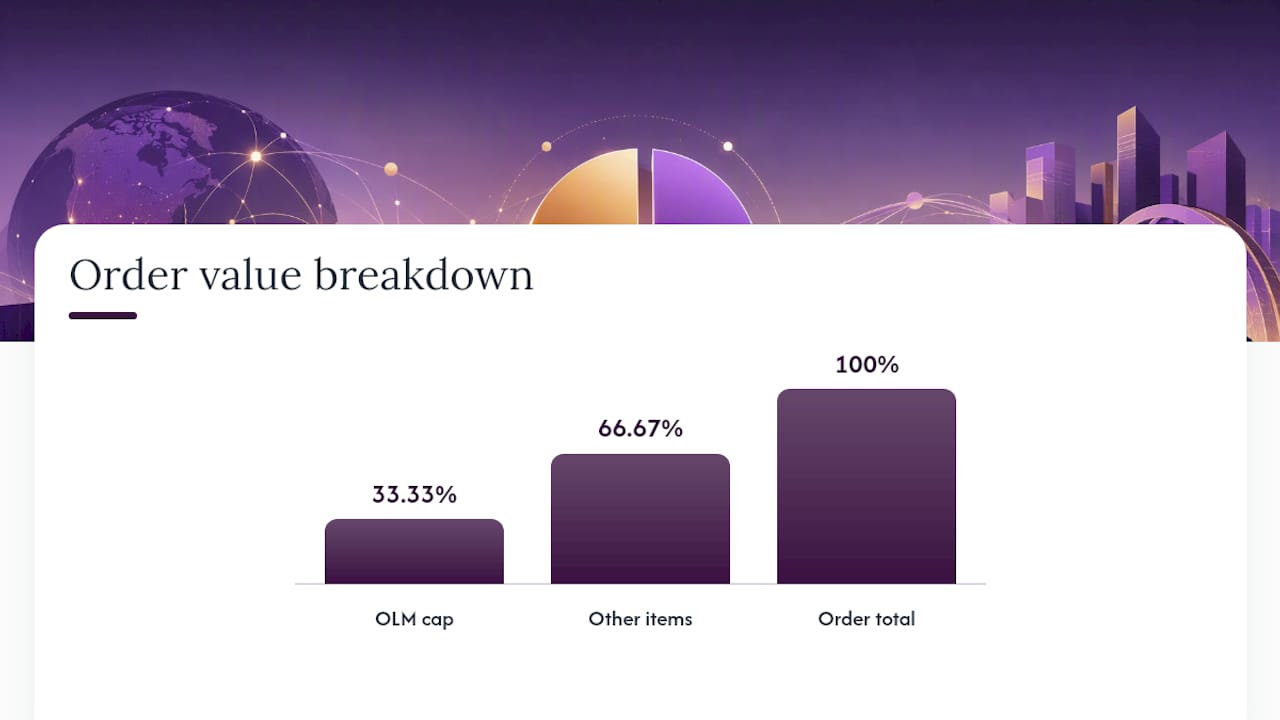
BPAs complicate this math. The cap technically applies across the life of the BPA, not just to a single call, which means a contracting office needs a running total of OLM spend across every order placed under that agreement. The GSA Vendor Support Center’s OLM Ordering Guide recommends tracking this centrally rather than trusting individual order files to add up correctly on their own. In practice, many agencies apply the cap at the order level anyway for ease of tracking under decentralized BPAs, even though the rule is written cumulatively. If your office does this, say so explicitly in the BPA’s ordering guidance so contractors and reviewers apply the same math later.
Structurally, OLMs belong in their own CLINs, separate from Schedule-priced labor and products. Time-and-materials or labor-hour orders typically need a dedicated OLM CLIN with a Not-To-Exceed ceiling, and the contractor bears the cost risk of exceeding that ceiling without a modification.
- Never fold OLM costs into a labor CLIN just to simplify the order structure.
- Never forget to include the Industrial Funding Fee on OLM CLINs.
- Never assume a BPA’s cumulative OLM percentage resets with each new call.
Misclassifying an open-market item as an OLM (or vice versa) is one of the most common findings in post-award reviews, largely because the two categories get treated as interchangeable by staff unfamiliar with the SIN requirement.
Ordering Procedures, RFQ Practices, and Documentation
Getting the paperwork right starts before the order is even issued, at the RFQ stage. Ordering activities have real discretion here, and that discretion is exactly where most compliance gaps open up.
- Decide whether to post to eBuy or solicit three vendors directly. eBuy works well for competitive, multivendor buys; direct RFQs to three Schedule holders work fine for narrower requirements, provided the office documents why those three were chosen.
- Write OLM requirements into the RFQ explicitly. Require vendors to quote OLMs in a separate CLIN, provide a basis of estimate for each one, and state an NTE ceiling rather than a soft estimate.
- Require IFF inclusion in every OLM quote. Vendors sometimes forget to layer this in, and it is far easier to catch at the quote stage than after award.
- Trigger a Determination and Findings for T&M or labor-hour orders. FAR-based FSS ordering procedures require a D&F documenting why a T&M or LH contract type is necessary, and that D&F needs to sit in the file alongside the price reasonableness analysis.
- Retain everything. Quotes received, quotes rejected, the D&F, the basis-of-estimate documents, and the final price analysis all belong in the contract file, not in someone’s inbox.
The insight from GSA’s implementation materials worth internalizing here: the RFO shifted emphasis away from prescriptive, statement-of-work-based rules toward acquisition complexity and fixed-price availability. That gives OCOs more judgment calls to make, which raises the value of writing precise RFQ instructions rather than relying on boilerplate language left over from a pre-RFO template.
Contractor Responsibilities and Audit Compliance
Contractors carry real obligations here too, and the SIN question comes first. Before quoting a single OLM, verify the OLM SIN actually sits on your Schedule contract. If it doesn’t, that requires a contract modification request through your contracting officer, which is not a same-week fix. Build that lead time into your business development pipeline rather than discovering the gap when an RFQ lands.
Once the SIN is in place, the documentation burden falls squarely on you:
- Keep the three quotes obtained (or a written record of the attempt) for every OLM above the SAT.
- Maintain a basis-of-estimate document for each OLM CLIN, not just a total dollar figure.
- Track indirect cost application and IFF inclusion separately so a reviewer can trace the math.
- Retain records tied to each specific CLIN rather than aggregating everything into one file.
Contractors with an approved purchasing system under FAR 44.3 get real relief here, skipping the three-quote requirement entirely for OLM acquisitions. That approval needs to be documented and cited in the proposal itself, not just assumed. A related GSA Focus resource on fair-and-reasonable pricing walks through what OCOs actually look for when reviewing a contractor’s price backup, which is worth reading before your next OLM proposal goes out.
How the RFO and GSAR 538.71 Changed the Rules
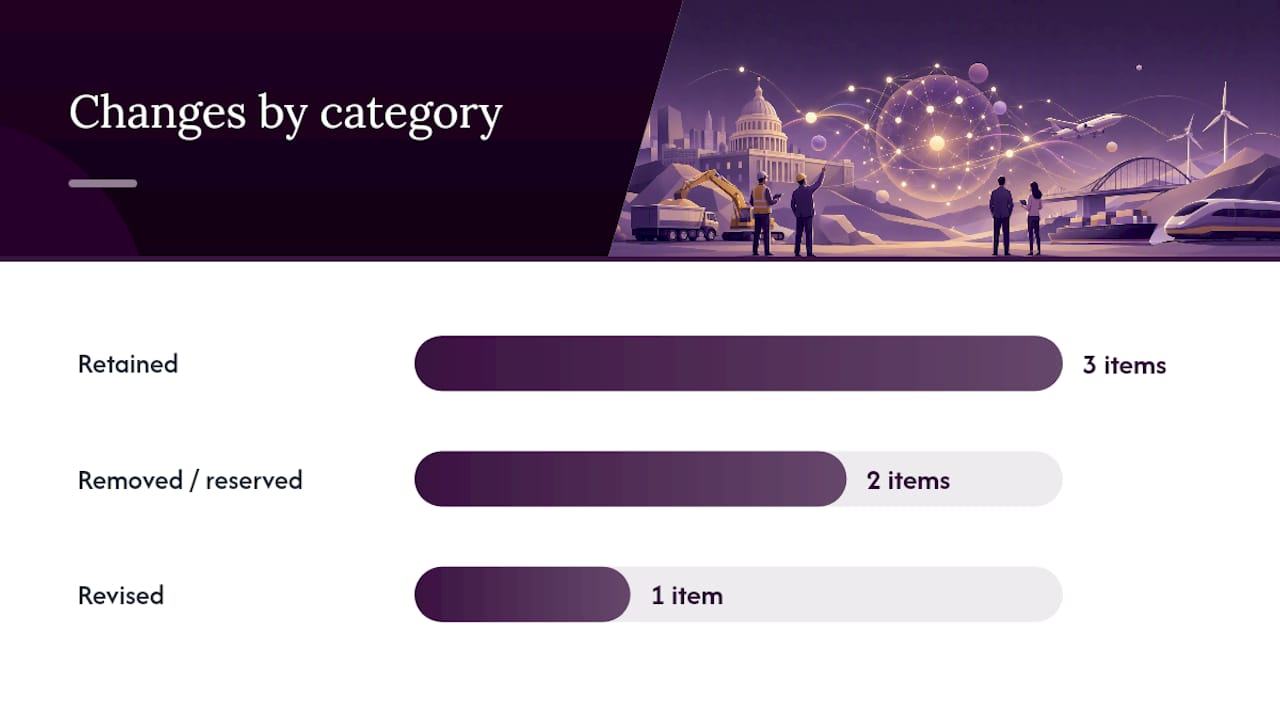
The Revolutionary FAR Overhaul consolidated OLM procedures into a single, streamlined home: GSAR subpart 538.71. The older subpart 538.72 and clause 552.238-115, which previously carried the “Special Ordering Procedures for the Acquisition of Order-Level Materials” language, were reserved as their substantive content moved into 538.71.
What actually changed in practice:
- Retained: the three-quote practice for items above the SAT, the requirement for a separate OLM SIN, and the 33.33% cumulative limitation.
- Removed or reserved: the standalone 538.72 subpart and clause 552.238-115 as independent citations.
- Revised: the emphasis on acquisition complexity and price certainty over rigid statement-of-work triggers, giving OCOs more discretion in structuring OLM requirements.
Contracting offices still running templates that cite 538.72 or 552.238-115 need to update those references now. GSA’s class deviation memorandum is the authoritative source for the current text, and it links directly to the acquisition.gov pages where the implementing FAR language sits. A GSA Focus post on the broader RFO changes covers how these updates ripple into other parts of Schedule ordering beyond OLMs specifically.
A Quick Checklist for RFQs and Orders
Before an RFQ goes out or an order gets issued, run through this:
- Confirm the OLM SIN is active on the vendor’s Schedule contract.
- List every OLM in its own CLIN with a stated NTE ceiling.
- Require a written basis-of-estimate for each OLM CLIN in the quote.
- Confirm the IFF and indirect costs appear explicitly in the pricing breakdown.
- Save all three quotes received, or document why fewer than three were obtainable.
- File the D&F for any T&M or labor-hour structure before award.
Pro Tip: Retain OLM documentation for the full life of the contract plus whatever your agency’s records schedule requires afterward. Reviewers often pull files years after award, and “we didn’t keep it” is never an acceptable answer.
What Trips Up Contractors and OCOs Most Often
The mistake I see most in file reviews isn’t a pricing error. It’s misidentification: teams label something an OLM when it’s really an open-market item, or vice versa, and the paperwork never catches up. Weak price backup and missing IFF documentation follow close behind. The fix is almost always the same: build the basis-of-estimate and quote file before the order is signed, not after a review flags it. Early documentation discipline is the cheapest insurance against an audit finding, and it costs nothing but a little planning. This is a common pattern behind many compliance conversations consultants have with clients.
— Josh
Get Hands-On Help With OLM Compliance
There are direct alternatives to guessing your way through an OLM proposal or hoping your RFQ language holds up under review. If you’re staring down a SIN modification, unsure how to structure separate OLM CLINs, or need someone to sanity-check your fair-and-reasonable price backup before it goes in front of a contracting officer, that’s exactly the kind of work we handle day to day for small and mid-sized government contractors.
A typical engagement includes reviewing a Schedule contract and SIN coverage, drafting or tightening order documentation, and providing audit-readiness support so files hold up when reviewed. If ongoing contract maintenance is part of what you need, our checklist for maintaining a GSA Schedule contract covers the adjacent pieces beyond OLMs specifically.
Start a discovery call to walk through where your OLM documentation stands today.
Sources
- Acquisition
- Class Deviation RFO-2025-FSS-GSAR 538: GSA memorandum on FSS Ordering Procedures
- Order-Level Materials (OLMs) Ordering Guide — GSA Vendor Support Center
FAQ
What Is a GSA OLM?
An order-level material is an item or service a contractor needs to complete a specific GSA order that wasn’t priced on their original Schedule contract, and it must meet three conditions under current FSS ordering procedures: it can’t be the main purpose of the order, it must be clearly flagged as off-Schedule, and it needs a fair-and-reasonable price determination.
What Is an OLM SIN?
The OLM Special Item Number is the specific line contractors must hold on their Schedule contract before they can propose order-level materials on any task or delivery order; without it, a contractor cannot lawfully quote OLMs even if an ordering activity asks for them.
What Are the Current GSA OLM Rules on Usage Limits?
OLMs cannot exceed 33.33% of the cumulative value of a single order or a BPA over its lifetime, and that limitation now falls under GSAR subpart 538.71 following the RFO.
What Is GSA IT Schedule 70?
GSA formerly maintained dedicated Schedules for categories like information technology products and services before consolidation into the single Multiple Award Schedule; OLM rules apply the same way across MAS regardless of the legacy Schedule number a contract once carried.
Do Contractors Need Three Quotes for Every OLM?
Three quotes are the standard practice for OLMs priced above the Simplified Acquisition Threshold, but contractors with an approved purchasing system under FAR 44.3 are exempt from that requirement and should document the exemption in their proposal.
Recommended
- (Infographic) 25 Reasons GSA Contracts are Rejected
- GSA Compliance: Don’t Get Lost
- Performance Metrics for GSA Contracts: 2026 Guide
- GSA Contract Eligibility & Return on Investment