

Winning a GSA Schedule doesn’t generate a single sale by itself. The contract only opens the door. You have to optimize your GSA Advantage! and eLibrary listings the week you’re awarded, set up eBuy alerts for your SINs, and build a short federal marketing plan with a one-page capability statement. GSA won’t market your contract for you, and GSA is explicit about that — the burden sits on you, within GSAR advertising limits.
TL;DR:
- Optimizing GSA Advantage! and eLibrary listings immediately after contract award is crucial, as outdated or incomplete listings significantly reduce visibility to buyers.
- Using federal procurement data tools like FPDS, USAspending, and SAM.gov helps identify the best-fit agencies by analyzing past awards, spending patterns, and upcoming opportunities.
- Building a targeted agency list and maintaining a quarterly refreshed catalog and marketing plan accelerates pipeline development and turns interest into actual sales.
- Consistently updating your catalogs after contract modifications and strictly following compliance rules are mandatory for avoiding review flags and maintaining credibility.
- Success depends on proactive outreach, relationship building with contracting officers, and a disciplined, ongoing approach—one-time setup is rarely enough to generate revenue.
Table of Contents
- Your First 90 Days of GSA Schedule Marketing: A Priority Checklist
- How Do You Optimize Your GSA Advantage! and eLibrary Listings?
- Where Do You Find GSA Opportunities: eBuy, SAM.gov, or Both?
- What Belongs in a Federal Marketing Plan and Capability Statement?
- Which Federal Data Tools Reveal Your Best-Fit Agencies?
- How Do Industry Days and Teaming Actually Turn Into Contracts?
- What Compliance Rules Govern GSA Schedule Marketing?
- What Actually Moves the Needle After You Win a Schedule?
- How Gsascheduleservices Helps You Execute This Plan
- Sources
- FAQ
Your First 90 Days of GSA Schedule Marketing: A Priority Checklist
Most new schedule holders waste their first quarter waiting for orders to appear. They won’t. Here’s the sequence that actually builds pipeline, roughly ordered by urgency:
- Week 1: Upload your full catalog to GSA Advantage! and verify your eLibrary listing (contract-mandatory; owner: contract administrator).
- Week 1: Set up eBuy and SAM.gov alerts for your awarded SINs (owner: sales lead).
- Week 2: Draft a one-page capability statement (owner: marketing or founder).
- Weeks 2 to 4: Build a 15 to 20 agency target list using procurement data (owner: sales lead).
- Month 1: Launch a LinkedIn and email outreach cadence to contracting officers (owner: marketing).
- Month 2: Attend one industry day or matchmaking event (owner: business development).
- Month 2 to 3: Pitch a BPA to at least one warm agency contact (owner: sales lead).
- Ongoing, quarterly: Refresh catalog pricing and descriptions after any contract mod (contract-mandatory).
- Ongoing, monthly: Report sales and remit the Industrial Funding Fee (contract-mandatory).
Items 1, 8, and 9 aren’t optional marketing tactics. They’re contract obligations that also happen to drive visibility.
How Do You Optimize Your GSA Advantage! and eLibrary Listings?
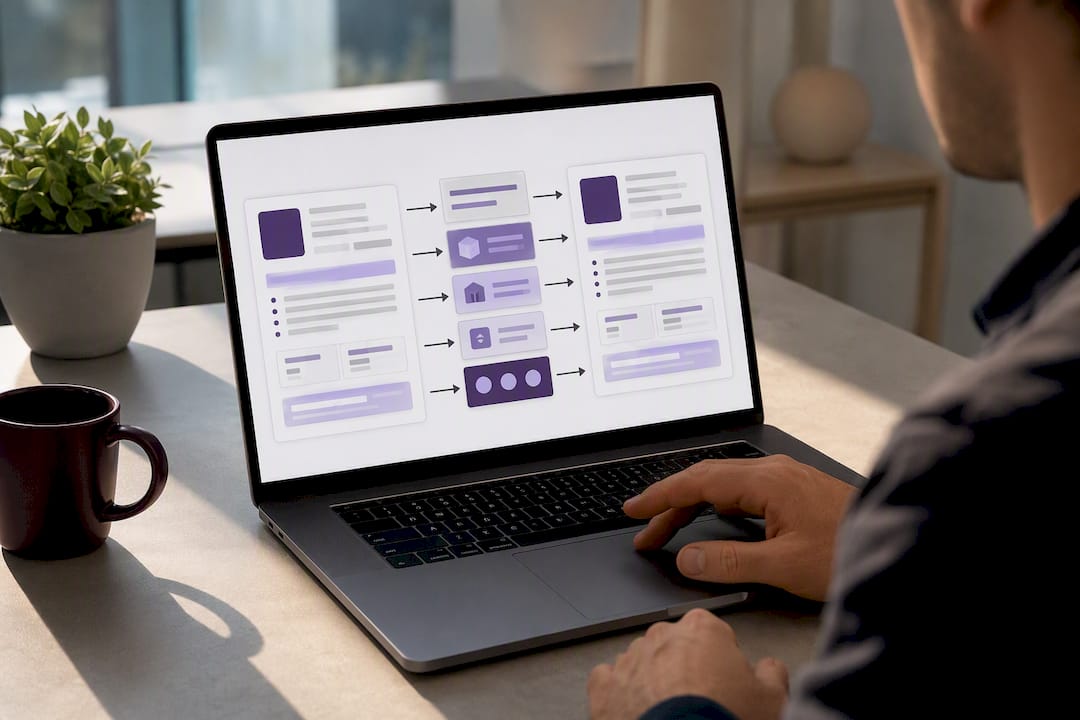
GSA Advantage! functions as the federal government’s version of an online marketplace, and eLibrary is where buyers first confirm you hold the SINs they need. Contracting officers use both to shortlist vendors before they ever open eBuy, so a thin or outdated listing costs you visibility you’ll never know you lost.
Treat your catalog like a storefront a buyer is actively comparing against three competitors, because that’s usually exactly what’s happening. A few things separate listings that convert from ones that sit ignored:
- Write item descriptions using the same language solicitations use, not internal product jargon.
- Align every listing precisely to the SIN it falls under. Mismatches confuse automated searches.
- Show pricing clearly, with unit of issue and any volume discounts spelled out.
- Include specs, images, or spec sheets wherever the SIN allows attachments.
Pro Tip: Set a recurring calendar reminder to check your GSA Advantage! files every time you sign a contract modification. GSA’s own Steps to Success guide treats this as mandatory, not optional, and stale listings after a mod are one of the most common compliance flags at review time.
Where Do You Find GSA Opportunities: eBuy, SAM.gov, or Both?
eBuy and SAM.gov solve different problems, and mixing them up wastes time. eBuy is the request-for-quote platform built specifically for Schedule holders. The eBuy Contractor User Guide confirms it lists active RFQs tied directly to your awarded SINs, which makes it your fastest path to a live buying opportunity. SAM.gov, on the other hand, publishes broader contract opportunities across the entire federal government, including ones open to non-Schedule vendors.
Once opportunities start flowing in, triage them fast instead of chasing everything:
- Does the requirement fall inside your awarded SINs? If not, skip it.
- Is the agency’s stated budget realistic for your pricing tier?
- Is the timeline compatible with your delivery capacity?
- Is it a sole-source opportunity, or will you face five competitors?
Set daily alerts in both systems. A same-day response on eBuy often beats a technically better quote submitted 48 hours late.
What Belongs in a Federal Marketing Plan and Capability Statement?
A capability statement is the single most reused marketing asset a Schedule holder owns, and most contractors write it once and never touch it again. That’s a mistake. Keep it to one page with these elements:
- Contract number, awarded SINs, and NAICS codes
- Two or three mission-aligned outcomes framed in the agency’s own language
- Past performance bullets with measurable results (cost saved, timeline met, uptime achieved)
- A direct point of contact with phone and email
- Links to your eLibrary and GSA Advantage! listings
Around that document, build a marketing plan spanning six to twelve months with quarterly goals: a target agency list, an outreach cadence (email, LinkedIn, occasional webinars), and a handful of KPIs like meetings booked or RFQs received. Our detailed playbook for federal service businesses breaks this down SIN by SIN if you want a fuller model to copy.
Pro Tip: Send your capability statement to a contracting officer only after you’ve referenced something specific about their agency’s mission. A generic blast gets deleted; a message that mentions their recent RFI does not.
Which Federal Data Tools Reveal Your Best-Fit Agencies?
Guessing which agencies to target wastes months. Federal procurement data from FPDS, USAspending, and the Schedule Sales Query tool tells you exactly who’s already buying under your SINs, at what price, and how often.
Run these three checks before you build a target list:
- Pull FPDS records for your SIN to see which agencies have awarded contracts in that category over the past two years.
- Check USAspending for the dollar range those agencies typically spend, so your pricing doesn’t look wildly off market.
- Scan SAM.gov for open RFIs or upcoming forecasted requirements tied to your NAICS codes.
Turn that into a 10 to 20 agency list with a named point of contact and one recent award noted for each. That’s your outreach queue for the quarter, not a wish list.
How Do Industry Days and Teaming Actually Turn Into Contracts?
Showing up to a matchmaking event without a follow-up plan is the single biggest waste of a marketing budget I see among new Schedule holders.
- Before the event, research three agencies attending and prepare a question specific to each one’s mission.
- During the event, collect names and immediate next steps, not just business cards.
- Within 48 hours, send a follow-up email referencing the specific conversation, not a generic thank-you.
- If the fit looks strong, propose a Blanket Purchase Agreement or Contractor Team Arrangement rather than waiting for a solicitation.
- If you lack the full capability, pursue subcontracting under a prime instead of chasing a prime slot you can’t fill.
GSA’s Office of Small Business Utilization and Customer Service Directors exist specifically to connect contractors with these buyers, and they’re underused.
What Compliance Rules Govern GSA Schedule Marketing?
GSAR 552.203-71 restricts how you can advertise your Schedule. You may state that you hold a GSA contract and cite the contract number, but you cannot imply government endorsement of your company or products, and you cannot use GSA’s logos in ways that suggest an official partnership beyond what’s authorized.
Two recurring compliance events shape your marketing standing directly:
- IOA/CAV visits review your current price list, recent modifications, sales records, and points of contact. A pre-visit checklist built around those five items keeps the review short instead of painful.
- Sales reporting and IFF remittance must stay accurate every quarter. Buyers occasionally ask for sales history as informal proof of active federal use, and sloppy numbers undercut your credibility as much as they trigger compliance flags.
Contractors who skip catalog updates after a modification are among the most common findings GSA reviewers cite, according to GSA’s own contractor guidance.
What Actually Moves the Needle After You Win a Schedule?
The contractors who turn a Schedule into real revenue almost never win their first order through eBuy alone. They win it because they’d already started a conversation with a contracting officer weeks earlier, armed with a capability statement that spoke the agency’s language instead of their own sales pitch.
The biggest mistake I keep seeing is treating the catalog as a one-time setup task instead of a quarterly discipline tied to your pipeline forecast. Firms that refresh listings every quarter and pick three to five target agencies to pursue seriously, rather than blasting fifty agencies shallowly, close faster and with less wasted effort. Chasing every eBuy notification without relationship groundwork is a slow way to burn a marketing budget.
— Josh
How Gsascheduleservices Helps You Execute This Plan
Everything above is doable on your own. Some firms have the internal bandwidth to run catalog updates, agency research, and outreach cadences in-house, and that’s a legitimate path. If you’d rather hand off the parts that eat the most hours, consulting services are available to help with readiness assessments, documentation and catalog uploads, price list development, and ongoing marketing support once a Schedule is active.
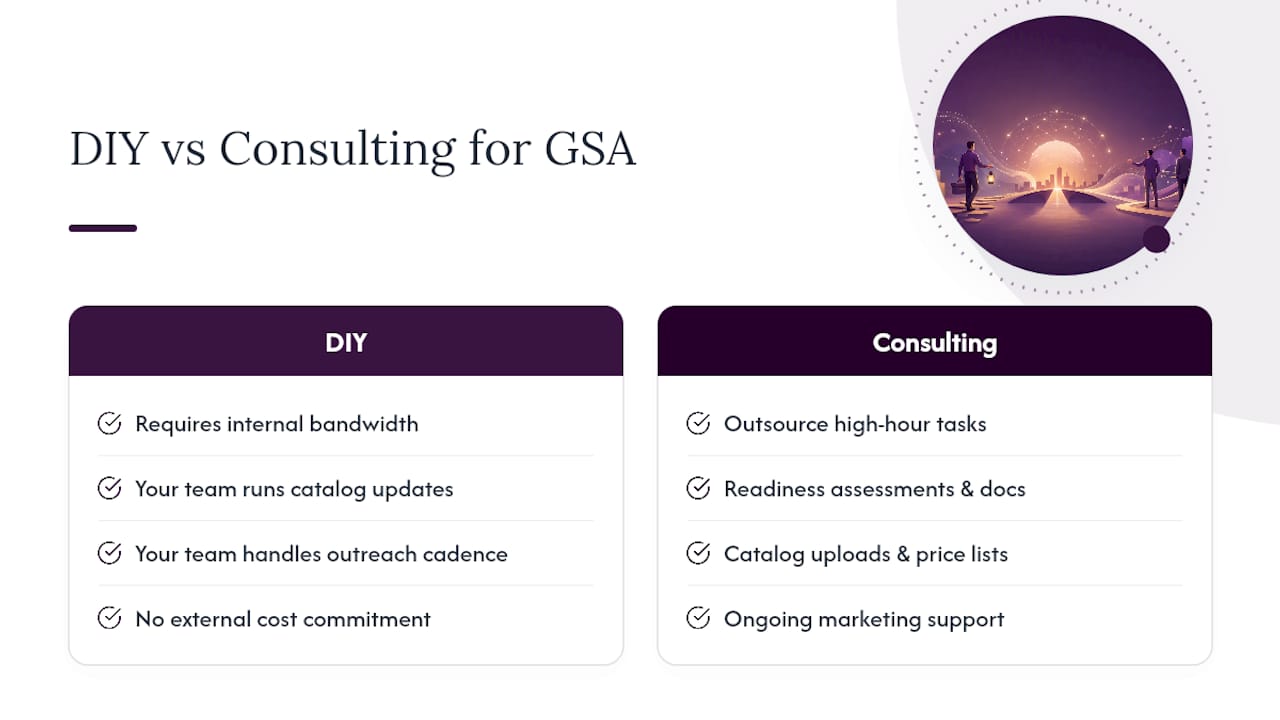
None of this requires committing blind. A short discovery call walks through where your Schedule stands today and which of the steps above actually need outside hands versus what your team can own directly. If your catalog needs a real update or you want a second set of eyes on your marketing plan before next quarter starts, book a discovery call and find out what’s actually missing.
Sources
- Marketing your MAS contract | GSA
- Contractor Reference Guide – Steps to Success, Making the Most of Your GSA Contract
- eBuy Contractor User Guide
FAQ
Can States Use GSA Schedules?
State and local governments can use certain GSA Schedule contracts through the Cooperative Purchasing program, mainly for IT, security, and disaster recovery SINs, but not every Schedule qualifies. Check your specific SIN’s eligibility before marketing to state buyers.
What Is GSA IT Schedule 70?
The GSA IT Schedule, now part of the consolidated Multiple Award Schedule under IT-related categories, covers information technology products, services, and solutions sold to federal agencies. Contractors under IT SINs should prioritize eLibrary optimization since agency IT buyers rely heavily on it during vendor searches.
How Hard Is It to Get a GSA Schedule?
Getting a Schedule requires proving financial stability, relevant past performance, and compliant pricing, and the application process typically takes several months of documentation and negotiation. It’s demanding but manageable with organized preparation, whether handled in-house or with outside support.
How Do You Market a GSA Contract Effectively?
Effective marketing combines a fully optimized GSA Advantage! and eLibrary listing, active eBuy and SAM.gov monitoring, a one-page capability statement, and consistent outreach to contracting officers using federal spending data to target the right agencies. GSA provides the platforms and data; the outreach and relationship building are entirely on you.
Does GSA Advantage! Update Automatically After a Contract Modification?
No. You must manually update your GSA Advantage! and eLibrary listings after every contract modification, and delaying it can create both compliance issues and lost sales from buyers viewing outdated information.
Recommended
- An Essential Checklist to Maintain Your GSA Schedule Contract
- GSA Schedule Contracts: Your Guide to Success
- How to Access GSA Contract Opportunities: Quick Guide (2023)
- Federal Services GSA Schedules: Secrets to Growing Your Service Business